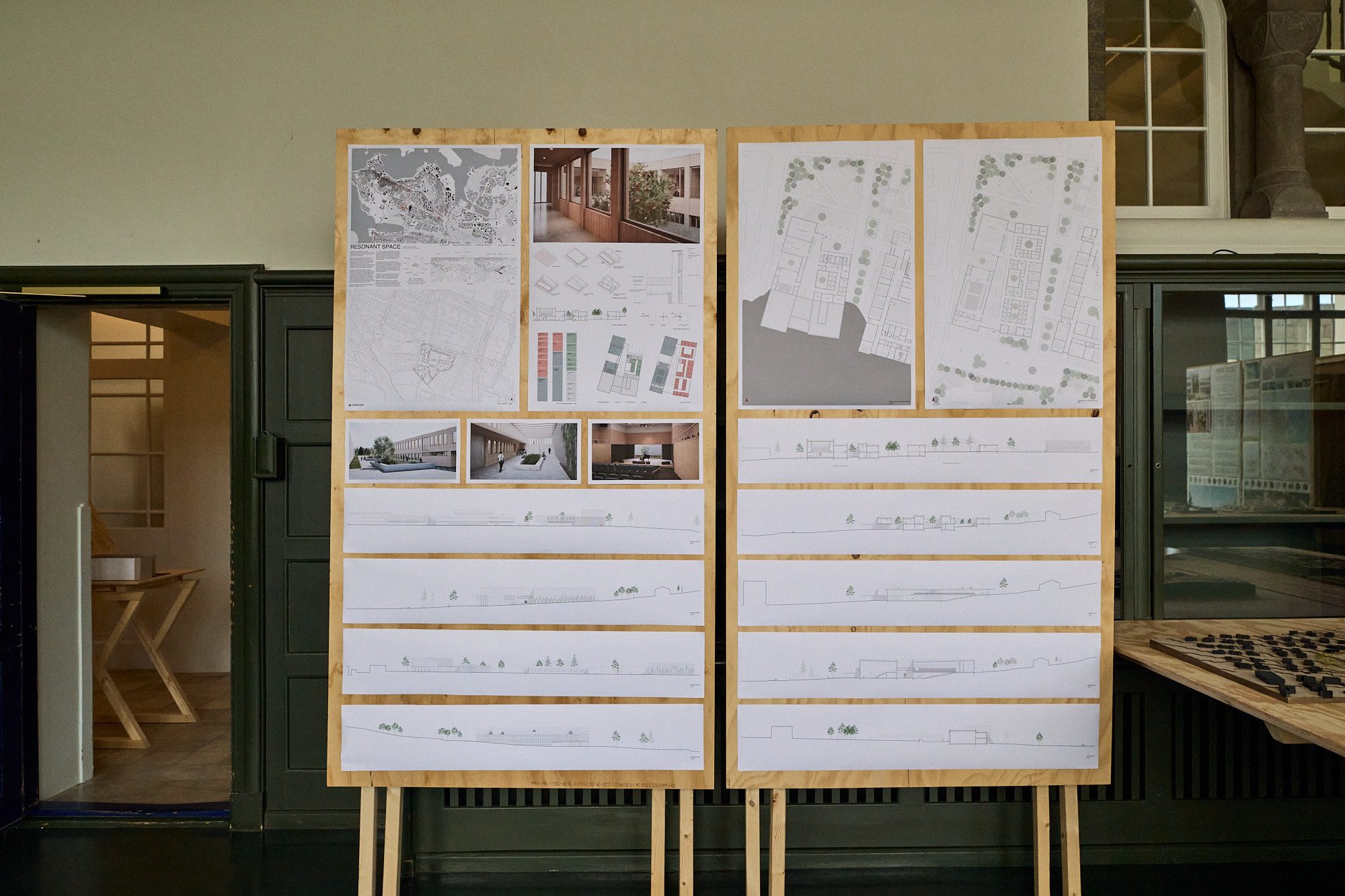
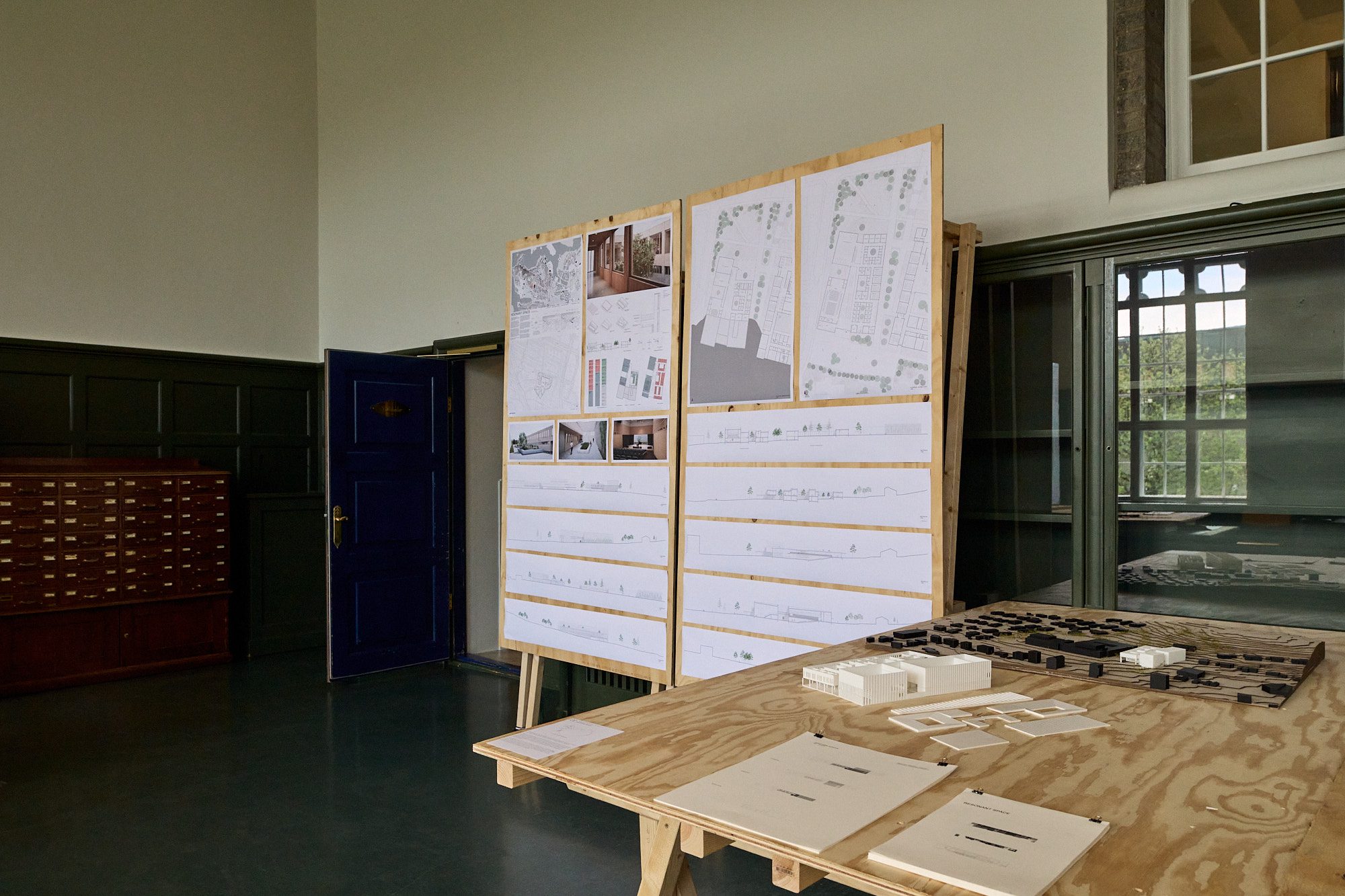
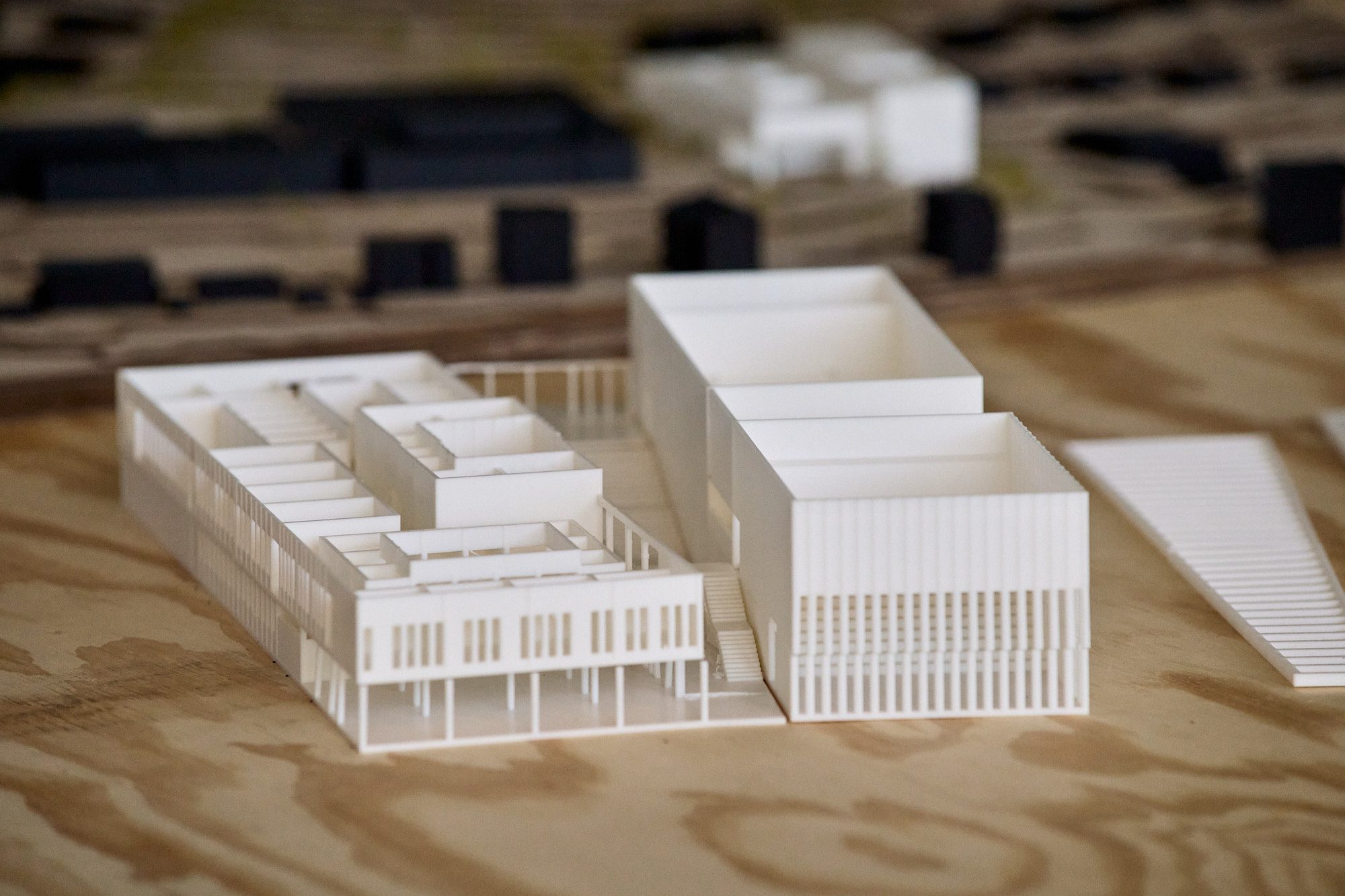
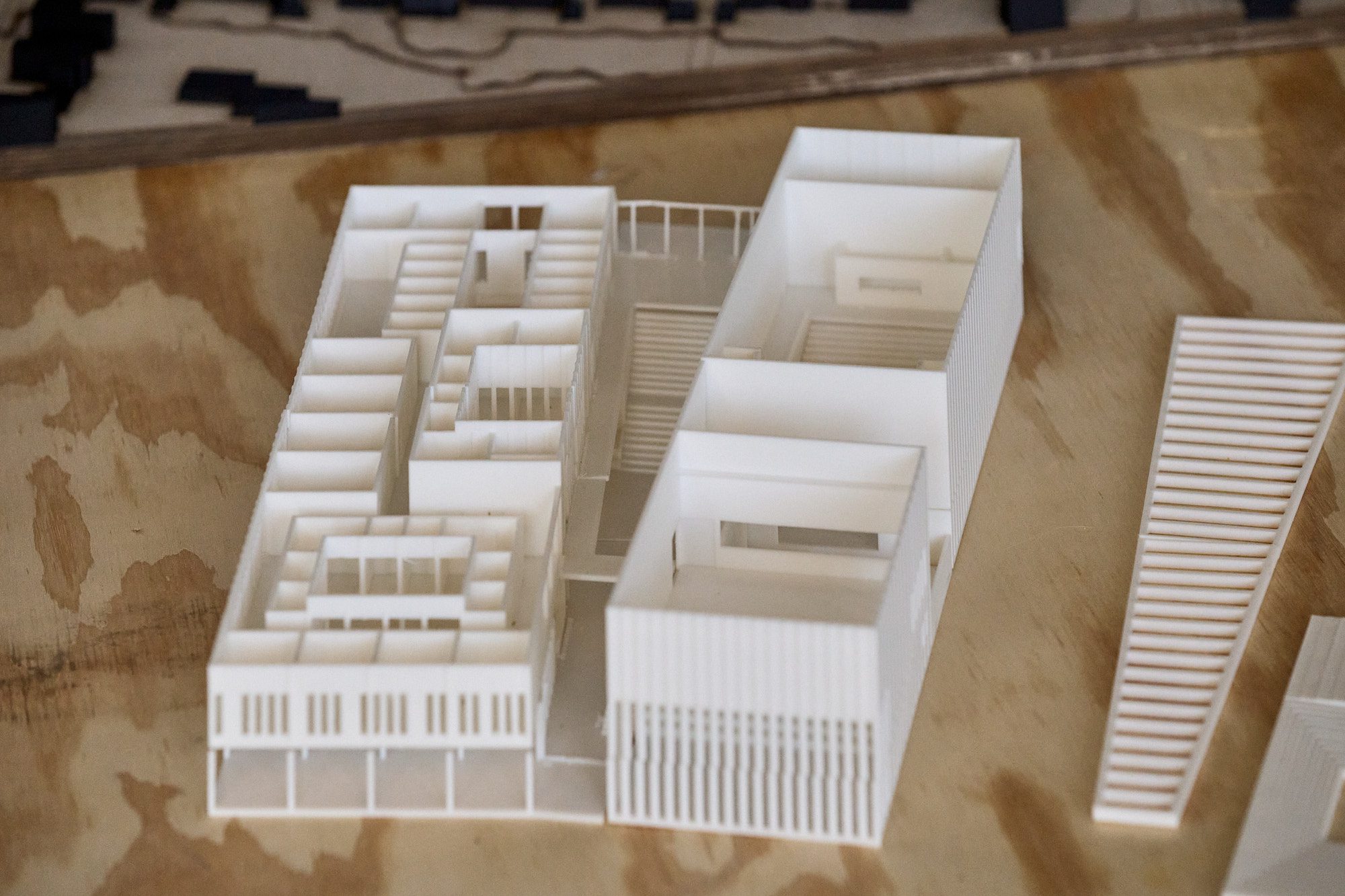
This project explores the relationship between architecture and music through the design of a new upper secondary School of Music (MÍT) in Reykjavík.
Music and Architecture
Music and architecture share many compositional principles, including rhythm, harmony, resonance, repetition, variation, scale and silence. Both disciplines can aswell shape how people experience space, influence movement, and create social connections.
Music and music education in Iceland
Despite Iceland’s strong musical culture and political support for music education since the 1960s, many music schools are housed in buildings not designed for musical learning.
MÍT, an upper secondary school in music, is one such example. It is currently divided across two locations in Reykjavík, limiting interaction, acoustic quality, and social cohesion. In addition, students pursuing a matriculation degree must attend academic classes at other schools, sosome students need to seek classes in three diferent buildings throughout their schooldays. Around 40% of these students are taking academic courses at Menntaskólinn við Hamrahlíð (MH).
Proposal
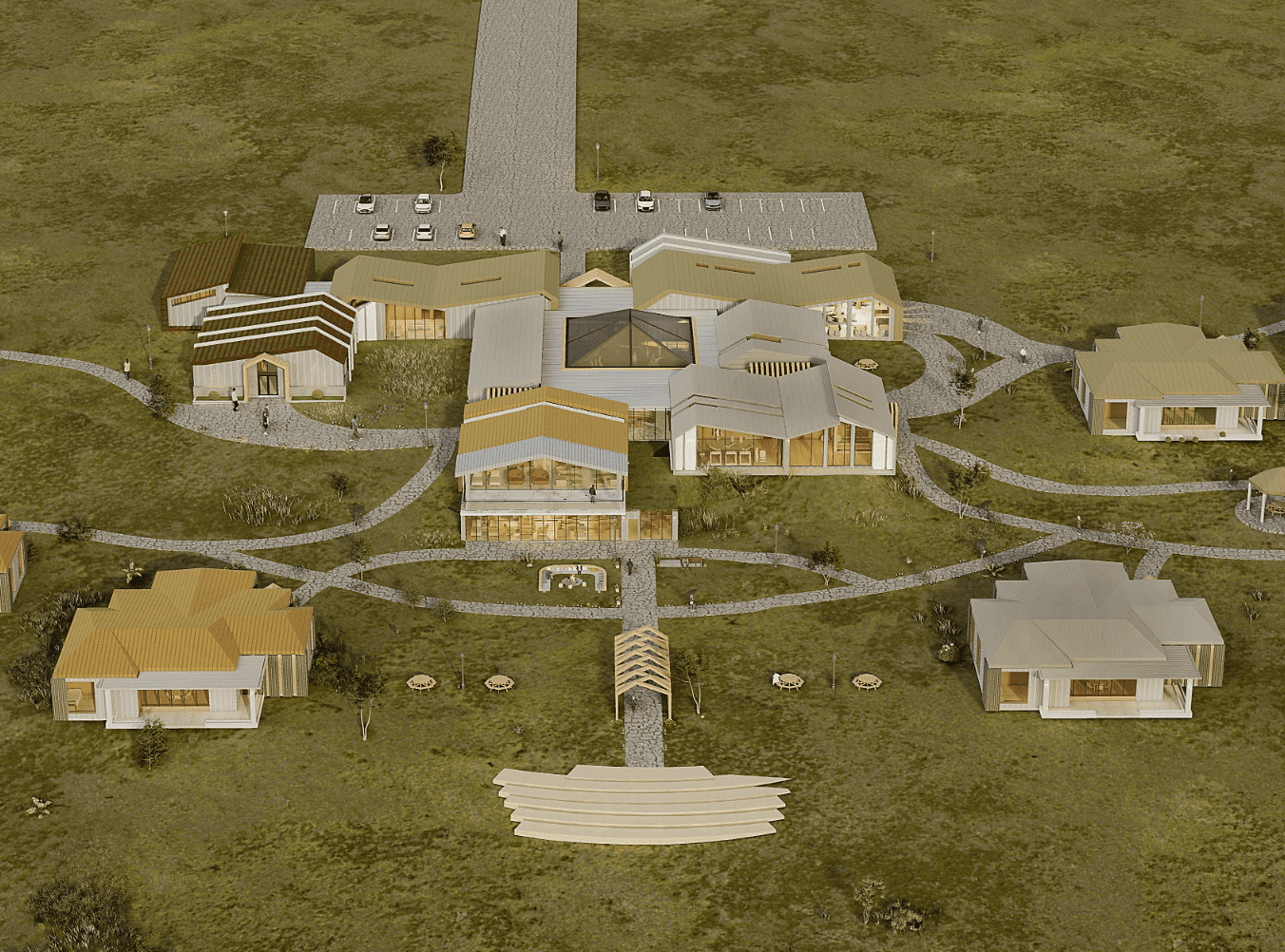
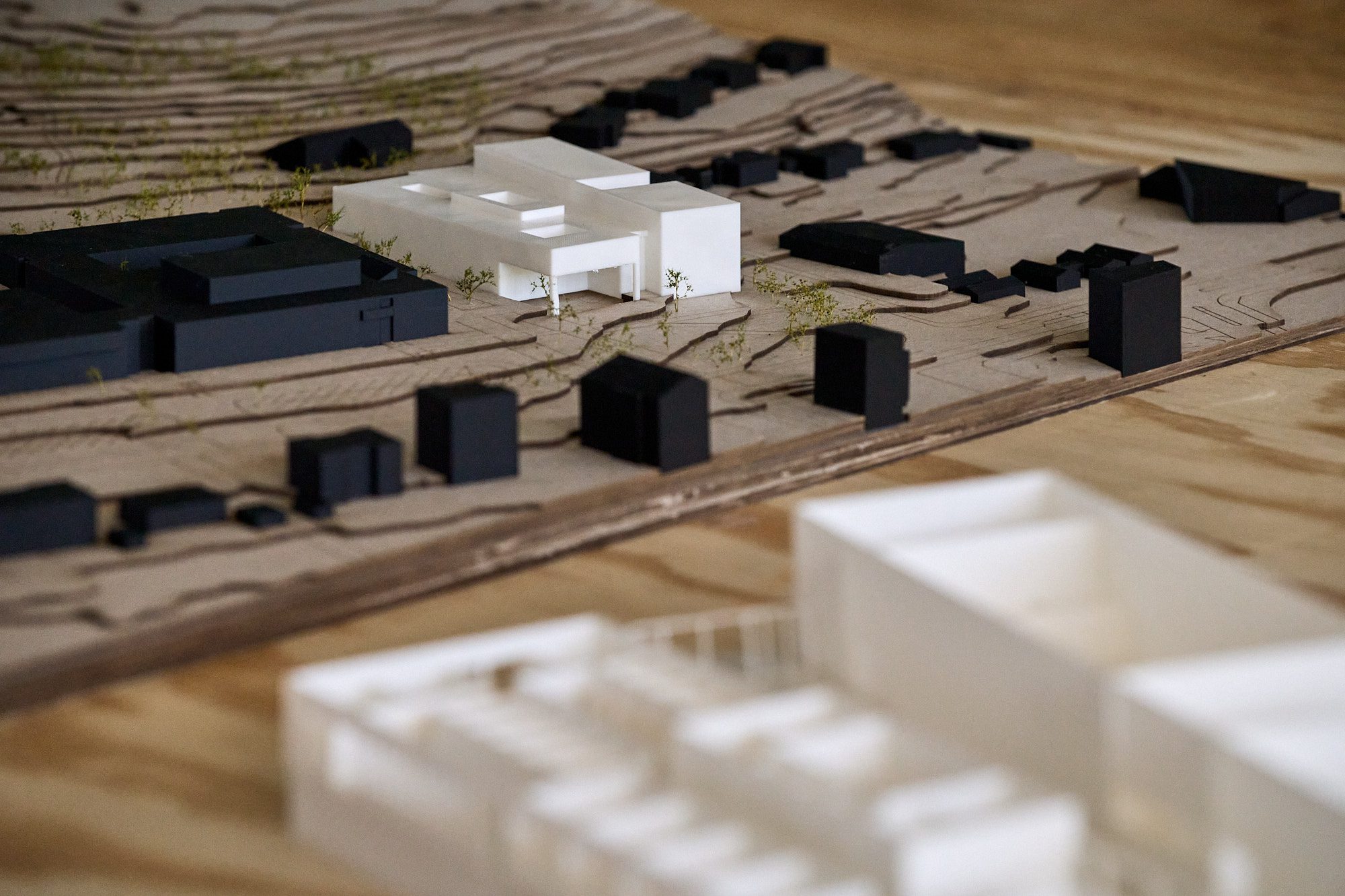
The proposal brings MÍT together to one location, beside MH in Hamrahlíð, creating a shared educational and social environment while activating the surrounding garden. The site is located within 400 meters from two future stations of a new public transport in Reykjavík called Borgarlína. For this reason the new structure is located on an extisting parking lot. strengthening accessibility and connections to the city. The project uses architecture as a tool to reinforce relationships between people, spaces and music through courtyards, gardens, and visually connected learning spaces. By encouraging interaction between students and making musical and musical life more visible in everyday life, the proposal seeks to strengthen the connection between music, education, and society.
Kristrún Lárusdóttir Hunter
Resonant Space
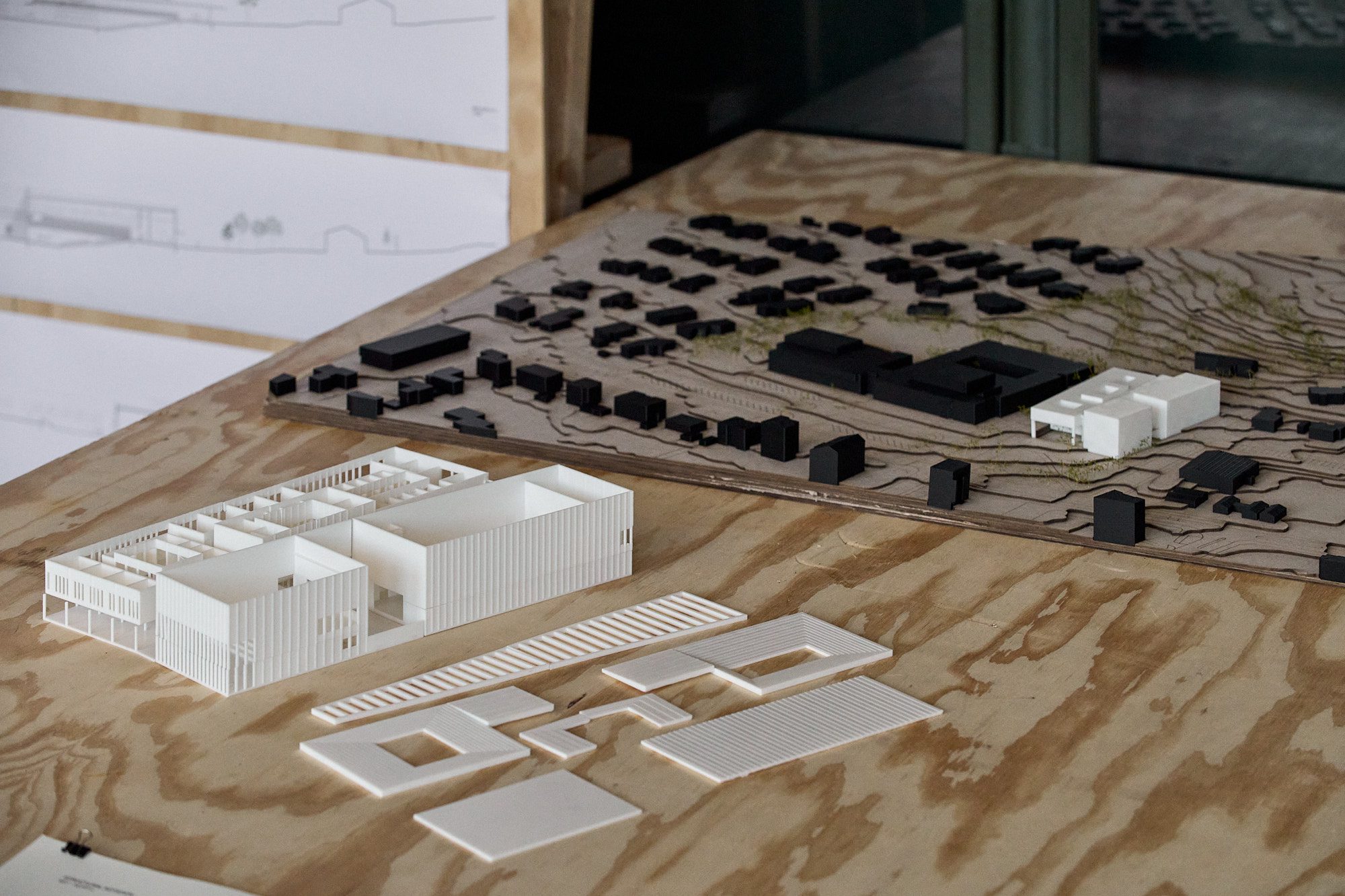
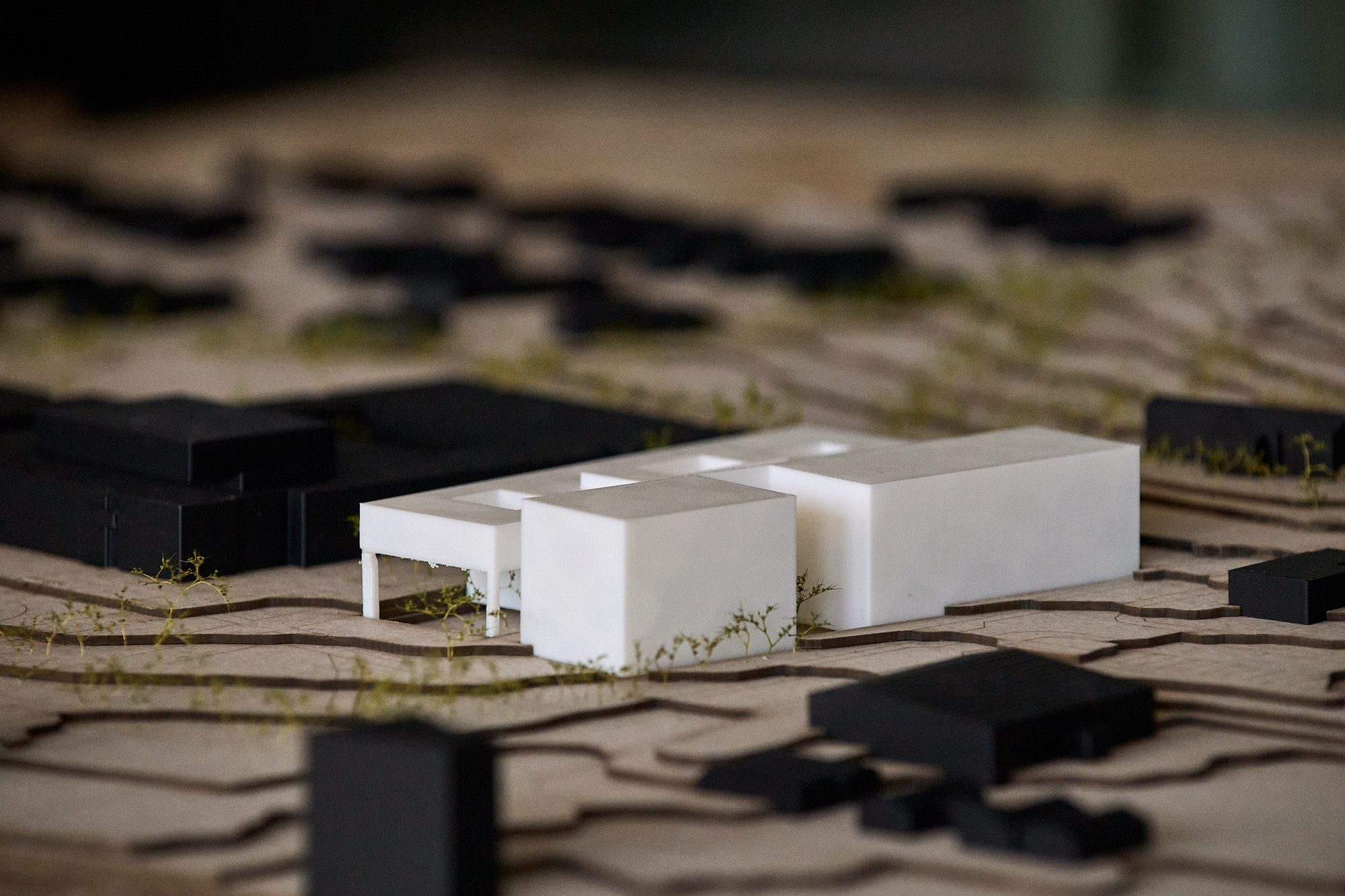
Verkið í myndum.