+ Bæta við
Samhengi // Hádegisfyrirlestur 24.4.26 – 12:15-13:00
Samhengi býður velkominn Asher Ian Armstrong píanóleikara, föstudaginn 24. apríl. Samhengi verður að þessu sinni í formi tónleika undir nafninu Luminaries þar sem kastljósinu er beint að fjölbreyttum og lítt þekktum hluta píanóbókmenntanna, verkum kventónskálda sem hafa lengi staðið í skugga hinna sígildu meistara. Efnisskráin spannar tuttugustu öldina og dregur fram tónlist sem mótaðist af stríði, menningararfi og persónulegri tjáningu.
Heyra má meðal annars áhrifamikil verk eftir Maria Herz, Gayane Chebotaryan og Jean Coulthard, auk nýs íslensks verks, Boreas eftir Veronique Vaka, sem sækir innblástur í norðurljósin. Tónleikunum lýkur á stórbrotnu verki eftir César Franck og ljúfri útsetningu á sönglaginu Nacht und Träume eftir Franz Schubert.
Viðburðurinn fer fram í Dynjanda, húsi Tónlistardeildar, Skipholti 31.
Öll hjartanlega velkomin!
//
Samhengi welcomes pianist Asher Ian Armstrong on Friday, April 24th. On this occasion, Samhengi takes the form of a recital entitled Luminaries, shining a spotlight on a rich and largely overlooked corner of the piano repertoire: works by women composers who have long stood in the shadow of the canonical masters. The programme spans the twentieth century and brings forward music shaped by war, cultural heritage, and personal expression.
Featured works include pieces by Maria Herz, Gayane Chebotaryan, and Jean Coulthard, alongside a new Icelandic work, Boreas by Veronique Vaka, inspired by the Northern Lights. The recital concludes with a monumental work by César Franck and a tender arrangement of Schubert’s beloved song Nacht und Träume.
The event takes place at Dynjandi, home of the Music Department, Skipholti 31.
All are warmly welcome!
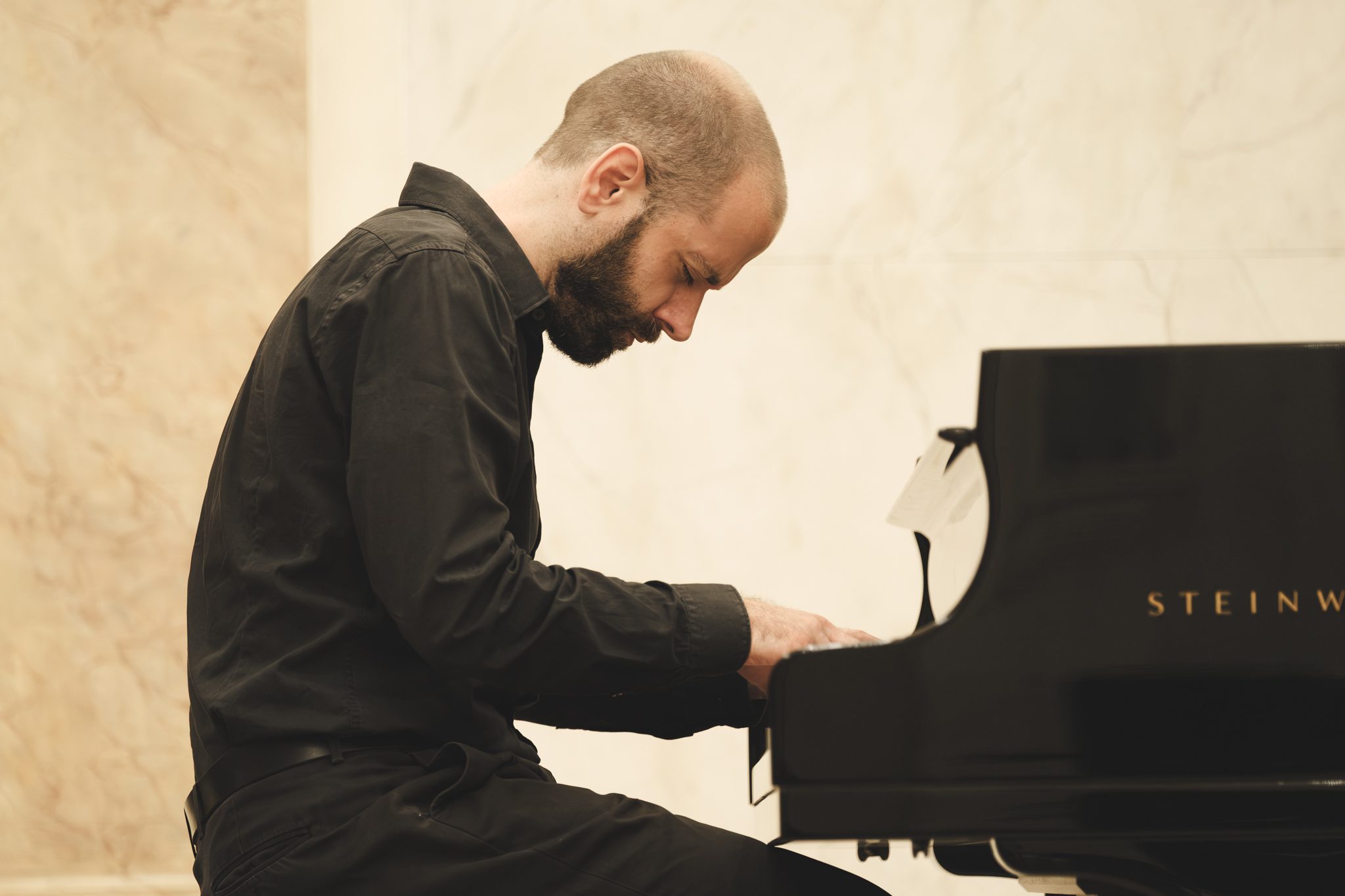
Asher Armstrong’s playing has been described as “powerful, big-boned” (American Record Guide) and “graceful, agile, and spontaneous” (Fanfare). He has performed widely across Europe and North America, with recent recitals at the Penderecki Academy in Kraków, the Royal College of Music in London, and the Royal Conservatory of Music in Toronto. His three solo albums feature works by Brahms, Busoni, and late-Romantic virtuosos. A passionate advocate for overlooked and contemporary repertoire, Armstrong has premiered works by Varvara Gaigerova and others. He currently teaches at the University of Toronto and serves as an Advanced Examiner for the Royal Conservatory of Music.
Luminaries
A Piano Recital
Music critic Alex Ross recently said of the music of Florence Price that “she seems to speak from an imaginary past, from an alternative history of an America that lived up to its stated ideals.” The same could be said for the piano literature; while music by Chopin, Schubert, Brahms, and Rachmaninoff is played and heard every season, there is a massive “alternative history” of piano music written by women of which most listeners remain unaware.
The Twentieth century is an ideal point from which to embark on an exploration of this largely unknown landscape of music. The composers heard on the first half of this program represent many components of this fascinating time in music history:
Maria Herz, a German Jew born in Cologne, led a remarkably creative existence even while experiencing war, upheaval, deaths of loved ones, and finally, a permanent dismantling of her family. Her music belies a love of the Nineteenth century Romantics (though later works show a true Modernist at work), and her early Variations on a Theme by Chopin are heard in Iceland for the first time today.
Similarly, war and conflict are forces which shaped the life of Gayane Chebotaryan in an indelible way. An Armenian, she was 5 years old when the genocide of her people was stopped, and would go on to work as a Soviet composer and musicologist for nearly the rest of the century. Her music is distinctive, faithful to her Armenian roots, and often expressively direct in a way that can be unexpectedly powerful; the beautiful Prelude and Fugue heard here featuresmore than one such moment.
Jean Coulthard is one of Canada’s greatest composers; among many other works written throughout the span of the Twentieth century, her two piano sonatas stand out as large, ambitious works – and some of the most significant examples of the genre to come out of Canada, ever. The first – a work which shows her fascination with emotional, Romantic templates of the form (and with Impressionist music vocabulary) is heard here.
The Icelandic piano work Boreas was written very recently (2024) – its composer, Veronique Vaka, depicts the beauty of the Aurora Borealis in three brief movements, lasting 7-8 minutes.
Finally, this performance will conclude with a large work – the most important piano piece to be written in late Nineteenth-century France: the Prelude, Chorale, and Fugue by César Franck. This monumental canvas is the perfect example of this composer’s famous “cyclicism,” where three separate musical ideas are interwoven, and brilliantly combined in the last moments of the fugue. Following this will be the performer’s transcription of one of Schubert’s most famous and beloved Lieder, the lullaby Nacht und Träume.
PROGRAMME
Preludes and Fugues in the Modes of Armenian Music
Book 1, No. 4.
Gayane Chebotaryan(1918-1998)
Prelude “Chaconne”: Andante
Fugue: ModeratoVariations on Chopin’s C Minor Prélude
(Op. 28, No. 20), Op. 1 (c. 1914)
Maria Herz (1878–1950)Piano Sonata No. 1 (1947).
Jean Coulthard (1908-2000)
I. Freely and Lyrically
II. “Threnody”: Slow and pensively
III. Finale: ResolutelyBoreas (2024)
Veronique Vaka (1986–)Prelude, Chorale, and Fugue (1884)
César Franck (1822-1890)Nacht und Träume (1825)
Franz Schubert (1797-1828)/arr. Armstrong