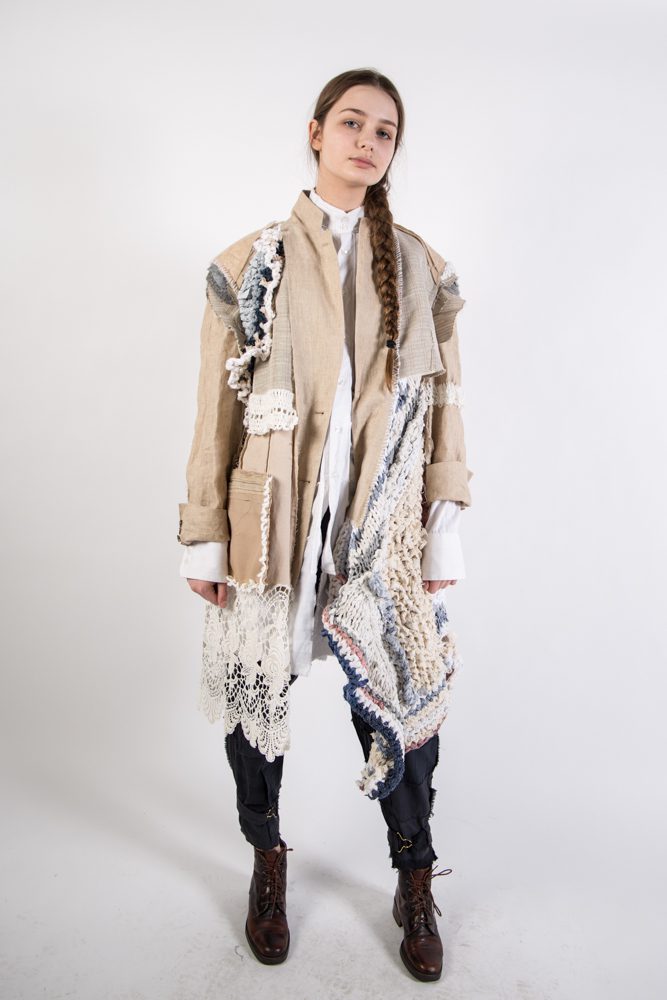
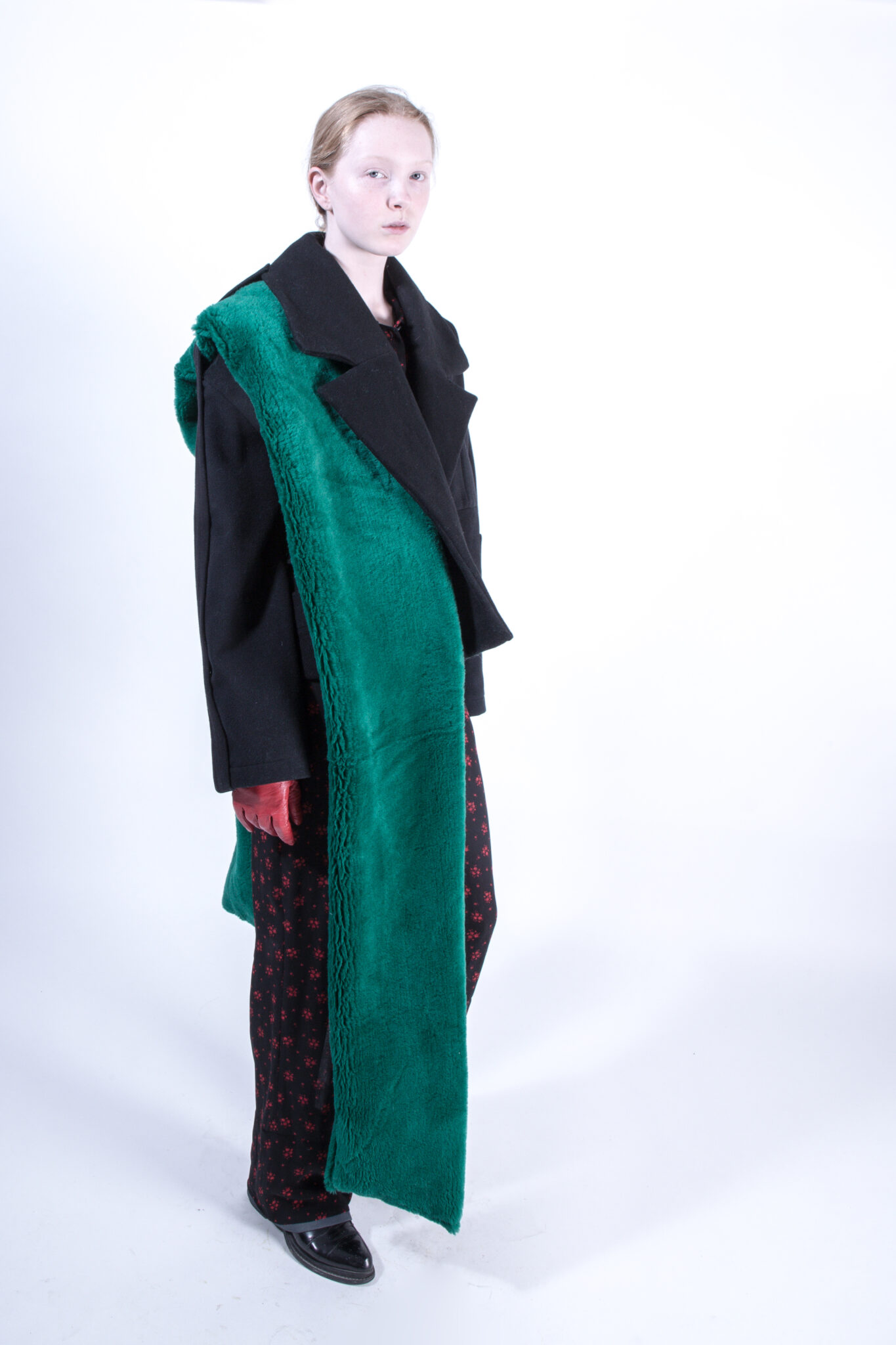
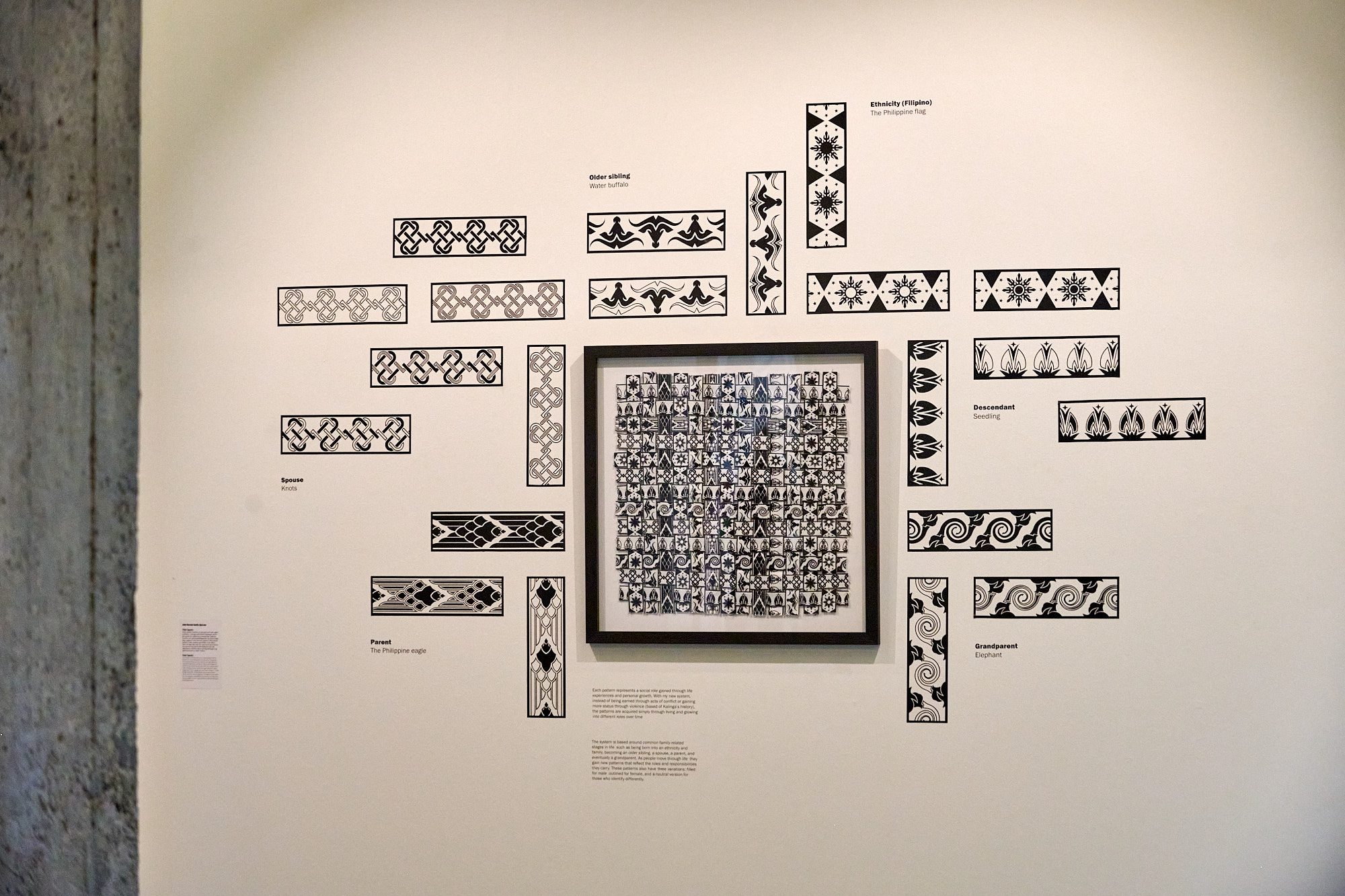
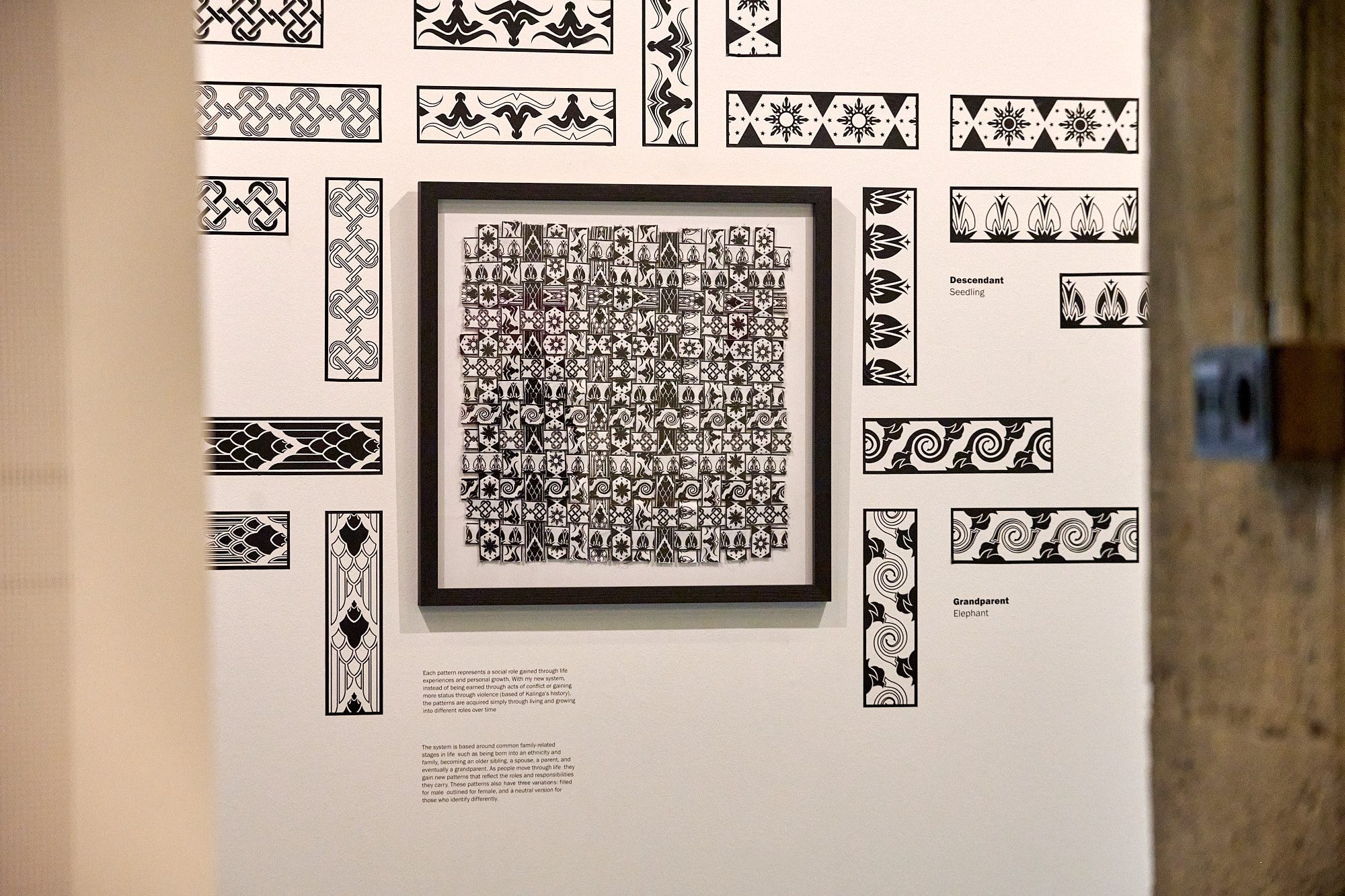
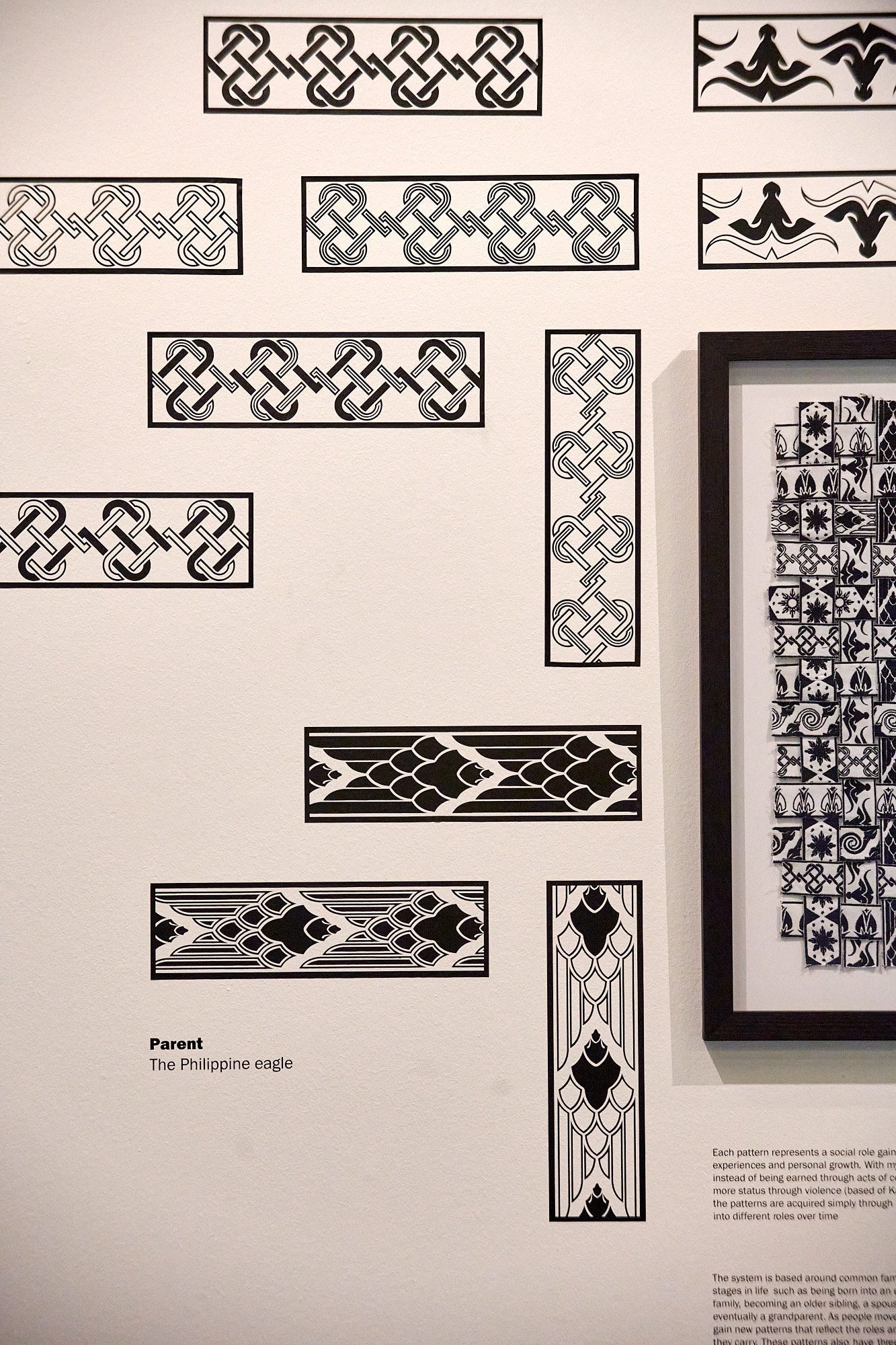
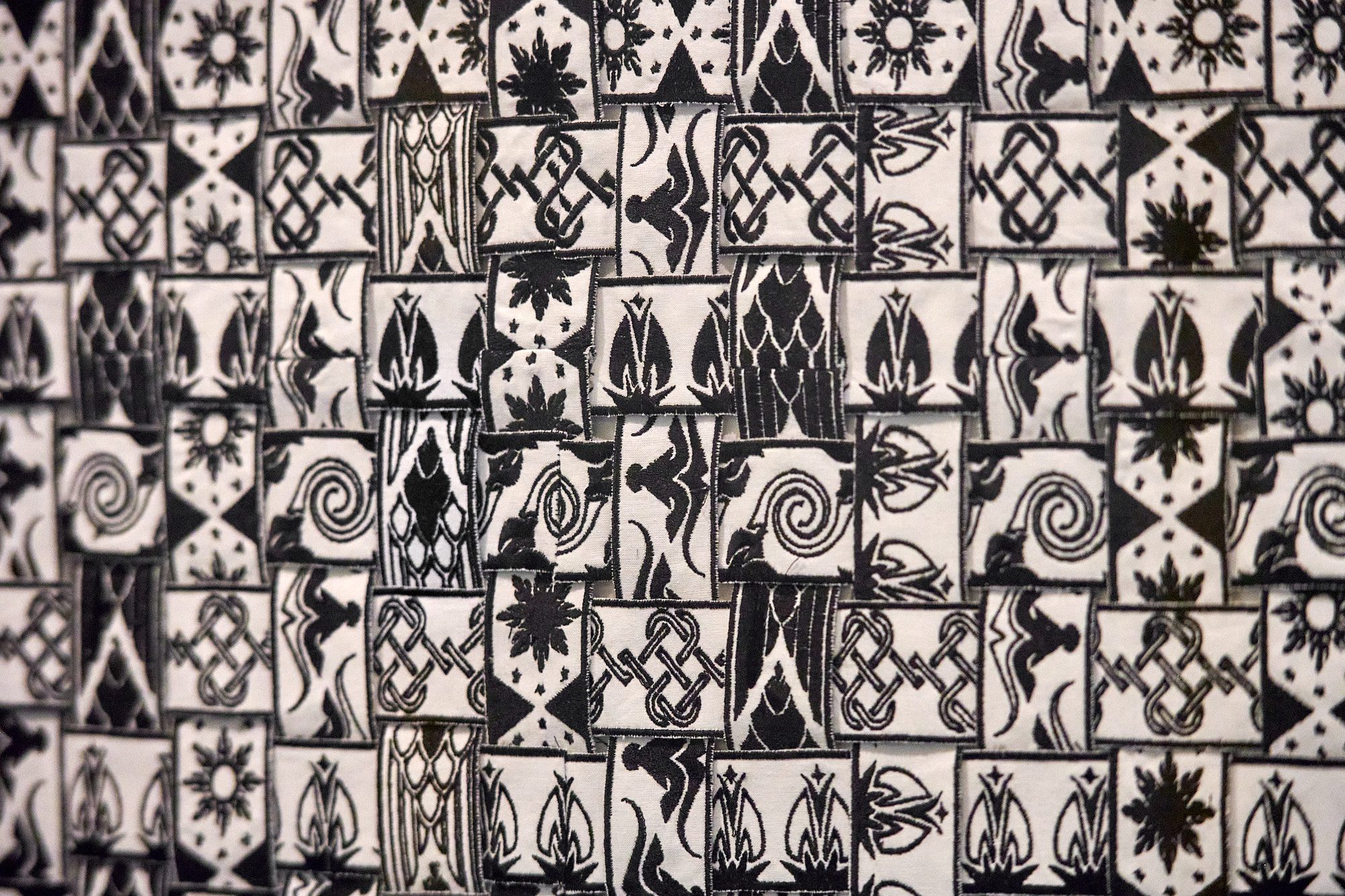
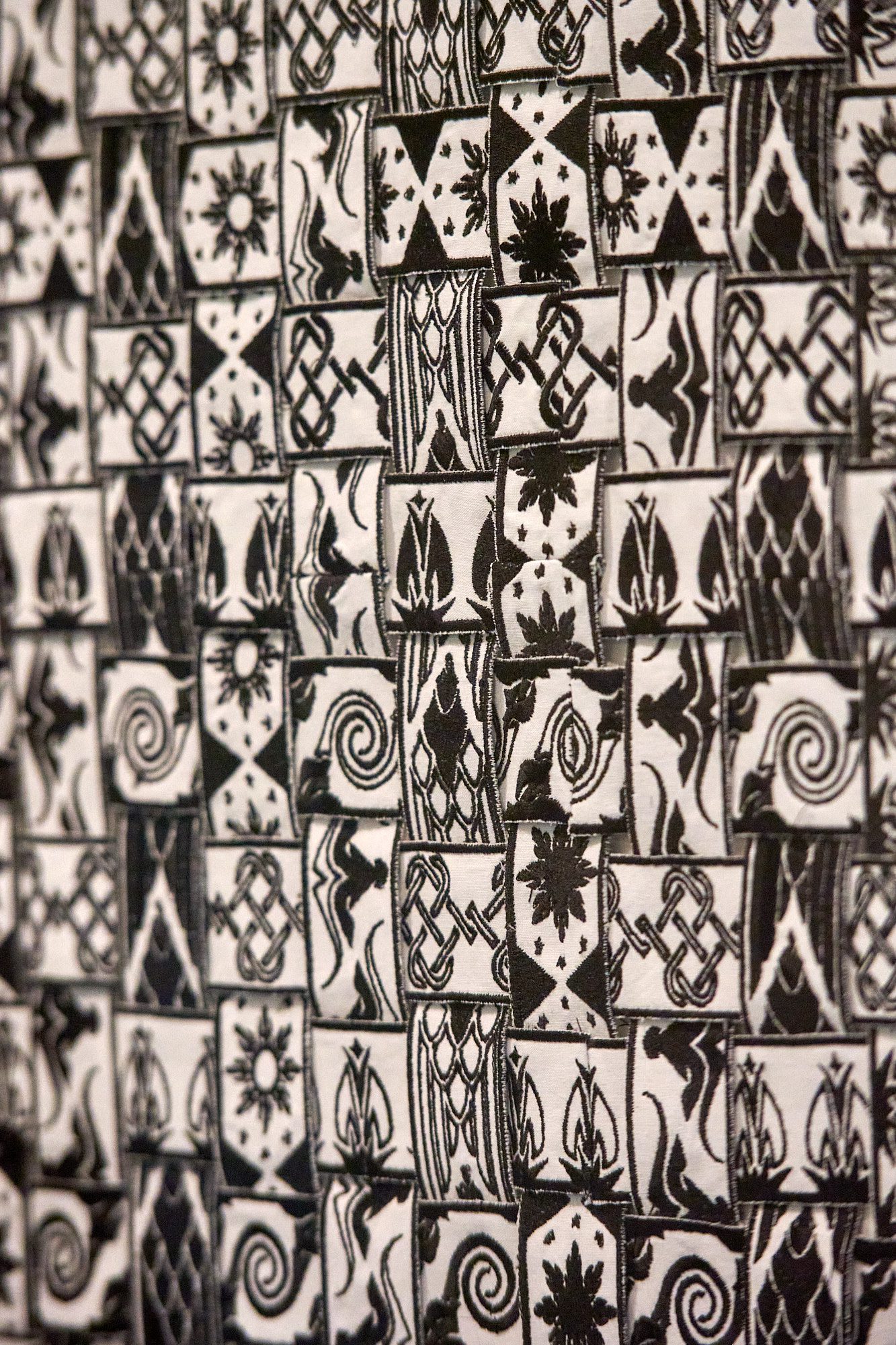
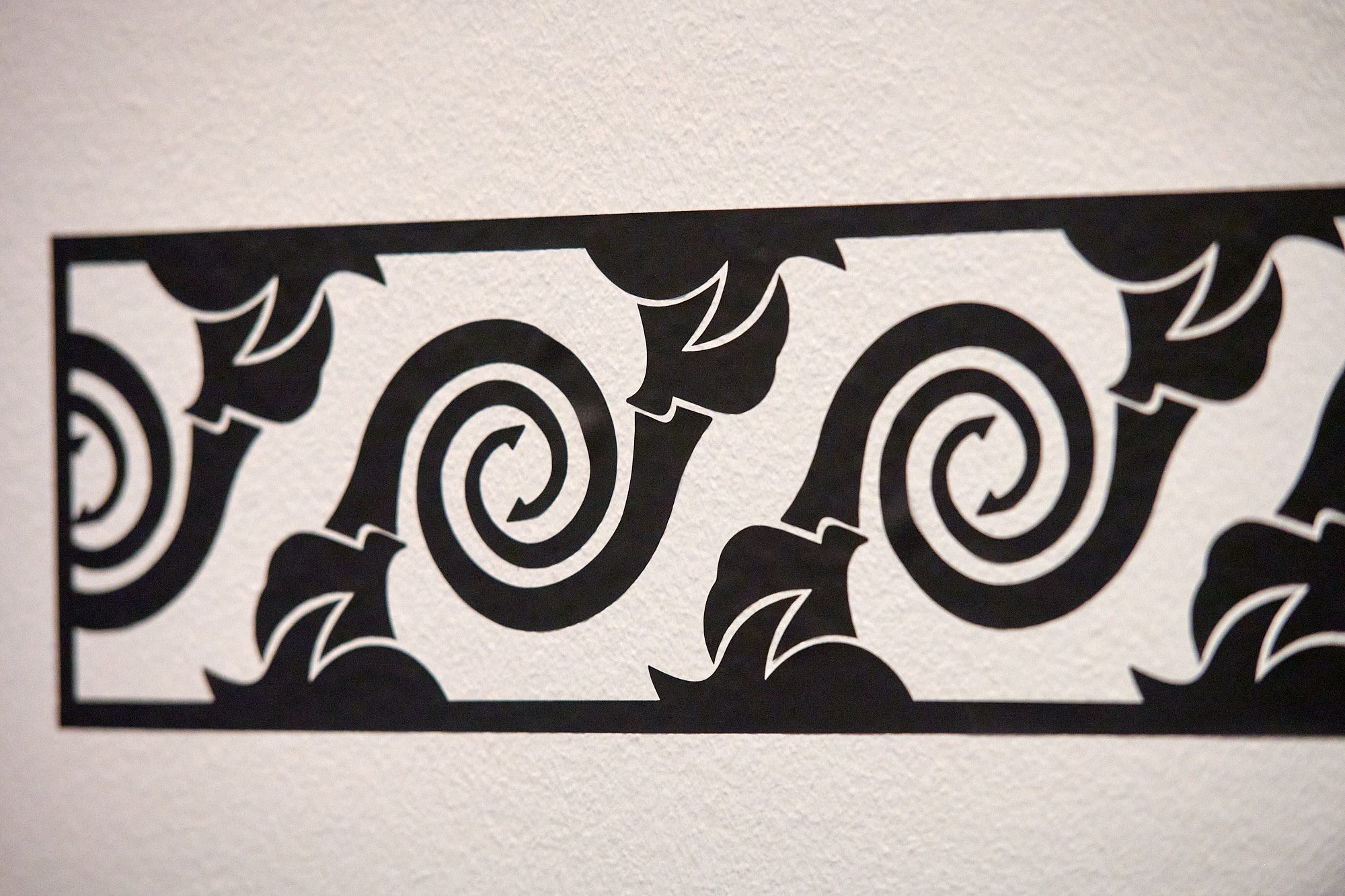
Þetta verkefni hverfist um sjónrænt kerfi sem sækir innblástur í Kalinga-húðflúrhefð Filippseyja. Kerfið gerir grein fyrir sjálfsmynd einstaklinga í gegnum mynstur sem tákna þjóðfélagsstöðu og persónulega sögu í gegnum ýmis hlutverk: þjóðerni, afkomendur, systkini, maka, foreldra og forfeður. Hver þáttur hefur sín eigin tákn sem eru saumuð út og að lokum ofin saman til að búa til refil fjölskyldunnar eða ættbálksins. Refillinn táknar þannig ættbogann og sjálfsmynd sem er sífellt í mótun.
This project revolves around a visual system that is inspired by the Kalinga tattoos from the Philippines. This system helps portray identity through patterns, representing status, personal history, and stages of social family based social roles: ethnicity, descendant, older sibling, spouse, parent and grandparent. Each stage has its own design for a symbolic pattern. These designs are then embroidered into strips of fabric which are then woven together to create a tribal tapestry. The tapestry represents the identity of those who are included in it and it also presents identity being an evolving process.
Myndir: Claudio Parada Nunes
John Berniel Gavilo Quirona
Tribal Tapestry
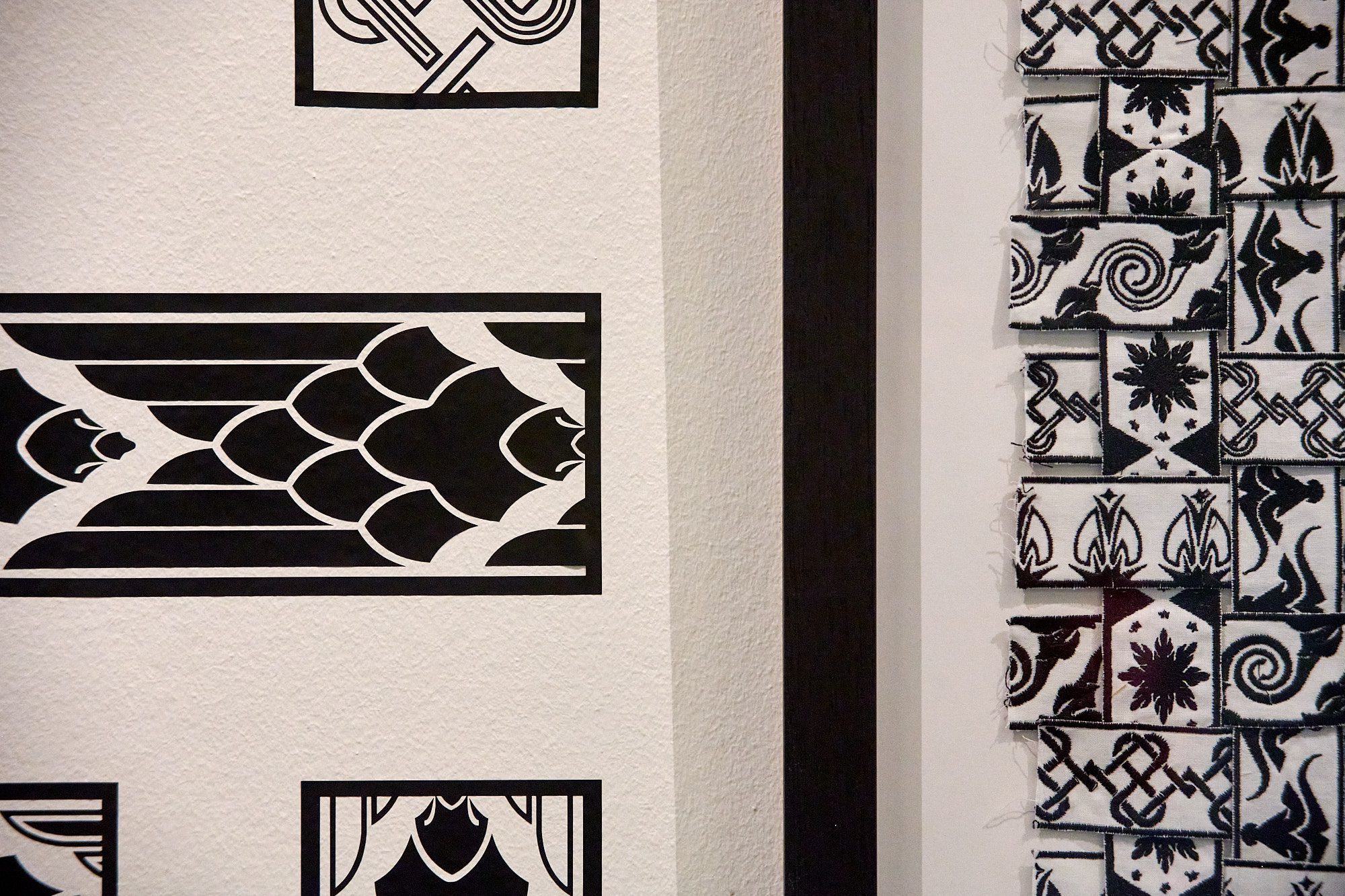
Verkið í myndum.