


Automatic translation by Google Translate.We cannot guarantee that it is accurate.
Skoða vefinn á ÍslenskuNew Audiences and Innovative Practice – NAIP M.Mus
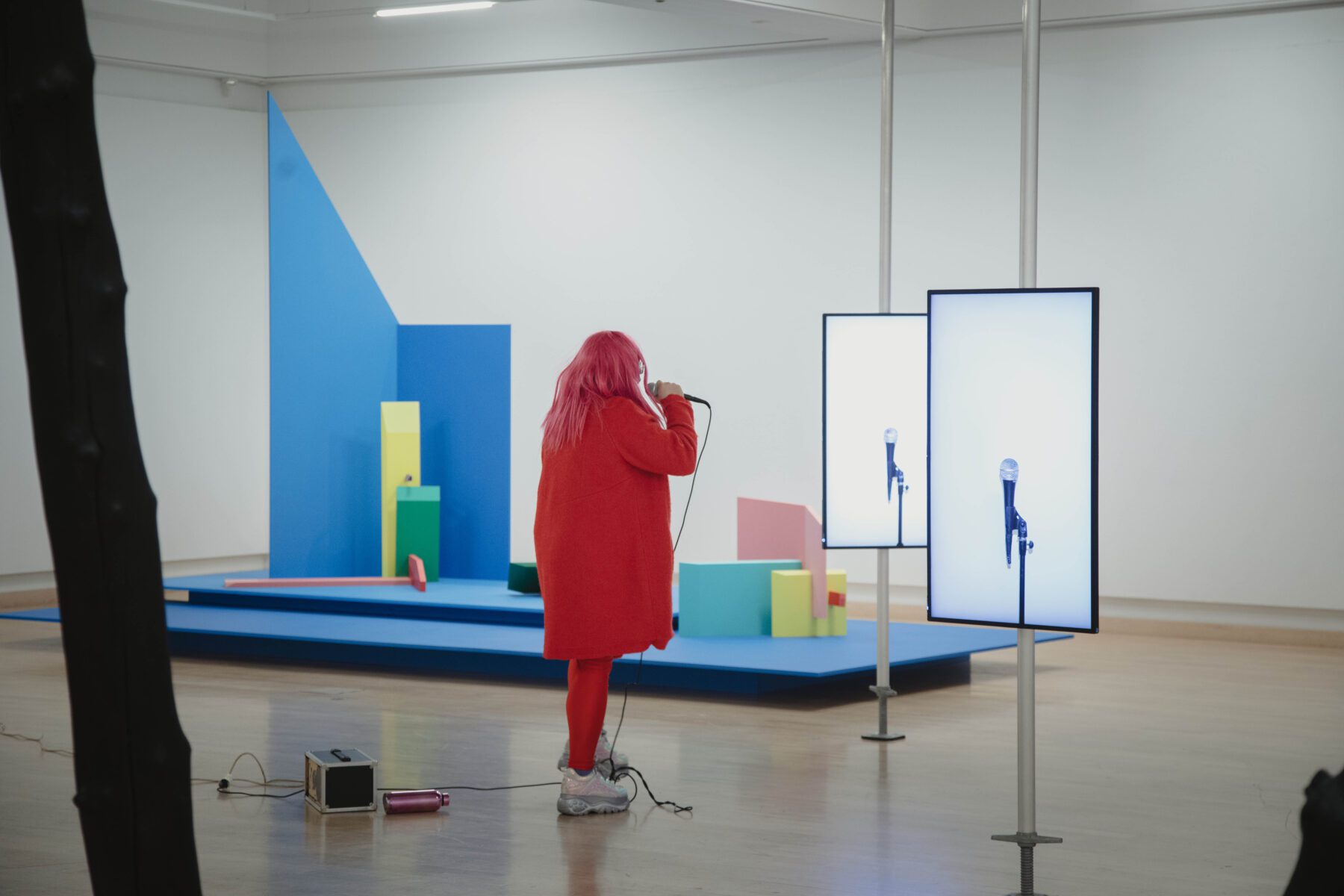

The program is suitable for musicians with diverse backgrounds. NAIP is a forum where students are encouraged to use innovative and interdisciplinary approaches to creating and communicating music to the audience as well as to society as a whole.
Upplýsingar um nám eru á ensku hjá námsleiðum þar sem kennslutungumál er enska.
Programme information is provided in English, as the language of NAIP is English.
About the programme
The Music Master for New Audiences and Innovative Practice (NAIP) provides future professional musicians with the knowledge and skills to become artistically flexible practitioners able to adjust to a wide range of societal contexts. The programme attracts musicians with diverse artistic background, including all styles and genres. It generates collaboration within different sectors of music and cross-arts settings.
The programme serves students with high-level performance skills and interest in reaching new audiences by learning to develop and lead creative projects in diverse artistic, community and cross-sectoral settings. During the programme, students develop their leadership skills and collaborative practice in a variety of artistic and social contexts. Students will also develop their reflective and research skills while exploring and deepening their own artistic practice.
A student-centred approach gives students an opportunity to choose their field of expertise and develop their study plan accordingly. For instance, students can choose a special focus on Experimental Sound Practice through a variety of courses with a special emphasis on music in the expanded field. Various other optional courses are offered in the programme.
The NAIP approach is to establish a safe and neutral learning environment built on trust, where students form a strong bonded group that allows them to experiment freely through both verbal and non-verbal interaction, improvisation, collaborative composition and various exercises. An important way of working is to exchange knowledge across both students and staff on an equal level, with a strong peer-learning and -reviewing component.
The programme was developed in collaboration with several higher music education institutions in Europe. It offers possibilities for exchange according to the students need and field of practice. The Music Master for New Audiences and Innovative Practice has received funding from the Erasmus+ Programme for its development.
Programme director
Sigurður Halldórsson
Study structure
NAIP is a two-year international master’s program (MMus), operated in collaboration with the Royal Conservatoire in The Hague and the Prince Claus Conservatoire in Groningen in the Netherlands (see details http://musicmaster.eu/). Students receive training in artistic practice and research, project management, entrepreneurship, leadership and performance. Collaborative projects across different musical styles, art forms and all kinds of groups in society are undertaken with the aim of approaching new audiences, training leadership skills and developing new platforms for artistic practice in a diverse context.
After graduation
The societal climate of musicians changes rapidly, becoming increasingly diverse, stretching across national and cultural borders. Creative thinking, collaboration and interdisciplinary methods and approaches as well asleadership and communication skills are valuable qualities when working in the field. The program aims to develop the above qualities in students so that they can better work as creative artists on a broad basis for the future.
Note: From fall 2026 tuition fees will apply to applicants from a country outside of EEA, Faroe Islands, Greenland and Switzerland. Further information about tuition fees.
Application Process
Iceland University of the Arts employs a standard electronic application form.
The application process is in two steps, first submit the application and then pay the application fee. Please note: It is possible to save the application while working on it.
Admission Process
The admission procedure for selection will be as follows:
A first round of selection based on the submitted material. Those who qualify are invited to the second round, consisting of a musical presentation by the applicant, and interview. A workshop led by one of the NAIP faculty, where applicants can demonstrate their musical and communication skills, may also be held as a part of the second round. Interviews and workshops will be in English.
If the number of applicants meeting the admission requirements for the study programme falls below the minimum threshold, the programme will not be offered for the upcoming academic year. Applicants will be informed of this decision as soon as possible, and any confirmation fees paid will be refunded.
Opnað fyrir umsóknir
14. janúar 2026
Umsóknarfrestur
2. mars 2026
Umsóknum svarað
Apríl 2026
Verðskrá
Application
An application is not valid until the applicant has submitted the application and paid the application fee. Applicants must submit the following documents:
-
1. Certified copy of degree certificate(s) and programme / course transcript(s) (PDF)
SkyldaApplicants should submit a detailed record of higher education up to the present, including programmes of study taken. Can be submitted in Icelandic or English. -
2. Statements (PDF)
Skyldaa. Motivation LetterApplicants must write a Motivation Letter in English (max 3 A4) making clear their motivation for joining the programme. Please elaborate on the following points:-
the applicant’s musical experiences to date and how these have led to the decision to join the programme,
-
the skills the applicant will bring to the course,
-
what the applicant imagines his/her contribution will be to the course,
-
how the applicant’s life as a professional musician might look like in five years’ time, and the role the programme will play in reaching this goal.
b. Study plan
Based on the applicant’s personal goals as an artist and the information that he/she has obtained about the NAIP Master, a study plan must be submitted in English (max. 3 A4), including information on:-
the main focus of the applicant’s activities in the programme (ensemble, creative/collaborative practice, cross-arts settings, social settings etc.),
-
which optional courses or subjects the applicant plans to take during the programme, and why,
-
on which developmental aspects the applicant specifically would like to receive coaching and guiding,
-
in which direction the applicant envisages his/her final project.
-
-
3. Curriculum Vitae (PDF)
SkyldaApplicants must submit a CV that should be written in English. It should not exceed 2 pages:-
page 1 contains the usual most important facts on the applicant: name, profile, studies, work experience etc.,
-
page 2 describes the activities the applicant has undertaken in his/her life (musical as well as non-musical) which are in some way connected to the goals of the programme NAIP.
-
-
4. Recorded material, audio and/or video (links to Dropbox, Youtube, Vimeo etc.)
SkyldaApplicants submit material containing his/her own work, enabling the admission committee to judge the applicant’s capabilities as a musician.The recording(s) should at least contain music making at the applicant’s highest artistic level on the applicant’s main instrument(s) (or, for composers, a registration of recent original work). The recording may also contain other musical activities, such as workshop leading, ensemble work etc. -
Admission Requirements
Applicants will have completed a BA or BMus degree in music or related fields of art and theory.In exceptional cases an applicant, with an established career and considerable experience, who does not hold a bachelor degree can be admitted to the programme providing he/she demonstrates broad knowledge of music, musical skills and experience in music performance – or a hybrid form of artistic performance built on a strong musical foundation. -
Language Requirements
The MMus programme for New Audiences and Innovative Practice is an international programme conducted in English. Students must be proficient in spoken and written English in the academic context. Applicants may be required to submit evidence of English proficiency.