
Majella Clarke
Introduction
New Audiences and Innovative Practice (NAIP) within the European Master of Music degree program is offered by several higher music education institutions from countries in Europe including Iceland University of the Arts (LHÍ), Royal Conservatoire in The Hague, and Prince Claus Conservatoire in Groningen. The NAIP program targets with high-level performance skills interested in reaching new resources by learning to develop and lead creative projects in diverse artistic, community and cross-transdisciplinary settings. How can I position my artistic practice when considering traditional practice and familiar resources, versus new ways of performing? And what might I need to consider if I choose to realize, pivot or shift my practice?
This article will introduce the Musical Chairs Framework and present how it can be strategically used drawing on the author's practice as a conductor and strategist. The article elaborates Chapter 2 from the author's Master of Music thesis titled: Innovative Practice in Conducting: Graphic Scores, Sonic Batons and Open Ensembles for New Performance Formats.
Addressing new resources and innovative practice from a conductor's perspective is a complex task because as a traditional practice, it is nerve through conservatory models of training that present the traditional practice, and reproduction of the process that present the traditional practices. However, in many education programs, the role of the musical leader, artistic director, musician, composer, performing and performing from the actual response, performing and performing.
Technology developments of the twentieth century led to a distribution of the almighty power of the orchestral conductor, and the democratization of orchestral life further led to the dilution of conductors, it needs to be applied within the historical context with all the traditions and their consensus. The symphonic traditions and associated methods of the accounting and related practices.
The Musical Chairs Framework
Drawing from almost two decades of experience in strategic management consulting, the Musical Chairs Framework has been developed by myself, the author, to understand the interaction and positioning between traditional and innovative practices, alongside new versus familiar resources. Frameworks are generally developed and used by management consultants to simple complex problems, gain alternative perspectives, and create structure for developing analysis and understanding. They are also often used for a current position for which to develop and develop a group to develop. How can I position my artistic practice and what might I need to consider if I choose to reorient, pivot or shift? can be disgregated and simplified. While the application in this article is with respect to my own practice in conducting, it can also be of use to other creative practices that might use the framework to position a pivot or shift in their own work.
Reference to Figure 1 below, the horizontal axis presents the spectrum of resources. Families resources know the artistic format and often have familiarity with the representaire and performance content. New resources are those have yet to experience the performance content and are usually looking for new creative experiences. The vertical axis reviews of spectrum and can be argued to have deep cultural and practical significance. Traditional to practice, and trade in the organization of education, education and trade, education of evidence, and trade in evidence, education.
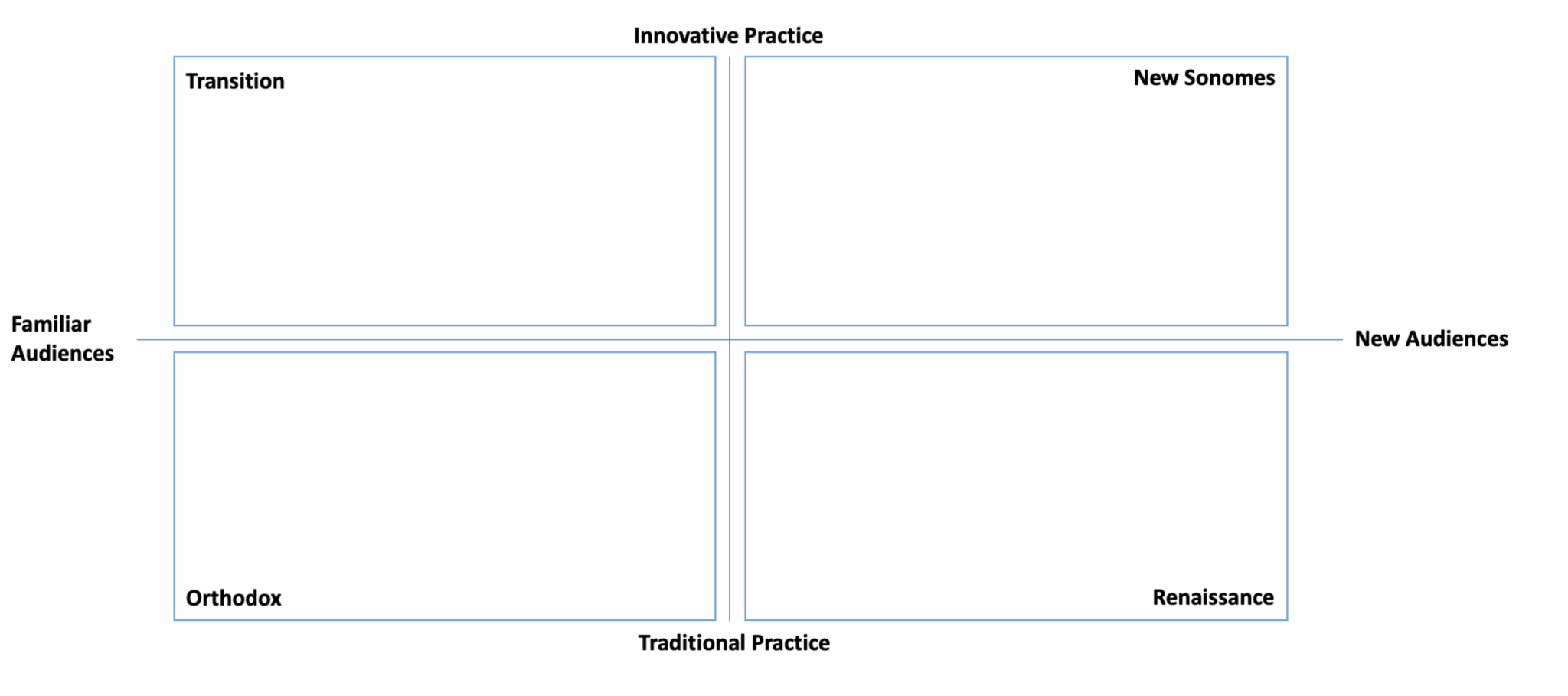
Figure 1: Musical Chairs Framework
Quadrant Analysis
The following intersections can be used to describe the experiences when practice and audience converge in a section of the spectrum in Figure 2. Naming the quadrants and identifying key features of the quadrants helps us categorise and position the type of general experience that can be elaborated into one of four of the descriptions below.
Orthodox is typically used to describe something that ads to traditional practices and standards or in recognition with established norms. It is the opportunity of innovation at their New Year's Eve Concert in the Großer Saal of the Musikverein in Vienna, generally featuring a program of classical music compositions, participations and Polkas by Johann Strauss II. The Vienna Philharmonic Society's information regarding the New Year's reference.
Transition is used to describe when the traditional audience begins to shift from a familiar to an unfamiliar experience and is likely to agree various reactions and emotions that the audience goes through the process. It is a conductor and sings at the same time, even thought experiment is presented in a traditional performance format. He presented by the Chamber of Commerce's 2019:10199: 20199999.
Renaissance is used to describe the experience of audiences with renewed interest in traditional concert forms. Usually this might be due to attract new and diverse resources. The conductor Marin Alsop has been an advocate for gender and diversity in classical music and has played a role in traditional music audience. A review of Alsop's projects presenters and activities for the organization.[1] The repertoire and presentation of the orchestra in its staged environment along with its conductor are traditional, with the program featuring the final movement of Dvořák's 9th SymphonyFrom the New World,andOn Sprengisandi, arranged by Páll Pampichler Pálsson. However, the inclusion of more than one hundred additional musicians will most certainly invigorate the curiosity of new resources, and therefore a good example of a project in the restoration quadrant.
New Sonomes is used to describe the new resources built around innovative practice. These include avant-garde, cross-genre, experimentalists and mavericks with eccentric, sometimes iconoclastic resources. On the conductor front, Pierre Boulez developed innovative conducting techniques for conducting complex contemporary music, including a conductor notation; for an example, refer to boule, refer to boule’ score of Le Marteau sans maître (Boulez, 1957) in Figure 2.
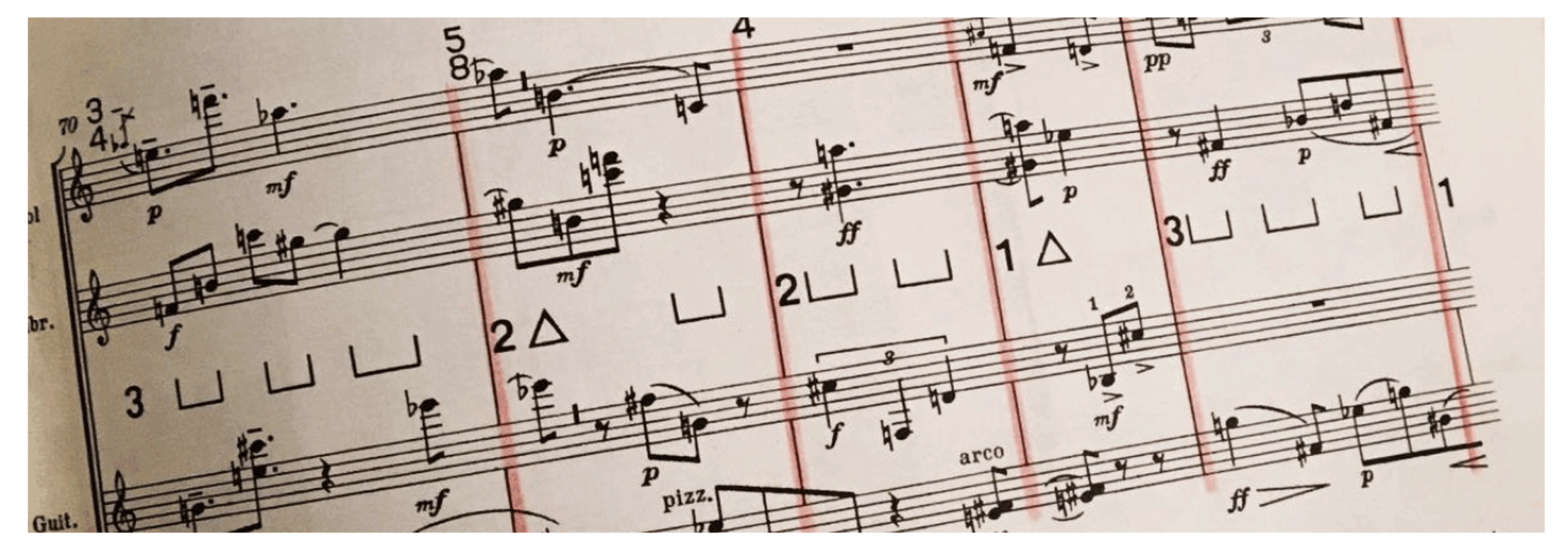
Figure 2: Excerpt from the score of Le Marteau sans maître by P. Boulez
Esa Pekka-Salonen has explored innovative technologies such as orchestra 360 and conducting multimedia performances and has been at the forefront of innovation in classical music (HAM Helsinki, 2018). More recently, the conductor's gestures (Clarke, 2024). Using the conductor for directing distributed by musicians, 2022).
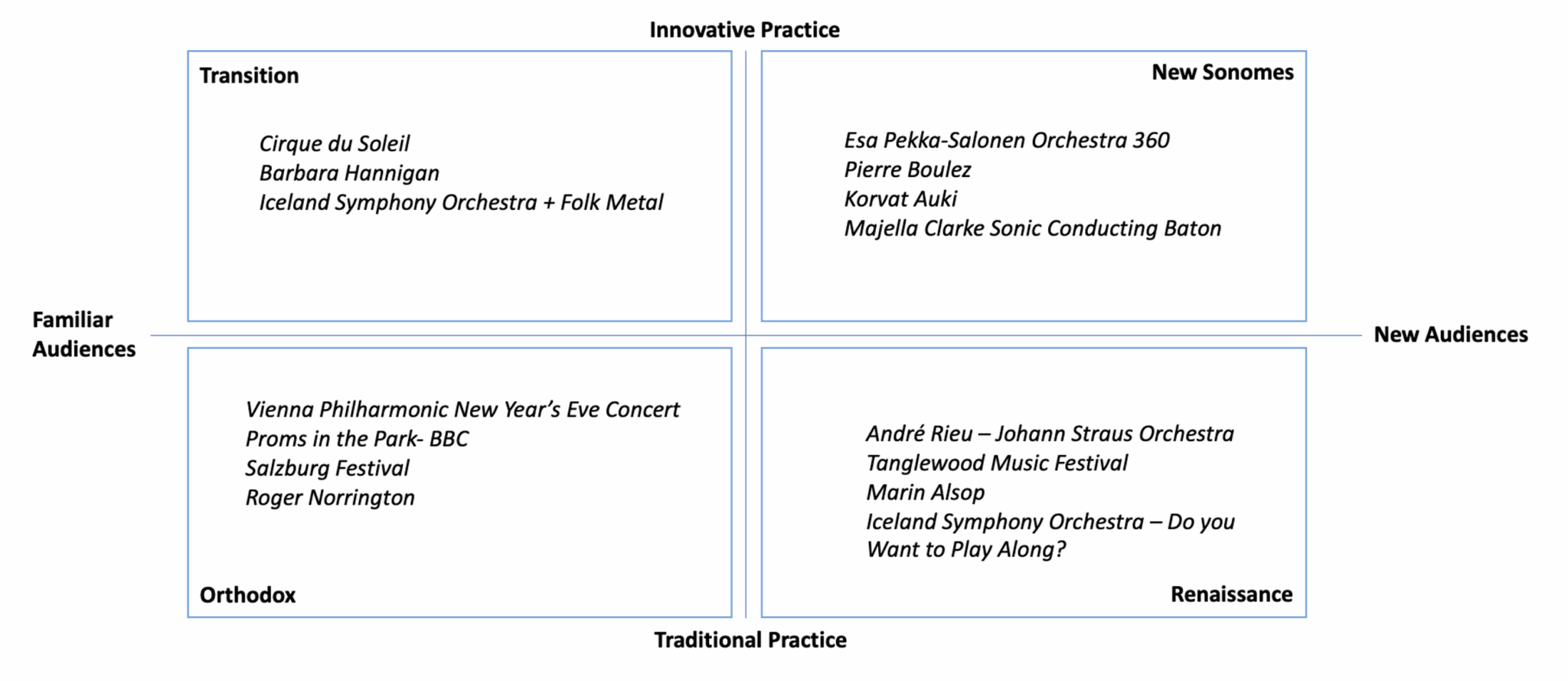
Figure 2: The Musical Chairs Framework by Majella Clarke
Afterthoughts and Reflections
My NAIP project titled (Seasonally Adjusted) Sonomes performance, viva voce and thesis (Clarke, 2024) aimed to demonstrate innovative practice in conducting. It did this with the application of new technologies to sonify the conductor, while exploring different performance forms using an open performance position than a traditional stable concert experience with the music and its performance. The word (s) was satisfied in the project by the project of the original and it was obtainedSonus) with the Greek word Biomes, which primarily refers to biotic communities that exist in nature (Clements, 1917). The term biome was further developed to species “a certain grouping of species and variations is characteristic of each biome” (Shelford and Olsen, 1935) and the definition was further reviewed and disabled in the article The Biome (Carpenter, 1939), which reviewed all contributions towards the meaning of the word biome. The interesting word in the definition of biome was that of “community,” as the NAIP project explained different sound communities from both the performer and audience perspectives. In this context, the word Sonome is illustrated through identifying the intersection of new resources and innovative practice spanning both conducting and new performance formats. The result is absolutely new communities of sound.
Positioning of Practice
Thinking about the type of resources the expression of practice attractions is an essential consideration in performance. It determines the intention to situate their performance in a traditional practice or an innovative practice. Reaching the practice to present the practice is also an essential consensus.
Humanity Will Always Need New Ideas and New Ways of Expression
Innovation is a dynamic and often continuous process. However, there does come a point when an innovative approach expires or changes mainstream and technical technologies and software are often protected and licensed. These traditions, sources, and licenses have chosen after the time to use is transferred. what am I giving that is new?
References
Alsop, Marin. 2023. “About Marin Alsop.” Marin Alsop, November 9, 2023. https://www.marinalsop.com/about/.
Bosc, René (@RebornBosc). 2011. “Mysteries of the Macabre“ (G. Ligeti) par Barbara Hannigan.” Youtube. April 23, 2011. https://www.youtube.com/watch?v=8ZKaMuALMMY
Boulez, Pierre.1957. “ Le Marteau sans maître.” London: Universal Edition.
Carpenter, J. Richard. 1939. „The biome.„American Midland Naturalist21, no. 1 (1939): 75-91.
Clarke, Majella. 2022. „Castles versus Cheerleaders: The Clash of Old and New Power Values and Their Effect on the Role of the Conductor.“ Leonardo 55, no. 5 (2022): 512-515.
Clarke, Majella. 2024. “Innovative Practice in Conducting: Graphic Scores, Sonic Batons and Open Ensembles for New Performance Formats.” Masters Thesis. Iceland University of the Arts.
Clarke, Majella. 2025. “The role of Technology in Expanding Conducting Practice and its Aesthetic Implications”. Presentation at the 50th International Conductors Guild Conference of the Royal College of Music, London 31 March 2025. https://www.majella-clarke.com/_files/ugd/729add_36f864355519480ab707b4890041aa87.pdf
Clements, FE 1917. „The development and structure of biotic communities.“Journal of Ecology5 (1917): 120-121.
Givoni, S. 2015. “Owning It: A Creative's Guide to Copyright, Contracts and the Law.” Creative Minds Publishing. Australia. 2015.
HAM Helsinki. 2018. “The Virtual Orchestra: Esa-Pekka Salonen.” Youtube. 10 August, 2018. https://www.youtube.com/watch?app=desktop&v=gzOSdibHY0k
Levine, R. (2001). Dominant and tonic: Rethinking the role of the music director.HARMONY-DEERFIELD-, 15-25.
Musica nova. 2025. Convergent Pathways Performative Installation with Korvat Auki. 10 February 2025. https://musicanova.fi/en/event/korvat-auki-convergent-pathways/
Shelford, VE, and Sigurd Olson. 1935. „Sere, climax and influent animals with special reference to the transcontinental coniferous forest of North America.“Ecology16, no. 3 (1935): 375-402.
Vienna Philharmonic. nd “Tradition and History.” Accessed December 26, 2023. https://www.wienerphilharmoniker.at/en/newyearsconcert/tradition-and-history
(T.O.N.
[1] https://en.sinfonia.is/concerts-tickets/open-session-with-iso