School of All Arts
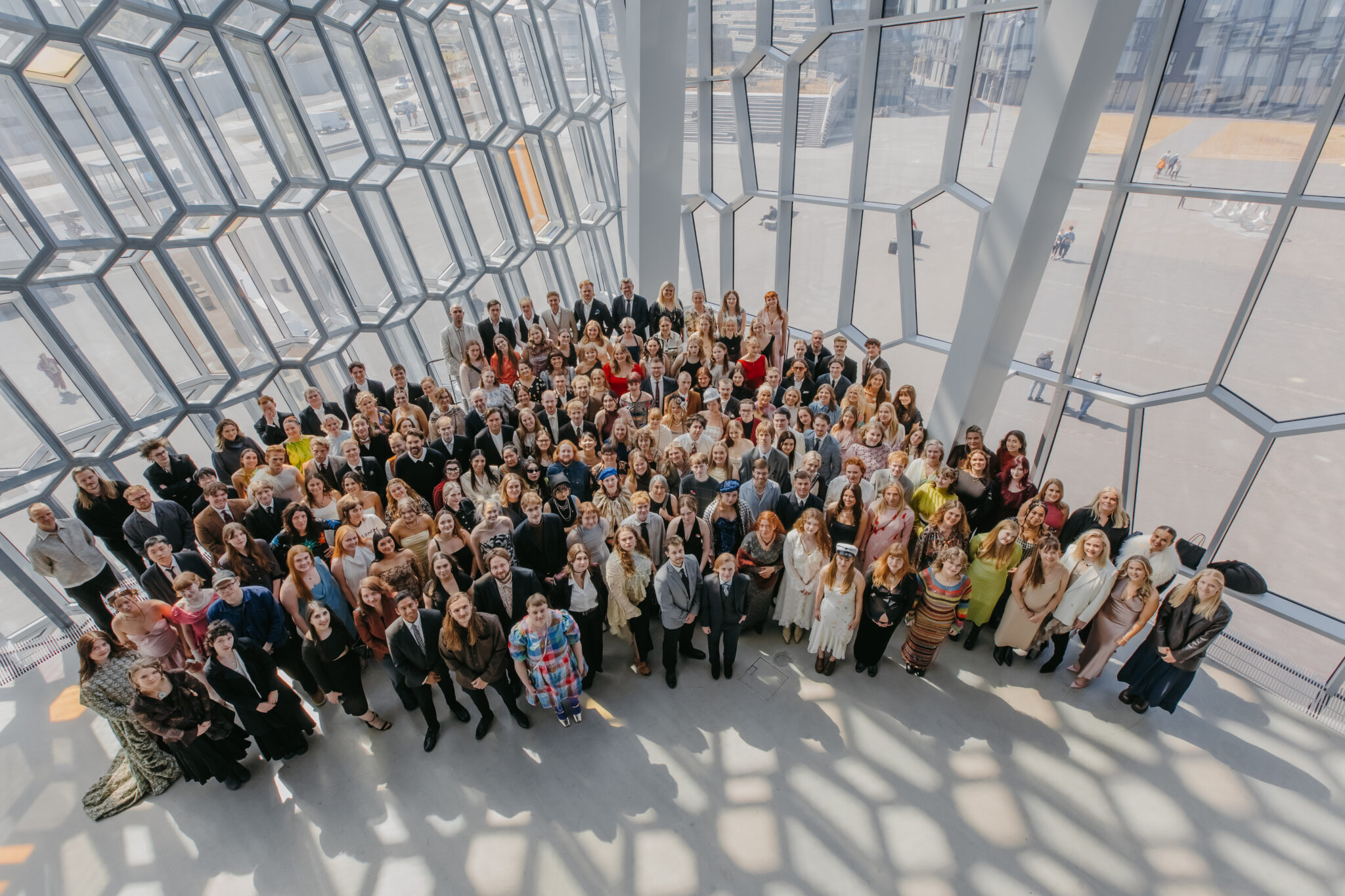
Graduation group of the University of the Arts spring 2025
Photo: Eygló Gísladóttir
Strategic planning
The College of Arts sees it as its mission to promote progressive thinking in the arts and culture and to stimulate all forms of innovation and development in all fields The school provides art education at the university level and communicates to the community knowledge and professionalism in the arts.
The school is a community of students, academics, teachers and other staff whose equality and respect prevail in all relations It operates in an international environment and targets those schools in neighboring countries that are considered to excel in artistic matters.
Policy of the Iceland University of the Arts 2024-2028
Rector
Kristín Eysteinsdóttir is the rector of the Iceland University of the Arts.
Kristín Eysteinsdóttir completed a master's degree in directing from Goldsmiths, University of London in 2007, but before that she had completed a BA in dramaturgy from Aarhus University in 2002. Kristín has directed about 20 performances in professional theaters and was a permanent director at the City Theater from 2008 - 2014. In 2008, she was chosen director of the year at Grímunn for the show Sá ljóti and was also nominated for the same award in 2010, 2012 and 2013. Kristín has also directed at the Radio Theater and worked as a dramaturg at numerous shows and has held numerous positions of responsibility with board seats and chairmanships of various boards and committees related to drama, education and publishing.
Kristín was appointed theater director of the City Theater in 2014 and held that position until 2020. Under her direction, the City Theater achieved remarkable results both artistically and operationally, attendance records for the theater were broken, and the theater won the Grímuna, the Icelandic Performing Arts Award, for the show of the year all the years she was theater director. She recently finished her first short film and has been preparing her first feature film in the past two years, which is well on its way to development. Kristín worked as a professor and professional director at the performing arts department of the Iceland University of the Arts in the school year 2022-2023.
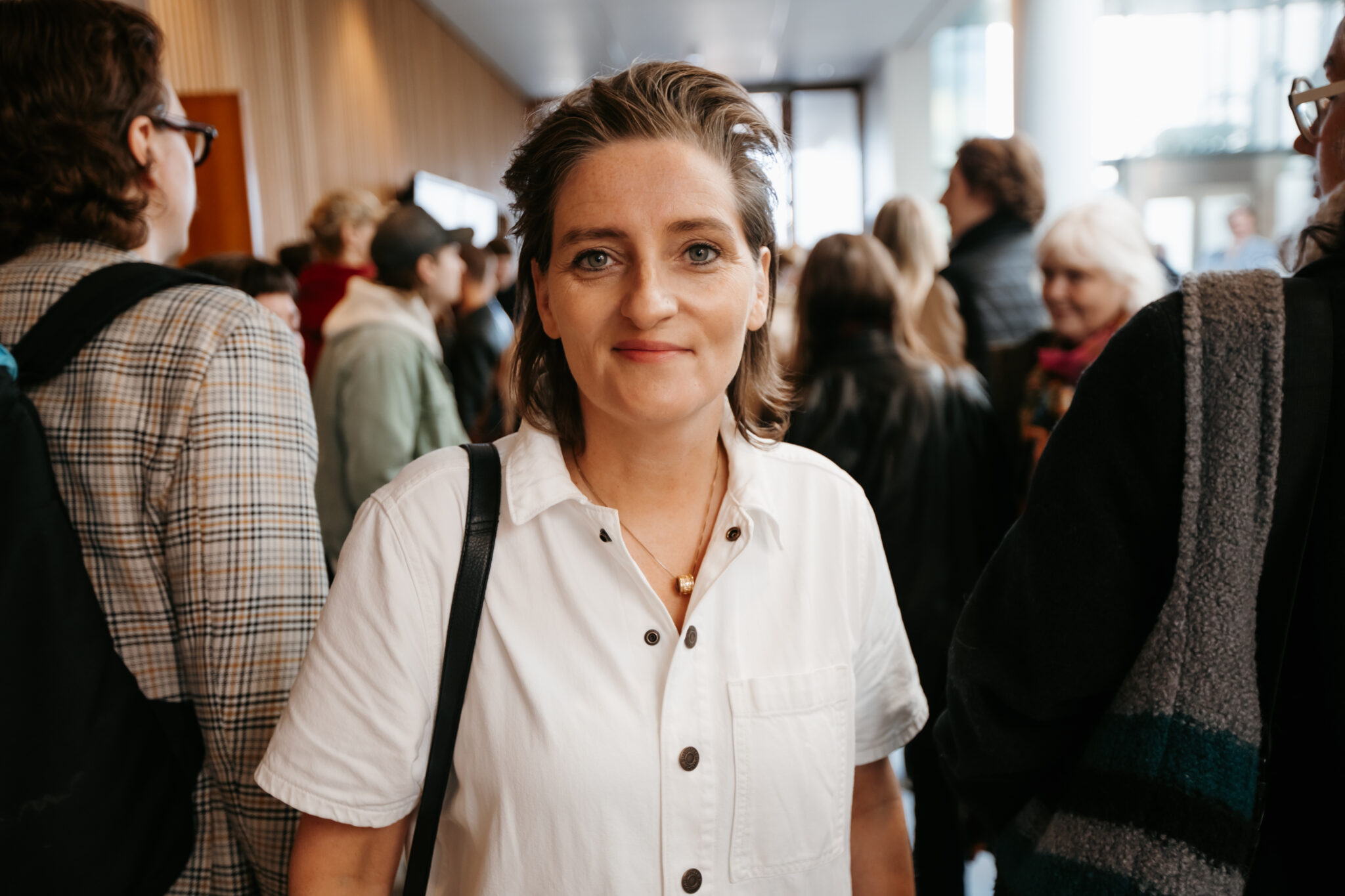
Kristín Eysteinsdóttir rector on LHÍ's freshman days 2024
Photo: Eygló Gísladóttir
History summary
The Iceland University of the Arts is a non-profit organization At the founding meeting on Sept. 21, 1998, a charter was established for the school, which was signed by representatives of the Association of Icelandic Artists and the Minister of Education. The Minister of Justice confirmed the charter on Sept. 29 of the same year. According to the charter, the role of the University of the Arts is to carry out higher education in the field of arts. The school must also work to promote art education with the nation and to communicate education about arts and culture to the public.
On March 24, 1999, the school and the Minister of Education signed a statement that included how the development of the education would be carried out.
The University of the Arts received a license on June 10, 1999, and in the fall began its activities with the operation of the art department.
The development of the Iceland University of the Arts has been rapid since its operation began in 1999. in accordance with the statement of March 24, 1999, the school began teaching drama in the fall of 2000 and in music in 2001. The school then started operating an independent design department in 2001, and a year later, programs in architecture, product design and fashion design were introduced.
The study of pedagogy for artists was appointed an independent place within the school starting in the fall of 2001, and teaching at the master's level began in 2009.
New study programs within the drama department started working in the fall of 2005, namely a one-year dance program in collaboration with the Icelandic Dance Group and a three-year program in contemporary drama activities called „science and practice“ A course in contemporary dance was established within the drama department in 2007. the name of the department was changed to the performing arts department in the fall of 2014, and the name of the study program „science and practice“ was changed to a stage writer's program.
Within the department of music, classes were started on two new study programs in 2008, a course in church music for a bachelor's degree and a course in master's level composition. A year later, a new master's level course within the department began to work, Creation of Mediation and Entrepreneurship, which is a pan-European program of five music universities in Europe (NAIP). In the fall of 2012, two new courses at master's level, an MA in design and an MA in art. Studies on the vocal and instrumental teacher training course began in the fall of 2013, studies on the master's level singing and instrument teacher training course began in the fall of 2016, and in the fall of 2018, a bachelor's degree course in rhythmic singing and instrument teaching were set up.
Along with the development of departments, the support areas have developed in their own way, including a library and information service for all arts and computer and online services. Research services were established at the school in 2007.
Questions about the school itself?
General inquiries about activities, school policy, cooperation or visits are best received by email at the rector's office or main switchboard.