
Þórhallur Magnússon
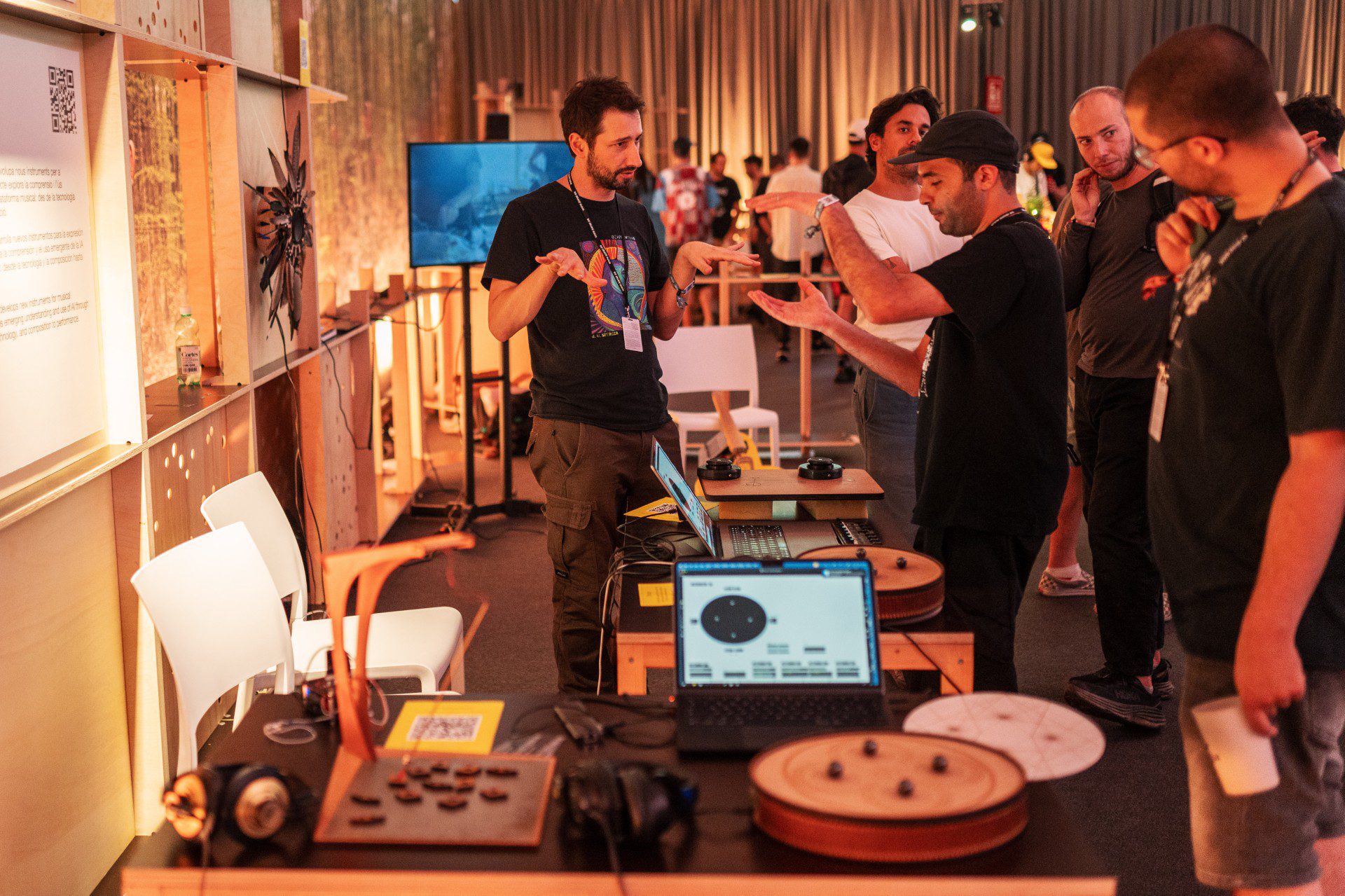 Figure 1: ii lab to present instruments at the Sonar festival in Barcelona in 2024.
The Intelligent Instruments project received funding from the European Research Council in 2020. The project investigates the impact of artificial intelligence on the music of the future and the importance of musicians themselves controlling how their relationship with artificial intelligence was defined and implemented. The goal of the project is to develop instruments with artificial intelligence that learn from the data of composers and the behavior of performers, instruments that develop and develop and often react in an unexpected way. This includes newness where the instruments learn about performers, develop with them and form a conversation that would be exciting from a musical and philosophical point of view. When the research application was written, there was little artificial intelligence in music in general, outside the laboratories of the universities and a few companies, but it was clear that a revolution was in the near future when artificial neural networks were put into use in the production of artistic material. One of the project was to conduct a discourse analysis of people' reactions when the bone of technology begins to have a significant impact on music practice and thereby shed light on this side of technology.
Since then, a lot of milk has slipped from Auðhumla's teats In the fall of 2021, Open AI put ChatGPT online, to the great acclaim of people around the world Here was an AI that could finally think like a human being - or so it looked at firstSometime earlier, Open AI had released a Jukebox that could convincingly imitate the music of well-known artists, although the sound quality was rather bad All of these were exciting experiments that, to be honest, surprised by experts in AI and surprised them by this new improvisational intelligence (e. generative AI) was now serving text, images and sound and it was even said that she had started to “create. Creative artificial intelligence (e. creative AI) has been precisely one of the main challenges of artificial intelligence studies, because if this intelligence were to be called human in any way, it would have to possess the main gift of the human animal: creativity.
In just a few years we have now become accustomed to texts, images and music sliding from linguistic, visual and musical models, and in a quality that it is often difficult to distinguish whether a person or machine is behind the work, such as ChatGPT, Deepseek, Perplexity and other programs in lyric writing, Midjourney, Dall-E in pictures, and Suno, Udio or Stable Audio in music making The companies behind these “ servers” have absorbed people's intellectual property - often through illegal downloading of copyrighted material - and have now fielded a product that produces synthetic material (e. synthetic media), to our advantage or horror either This automatic production of synthetic material has created turmoil within creative industries and it is claimed to cut artists' incomesThe fact is, however, that our late-capitalist system has long since exploited the creative classes, where companies like Spotify or Storytel stream artists' content without paying anything for it and then without the involvement of creative AI The situation is that if luck is included, the author could at most buy a few caramels in a bag for the annual salary, but not many. However, it is not artificial intelligence to blame that this is the case for pricing and the value of art.
The reason for people's anger towards this new artificial material is more metaphysical than economic If we trace the metaphysics of creation back in time, then one could start with Plato who considered creation to be a reproduction of the world of the perfect prototypes His student, Aristotle, brought creation down to earth and focused on art (art. tekhnē, τέχνη) of creation and how it could ennoble people (art. katharsis, κάθαρσις) In the Middle Ages, God was the only creator and human creation was rooted in his creativity In the restoration, the image of the inspired artist was strengthened and then the idea of author and author works was amplified. The information came about with science and theory, and emphasis was placed on originality In romance, the inspired genius took the stage, a kind of prophet with feelings originating from art goddesses or other forces. God died with modernism, and the idea of the subconscious, the hidden and dreams, was created while seeking purity in form and expression. In postmodernism, creation was considered to be basically references to older works, that in language everything was already said, that all verb is retelling, for in the end it is the reader who creates the meaning Today we are in the period of late truth (e). posttruth) where art is synthesis or mixing (e. synthesis) simulations, reality is gone and now creation is seen as the connection between circuits in the brain's wetware Furthermore, it is argued that the AI has a mind and - if not already, then soon - awareness. This is not now a particularly exciting vision, but now it is the case that we do not jump from one knowledge system (e. episteme) to another and forget all that was already there The idea of the inspired artist still exists, that creation is a distinctive feature of human beings in some kind of state of inspiration that has a higher origin. It is therefore a kind of insult to us as the highest animals on earth (see, for example, the anthropocentric theory of Christianity) that a machine can create And people get angry.
“Artificial intelligence does not understand anything and does not know anything”, “artificial intelligence does not have emotion”, and “artificial intelligence is not an active participant in human culture society, people say when they reject her work All these are correct statements. How then can she create something of lighthouse? Isn't this multifaceted sense what is needed if good art is to be made? If the first statement is epistemological, then the next is psychological and the third sociological. It is a complex set of ideas that address whether the artificial intelligence can produce anything other than artificial material. For the models have never tried anything, they have not sensed, they have not felt, never experienced or reflected in the society of others who perceive and understand How can they express any created thing? Here lies the myth engraved: it looks, after our systematic research in the laboratory, that people do not like similes, imitations - therefore do not like artificial material in some part because the millennia of the metaphysics of creation breaks with the production of the artificial material, but mainly because we do not trust the empirical evidence of the music models that is “better than many things that can be heard in the age of the light wake, it is still preferable to the music model.
This is the situation today, in 2025, specifically in May, at the end of the month, We live at an alarming rate, however, in a time of changing technology increasingly characterized by numbness, thought control and rational death The danger of language models like ChatGPT is that we stop being able to think clearly and critically, that our thinking mixes with the artificial thinking of the machine without us realizing it The issue gets complicated when we consider that political forces can influence the thinking of the machine with control and it doesn't look good when the world's most powerful politician bulges out in one and half of people seems to care respect for the truth doesn't seem to be fashionable, but rather to beat around with statements that are not rooted in any reality When reality disappears into synthetic material produced by text, video and sound machines based on statistics (e. token) instead of symbolic thinking, and we dwell in that virtual reality an average of eight screen hours a day, perhaps the desire for real material from the real world disappears and the artificial material begins to suffice Only the future can decide this, that is, if there will be any human future in the future.
But until then, and then in the spirit of resistance and resistance to ultra-capitalist artificial intelligence technology, we at the Intelligent Instruments Lab are developing technology where artificial intelligence serves us artists in what we do, extends our bodies and minds in a personal way and creates anticlimaxes (art. diabolo, whoever throws back, e. devil) which we like to grapple with, chat with, throw at. We find it cheap to reject artificial intelligence in the arts because it upset the idea of the creative genius and rather play with studying how new intelligence becomes part of our devices and thinking in an exciting and rewarding way. Instead automatic artificial intelligence then we develop complicit artificial intelligence. It is the case that in a contemporary posthumanist world, we are tired of the mechanical worldview of modernist science and people seek to connect with the earth, the dying earth, in a new way. Then we ask about spirits in rocks, streams, mushrooms, plants and animals, as well as our connection, influence and violence towards this We reflect ourselves in the bones of nature and now we are starting to enjoy reflecting ourselves as artists in direct tools for the practice of art, whether it is a pen, a brush or a piano Finding the devil in our tools, the instruments, is finding an interlocutor in technology, being able to think outside the mind, or rather that our minds are entangled (e. entanglement) into the mechanics of the instruments We also find how musicians are tiring of the idea of the inspired romantic genius who has complete command of his instrument (after the fascism of the 20th century which now resonates in the world's major powers there is a certain tiredness of “vald”) and instead moves towards instruments that are surprising, are unpredictable, fun, exciting and involve a challenge, much like a new quality in spring Instead of composing works, musicians around the world are increasingly starting to design systems presented as compositions These are nonlinear systems that require conversation and research, and here artificial intelligence is an exciting technique The conversation with the system (whether presented as an instrument, composition, or installation) then becomes a study of the possibilities of expression and thought Namely, this is what Plato realized in the dialogue Kratylos when he started looking at the etymology of the word music (art. mousikḕ, μουσικ TEXTS) that music comes from the kingdom of the goddesses of art (art. moûsai, μοκσα, e. muses) and that mōsthai (μωσθαι), which is the etymology of the art goddesses, actually means study or search. With the new instruments we are looking, studying, μωσθαι.
Human beings are a technical creature This was known by the ancient Greeks long before the invention of writing technology, and that knowledge was stored in myths It was Prometheus who gave us the fire, the technology, and it is the basis for our very existence Our own Prometheus, the giant Loki, Odin's stepbrother, often went beyond the gods' garden (he was avant garde) where he met giants and dwarves, and returned with a technique that was the basis of the gods' success Here we can mention Mjolnir, Thor's hammer; Skidblaðni, Frey's ship; Gungni, Odin's spear; or Sifjar's golden hair.
Music is the technical art, its instruments have been among the most advanced technologies of any historical period, where we connect with devices that extend the potential of the body and mind Our instruments become the tools and the possibilities of our thinking are written into the design of technology. It is therefore exciting to look at how the new technology, artificial intelligence, can extend thinking and actions through physical interfaces and how technology, once again, changes what we call musicification (e. musicking) today. For that we need philosophy - and music is a practical philosophy. Or perhaps rather, as Plato says Phaedros, that philosophy is the highest music.