The riddle music of the Renaissance and the rude

The riddle music of the Renaissance and the rude
Einar Torfi Einarsson
In this short article, there will be a glimpse into the world of the Renaissance and how the riddle culture of that time was reflected in music and especially written music This musical culture gave birth to something I would like to call riddle music here.
Riddle culture during the Renaissance
The Renaissance period was characterized by a renewed interest in human experience, science, art, and ancient knowledge During this time, arts and science flourished, and the cultural landscape of Europe underwent a great deal of change In this spirit of development and renewal, composers began to play with new ideas in their creations, including through the use of puzzles or riddles. Not only was the musical intellectual challenge, but it also reflected a deeper search for knowledge and understanding of the world.
Riot music in the Renaissance was an art form in which the composers created works involving hidden messages or puzzles that had to be solved These compositions, often based on complex compositional techniques and themes, called for deep analysis and insight from both performers and listeners, Using riddles in their compositions, the composers created a world in which the music was not only for recreation or in a specific service role, but also as a way to challenge the mind and seek deeper meaning.
Riddle music provided opportunities to deepen understanding of musical form, compositional methods, the interaction between instruments and voices, and their connection to conceptualization and worldview Performers needed to be sharp and creative in their approach to analyzing and solving the puzzles that could be inherent in the compositions, whether they were latent voices, symbolic use of tones, or complex compositional methods These processes required not only technical skills but also a deeper understanding of musical traditions and historical and social contexts.
Symbols and meanings
The use of symbolic and allegorical elements was a daily occurrence in the riddle music of the Renaissance The composers used symbols that referred to a wider cultural, religious or philosophical context This gave performers and listeners the opportunity to interpret the works in a personal way and to relate to the larger ideas and traditions that were prevalent at this time.
Through this art form, the composers developed a platform for intellectual and emotional exploration or a process intertwined with these elements The riddle, in general, in Renaissance art and culture was thus not only a source of entertainment or intellectual challenge, but also a profound process involving a symbolic journey from darkness to light Riddle as such was therefore also a definite symbol This process of solving the riddle - which could also be compared to a journey from uncertainty and ignorance to enlightenment and understanding - was a fundamental aspect of this approach In this context, the riddle is not only a test or a game, but a platform for the individual to examine and develop their own understanding and wisdom.[1] The starting field, or „darkness“, represents the initial state of uncertainty and confusion in which the meaning behind the riddle or work is obscured This situation calls for reflection, analysis, and deep thought from those trying to find the solution.
As the journey is continued, when the individual uses both reason and intuition to deal with the riddle, the first fragments of the understanding appear and the „light“ gradually becomes more visible This „light“ stands for the enlightenment that deals with revealing hidden meanings and connections within the work, providing not only an understanding of the composition itself but also of the deeper cultural, philosophical and emotional aspects it reflects.
Ultimately, when the riddle is solved and the „light“ is achieved, it becomes not only a sign that the individual has achieved technical or intellectual achievements, but also of personal and spiritual development The riddle's journey from darkness to light thus becomes a symbolic reflection of the human search for understanding and knowledge, a process that reflects not only the growth of the individual but also the collective cultural heritage and world view of the Renaissance.[2]
This process from darkness to light through the riddle and as a process of performing riddle music during the Renaissance gives us insight into how art and culture at this time not only emphasized sensory or aesthetic experience but also into the deeper search for meaning, understanding and enlightenment This is pleasant, and in many ways, at odds with the present where the performance of works relies as much as possible on performance practice so that things go as quickly as possible (but of course there are exceptions to that). It could therefore be said that here the work achieves its purpose if it is understood not at first meeting.
Crux Christi and Miraris Mundum
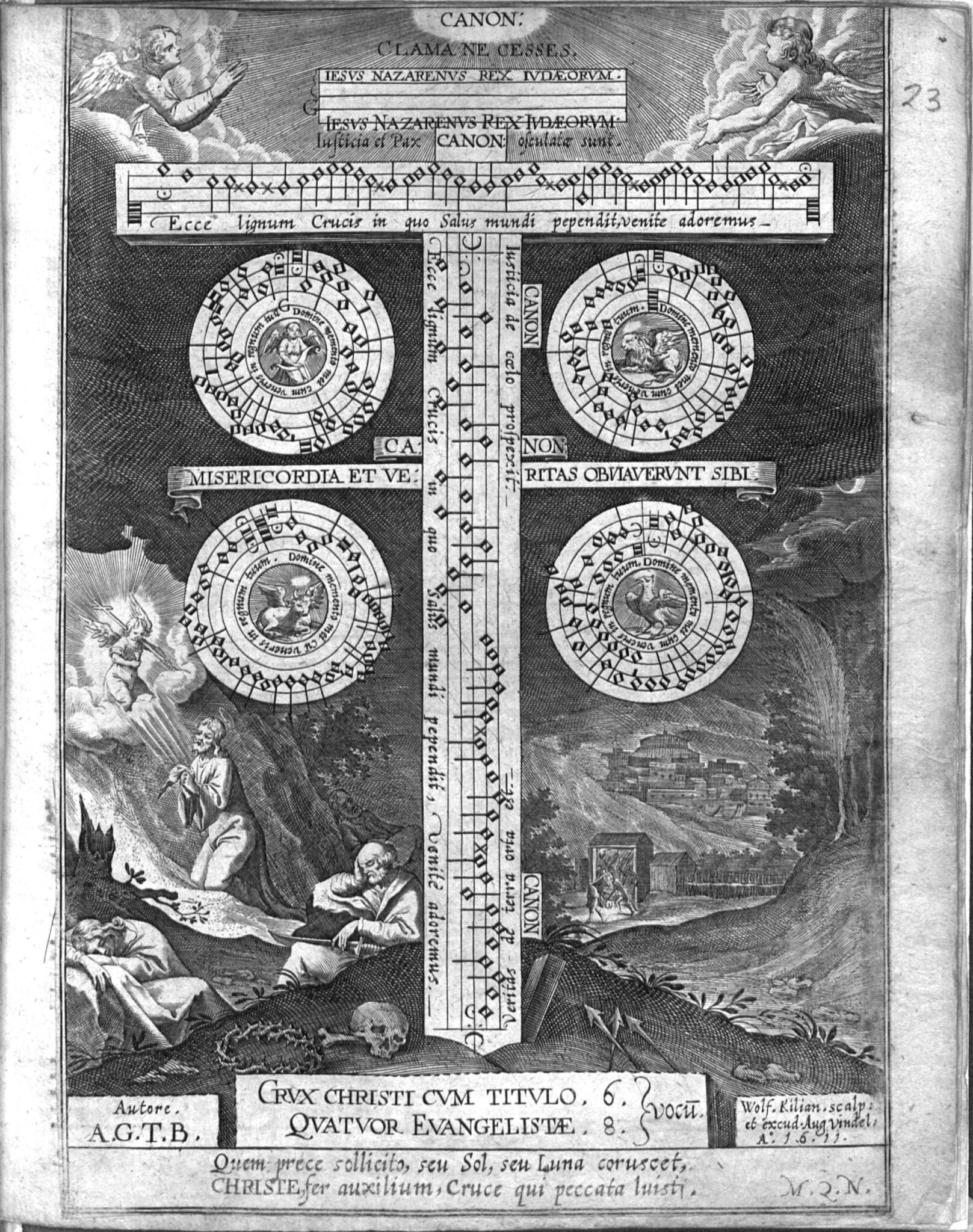
Figure 1: Crux Christi (1595), Adam Gumpelzhaimer
One work that gives us a little insight into this world is Crux Christi (1595) by Adam Gumpelzhaimer (see Figure 1).To solve this riddle music, performers had to understand the complex interplay of lyric canons and the pictorial representation of the music. Crux Christi consisting of music written within four circles and a cross, each carrying an important religious symbolism The four circles represent the evangelists, marked by their traditional symbols: an angel for Matthew, a winged lion for Mark, a winged ox for Luke, and an eagle for John When the music in these circles is combined, it forms an eight-voice composition called the Quatuor evangelistae.[3]
The key to finding these eight voices from four circles lies in the text canon placed between them Gumpelzhaimer uses here verses from a well-known hymn (which Ludwig Senfl had previously chosen for his crosswords and therefore forms a riddle-context): „Misericordia et veritas obviaverunt sibi“ (mercy and truth meet) Performers had to read from this that the music in each circle should be performed both clockwise and counterclockwise, simultaneously, which then doubled four voices into eight This method and presentation also turns to a linear understanding of time: Christ is then represented as the beginning (alpha) and the end (omega).
The music of the cross itself, with inscriptions on its arms, encourages contemplation of Christ's suffering and forms two back-to-back canons The music over the cross is linked to the psalm fragment „Iusticia et Pax oscillatae sunt“ (justice and peace have kissed each other), representing harmony between heaven and earth achieved by the sacrifice of Christ„ This is further highlighted by additional inscriptions “Veritas de terra orta est„ (truth springs from the ground) and “Iusticia de Caelo prospectit" (justice looks down from heaven), which are located in the music in such a way that it creates yet another layered canon.[4] These glyphs therefore make use of the ring form and the cross shape in various symbolic ways.
At the top of the page, on both sides of the title of the cross is the inscription „Iesus Nazarenus Rex Iudaeorum“ (Jesus of Nazareth, King of the Jews), as well as yet another mystery with the instructions„ Clama ne cesses“ (shout incessantly), indicating that the text should be sung incessantly or continuously This adds yet another dimension to the riddle's resolution (and inside the light, the seat of God, is written „Canon“).
To solve this riddle music of Gumpelzhaimers, performers therefore had to deal with these many layers of visual symbols, textual and musical symbols, and combine their understanding of religious context with their ability to interpret and perform complex polyphonic music. Here, there is no voice file coordinate system that clearly indicates which note meets which note at any given time.
Another example of this rich tradition within the Renaissance is a work by an anonymous author (Anon) called Miraris mundum. This six-part work, printed in Prague in 1589 by Georgius Nigrinus, is not only a unique composition but also an intellectual and pictorial puzzle that reflects the deep cultural and philosophical knowledge of the period.
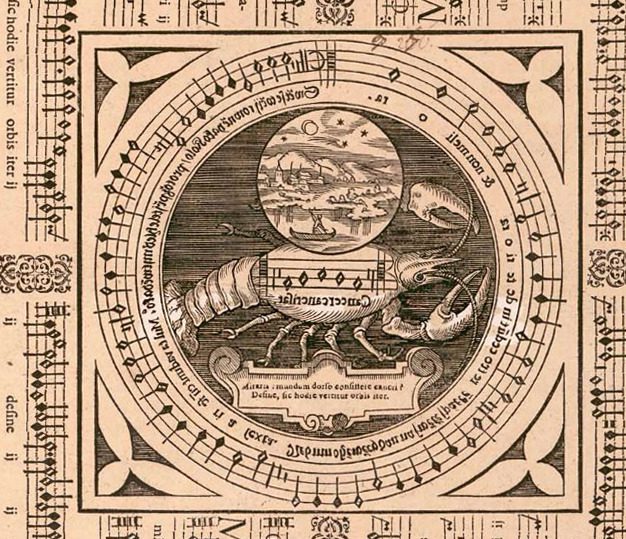
Figure 2: Center break from Miraris mundum (1589), by Anon.
The presentation of the work thus serves a dual purpose; on the one hand as a composition that requires interpretation and understanding, and on the other hand as an intellectual and symbolic puzzle that encourages reflection on deeper layers of meaning The idea of solving the riddle is, as mentioned above, linked to an enlightenment that juxtaposes these two goals; finding the solution not only provides an understanding of how to perform the music but also an insight into the complex cultural and philosophical ideas that lie behind it.
The work, kept in the monastery library of Strahov in Prague, offers a rich interplay of music, art and text (and worldviews) Four voices are set up in a tablet (or table book form) into a decorative frame, two and two facing each other, and convey a mysterious text: „Miraris mundum dorso consistere cancri? Desine sic hodie vertitur orbis iter“ („Are you surprised to see the world on the back of a crab? Stop it; thus is today's world“.
The center of the score shows a banderole with the same text, which is accompanied by a picture of a crab (lobster)[5]) bearing a globe on its back (see Figure 2).This globe contains a landscape, a man on a boat, the outline of a town, and a star roof with a waning moon On the crab is a short, five-note palindromic pattern (g-ab-ag) with the words „Cancer cancrisat“ („The crab walks backwards“) printed mirror-inverse beneath it (that is, by mirror writing[6]) and likewise the text under the notes is treated in the round string of notes that envelops the crab A musical configuration within the crab is palindromic as mentioned above with c-keys and 2.5 semibreves silences at each end, forming a short „soggetto ostinato“ that can be read in both directions The performers therefore had to solve the puzzle of finding how to turn voices, or read them backwards, and leaving various obsessions of various lengths (some are 2.5 semibreves, others 2 or 3.5)[7] fit in overall; a whole that weaves three lyrics together with four free voices and two obsessive voices.
It is interesting how this work connects music to a wider symbolic context, which shows the crab (or lobster), carrying the globe, as a symbol for the regression of the world, according to the view that the world was in decline. The idea was also linked to the icon traditions of the time, where the ambiguity (e. distich) „Miraris mundum...“ was known in the context of emblem books (e. emblem books), for example the humanist Joachim Camerarius introduced these verses in his manuscript Symbola et emblemata (1587), since the crab's backward migration - in these times, crabs were widely believed to be walking backwards - represents precisely the regression of the world, a world that is desperate and loses sight of its goal.[8]
Through this complex interaction of music, text and art, reflects Miraris mundum the deep search for knowledge and understanding that characterized the cultural landscape of the Renaissance The work is not only a musical combination of voices, but also an intellectual and symbolic puzzle that offers a deep reflection on the nature of the world and human existence.
Why obstruction?
But why be creating this threshold, this resistance, this complication or this intricacy? Given the cultural and intellectual landscape of the Renaissance, this question creates a basis for a deep view of the use of intrusiveness within music The historical context and theoretical analysis of the intrusiveness of Renaissance music can be immersed, but here we will only look at certain perspectives of this complex aspect of artistic creation.
The composers of the Renaissance took advantage of the intricacies to develop the intellectual capacities of performers and listenersThe intrepidity of music requires the performer/listener[9] digging/diving deeper, searching for hidden meanings and connecting different aspects of the work to fully understand it This approach to music manifests itself not only in complex compositions but also in lyrics and graphic presentation, which required performers to be active participants in the creative process, instead of merely recipients or communicators In many ways, this ideology rebounded in the 20th century through the experimental music that also placed performers in new interpretive poses, encouraging them to piece together pieces on their own (albeit with other signs and other ideologies).
Confusion as an artistic tool
Troubles were used not only to complicate understanding of music, but also as an artistic tool for expressing emotions, ideas, and even political views Through intrusiveness, the composers were able to convey sensitive or critical ideas in a way that was both creative and hidden from unwanted attention This was especially important in an era where art and some form of criticism - while a completely different understanding was placed in these concepts at the time - could be limited by external factors such as church authority or government.[10]
The ambiguity of the music of the Renaissance also reflects the cultural context in which the works were created At that time, great emphasis was placed on education, intellectuality (e. intellect) and complex philosophical debate Music involving ambiguity was a way for artists to connect with these discussions and show their contribution to the cultural and intellectual wealth of society Thus, ambiguity became not only a tool for artistic expression, but also connected music to the larger scientific, philosophical and cultural currents of the day (and it must not be forgotten that music had then been an important part of the learning structure and one way to the knowledge of the world (cf. quadrivium)).
The irrationality of the music of the Renaissance is therefore an important factor, showing how certain artists of the time took advantage of all aspects of art - from composition and lyrics to presentation and performance - to challenge, educate and develop performers, listeners and society Through this perspective of intrepidity, a new way of understanding and evaluating the music of the Renaissance opens up, not only as a work of art but also as a window into the intellectual and cultural landscape of the time An analysis of the use of intrusiveness provides it with valuable insights into how music can be a medium for complex ideas and dialogue, and how it reflects the aspects of society from which it springs.[11]
Role of Music Writing
During the Renaissance, notation was not only a technical tool for recording music but also a platform for philosophical and artistic creation The development and use of complex scales of length values (or of the menus symbols, e. mensuration signs), at this time was not only a technical necessity but also an artistic and intellectual choice.[12] The composers took advantage of these elements to create works that were at the same time both beautiful to look at and rich in hidden meanings and intellectual challenges In addition, images and symbols were used to connect compositional methods with broader ideologies Interpretation was therefore a riddle or puzzle that was at once the analysis and understanding of symbols and their meanings (cf. the crab that represents the regression of the world but also how voices should be put together).
As knowledge of complex men's-manifolds and their proportions waned at the end of the sixteenth century, some composers began to use them as a reference to the remains of older traditions The use of music notation then took on an archaic tone and was used only for honor, tribute, or simply to show proficiency in arcana musica. This development reflected how musical traditions evolved from the complex and symbolic approach of the Renaissance to the greater simplicity and approach that characterized the Baroque period and later styles (although certainly there is a complication there, but of a completely different nature) This waning knowledge of the Mensura symbols and proportions led to the loss or obsolescence of some of the more complex and symbolic compositional traditions of the Renaissance, as new notation methods and compositional styles, emphasizing direct and explicit presentation, took hold.
Consequences and dissolution of the riddle culture
While the riddle culture of the Renaissance certainly possessed a fascinating interplay of creativity and intellectual challenge, there were certain elements that could be defined as negative consequences of this culture These techniques placed great pressure on performers, unnecessarily high in many's opinion, and could have an exclusionary effect, as those who failed to solve the riddle or follow complex musical guidelines faced possible humiliation or ostracism.
The criticism expressed in Heinrich Glarean's writings, Dodekachordon (1547), speaking of the „ostentatio ingenii“ or exaltation of genius, suggests that some composers of the era placed too much emphasis on demonstrating technical talent and complexities of meaning rather than creating music that was pleasing and accessible to performers and audiences Such an approach meant that compositions containing complex mensural canons with riddles and puzzles were often difficult for performers and could cause despair or fear of becoming ridiculed if they did not satisfactorily solve them.[13]
Í Institutioni harmoniche (1558) by Gioseffo Zarlino reports how complex works not only cause chaos and discontent among singers, but the singers also experienced social pressure to deal with these complications if they did not want to look clumsy or ignorant This shows that performers felt the need to solve all kinds of musical complications, as the ability to decode the composers' ideas gave them a certain amount of power This fact was in Zarlino's view in itself absurd, but it was even worse that singers had to spend time in such complications at all.[14] Differences of opinion within the music culture therefore began to undermine this tradition.
In a letter sent by Giovanni Spataro to Giovanni Del Lago, Spataro expresses his sorrow at Franchino Gafurios' criticism of some of his compositions Spataro felt misunderstood and accused Gafurio of being unable to understand the complications of his works These interactions show how disagreements over complications in music could lead to disputes and misunderstandings between musicians.[15]
These aspects of Renaissance riddle culture highlight how the emphasis on riddles and intellectual challenges could have an exclusionary effect and create pressure on performers Those who could not observe or solve such riddles were therefore not at all on an equal footing with others within this culture.
This view of musical ability and ability to solve riddles involved power struggles within the musical community, with power often held by those with the ability and knowledge to understand and perform the most complex works This emphasis on intellectual and technical complexity in music could therefore not only exclude or put pressure on performers but also create a hierarchy that valued people based on their ability to deal with and understand these complications Thus the ability to solve riddles and perform musical complications, which also called for broad knowledge and education, not only a measure of artistic ability, but also a tool for locating individuals within the power structure in the musical community.[16]
Final words
This music of the Renaissance that has been touched upon here was evidently rich and broad in scope and had a selective role regarding the knowledge creation and understanding efforts of the human being But it also made richer and even unrealistic demands on the participants of the musical life that eventually evoked the Hegelian dialogue of the generations in which the opposition (e. antithesis) of these approaches was gradually invoked (and perhaps we are still working in the merger).
One thing could be added to this, however, regarding the intrusiveness, or hidden meaning, and the mindset of the period During the Renaissance, the intrepidity was often intended as a certain protection, especially in relation to music, art, and literature This ideology was based on the belief that certain knowledge and wisdom should not be accessible to all, but only to those who were competent to understand and appreciate the depth inherent in it, otherwise dangerous Here, they were protecting those who were not willing, for otherwise it was thought that the project would be overwhelming and people would stray from the path of knowledge and enlightenment This was especially true of religious and philosophical issues, as direct and obvious expression of these topics was often considered too bold or even blasphemous.[17]
Í Crux Christi by Gumpelzhaimer (Figure 2, above) one can see examples of how the intrusiveness was intended as protection The musical riddle requires not only that performers are technically competent, but also that they have the depth and sensitivity to understand the complex religious and symbolic meaning inherent in the work By hiding the meaning behind the perplexing presentation, Gumpelzhaimer creates a form of protection that preserves the sanctity of music and knowledge for those who are willing to put in the effort to solve the riddle and understand its deeper meaning The discourses were therefore given the task of protecting both those who were not ready and the music itself, and its spiritual content, from superficial perception and understanding, and ensuring that only those who were truly competent, ready and ordained could approach the deeper, hidden meanings In this context, intricacy was not just a technical or artistic tool, but also a spiritual and moral device, which protected the sanctity of the artwork.[18]
[1] Schiltz, Katelijne. Music and Riddle Culture in the Renaissance (Cambridge: Cambridge University Press, 2015), 123-125.
[2] Ibid.
[3] Astute readers realize that the score actually contains two works, Crux Christi: Cum Titulo, which is a six-part canon, and Crux Christi: Quatuor Envangelistæ, which is an eight-part canon.
[4] Schiltz, Katelijne. Music and Riddle Culture in the Renaissance (Cambridge: Cambridge University Press, 2015), 319-324.
[5] It's actually lobster, but we always talk about cancer (crab).
[6] Since the score is set up in the so-called table book format, the performers have no doubt performed the work sitting at a square table and e.g. used a mirror cylinder located on the globe/circle of the world sitting on the back of the crab. Such a layout would therefore form a new „hidden“ symbol: music that reflects the state/nature of the world or vice versa. However, this hypothesis is completely unconfirmed, but it is known that mirror cylinders were used within art in so-called ‚anamorphosis‘ art and therefore no doubt known more widely in the branches of intellectual art groups.
[7] In this notation, semibreves are equivalent to whole notes in modern notation.
[8] Schiltz, Katelijne. Music and Riddle Culture in the Renaissance (Cambridge: Cambridge University Press, 2015), 293-295.
[9] It should be noted that at this time the distinction between performer and listener has not become as clear as it later became.
[10] Schiltz, Katelijne. Music and Riddle Culture in the Renaissance (Cambridge: Cambridge University Press, 2015), 250-251.
[11] Ibid.
[12] The mensura symbols and proportions in Renaissance music differed from modern notation, Mensura marks were used to represent lengths of tones in the music and formed the basis of what we know today as musical notation However, the system was actually much more complex than the notation that took over, with a number of marks and colors each representing different lengths and speeds (notes could then be in perfect tempo or imperfect, dual or ternary or a combination of them) These systems, which were fundamental to the mensural notation, required a specific understanding of the complex rules of rhythm and rhythmic forms The ratio game added even more complexity, with special symbols being used to change the fundamental proportions between the tonal lengths in certain parts of the work These ratio symbols changed the fundamental rhythmic of the work in a certain and often complex way, which required extreme complexity of knowledge and this range of accuracy. ars subtilior. See more EA Melson, ‘Compositional Strategies in Mensuration and Proportion Canons, approx. 1400 to approx. 1600’, (MA thesis, McGill University, 2008).
[13] Glareans, Heinrich. Dodekachordon (Basel, 1547), and in translation by Clement A. Miller (American Institute of Musicology, 1965).
[14] Zarlino, Gioseffo. Istitutioni harmoniche (1558)
[15] Schiltz, Katelijne. Music and Riddle Culture in the Renaissance (Cambridge: Cambridge University Press, 2015), 86.
[16] Schiltz, Katelijne. Music and Riddle Culture in the Renaissance (Cambridge: Cambridge University Press, 2015)
[17] Ziolkowski, Jan M. „Theories of Obscurity in the Latin Middle Ages.“ Mediaevalia 19: 101-107 (1993)
[18] Schiltz, Katelijne. Music and Riddle Culture in the Renaissance (Cambridge: Cambridge University Press, 2015), 320.