DaDom - Daily Dose of Music European collaborative project on health music within the NAIP master's program

Sigurður Halldórsson
This article is about the three-year Erasmus+ project DaDOM, or Daily Dose of Music[1], a development project on health music, which started in 2022 and is an example of a community-based project within the international NAIP master's program[2] as the department of music of the Iceland University of the Arts has succeeded. The DaDOM project is led by Embrace Nederland[3], an independent organization that works on various music-related projects within the health sector of the Netherlands Other participants are educational institutions in Friesland (North Holland), Iceland and Lithuania that offer programs for paramedics and associations of music therapists in Lithuania and in Iceland Within the Iceland University of the Arts, it is the international NAIP master's program that hosts the project.
The article raises various priorities of the project that circle around the following key concepts: Social arts, inclusion, welfare, accessibility, creative work, art education, music therapy, health issues The results of the project will then be published after that, at the beginning of 2025.
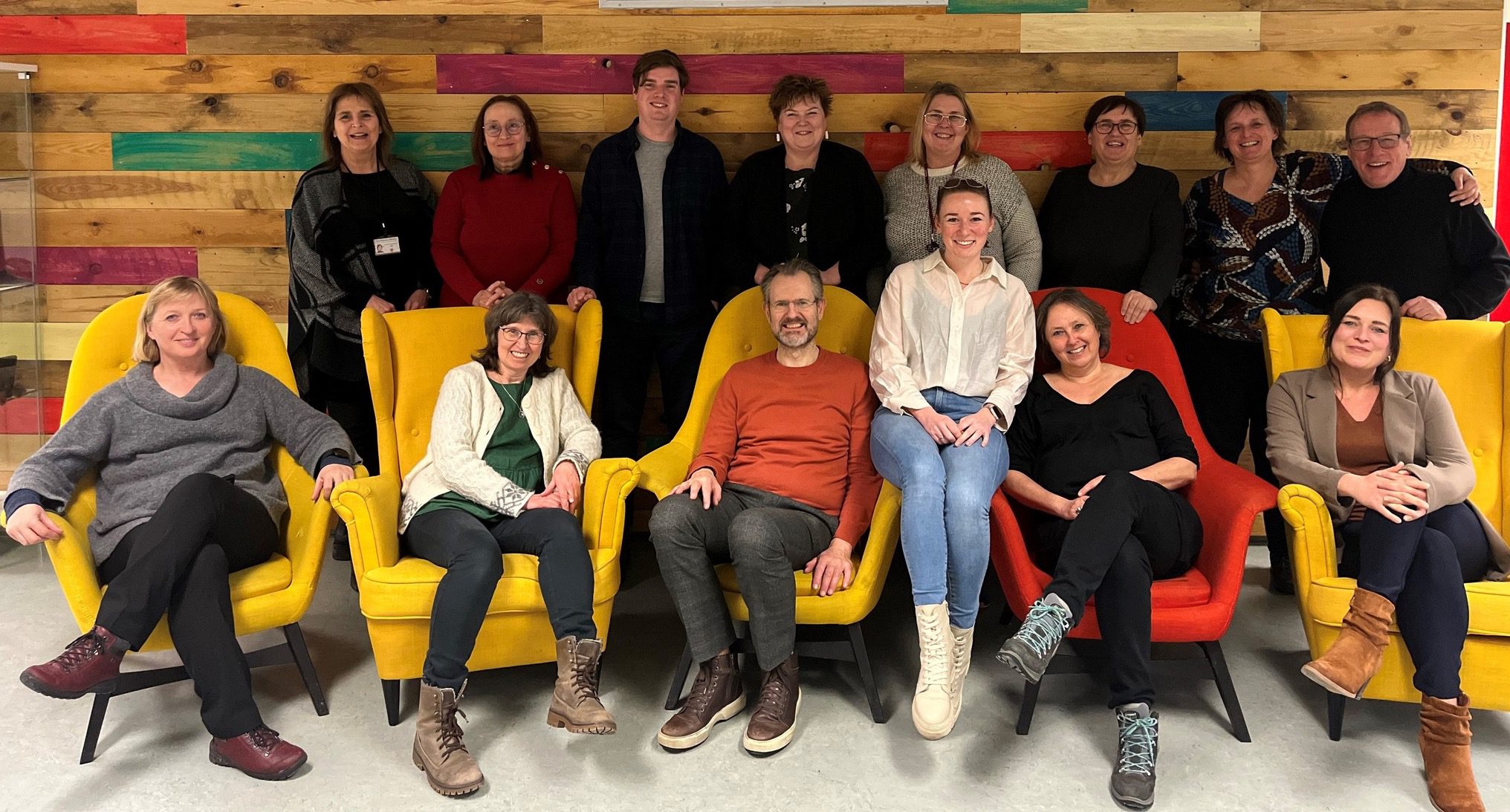
Figure 1: Participants in the Daily Dose of Music at a meeting at the Polytechnic School in Breiðholt in February 2024
Very short about the NAIP master's program
The International NAIP Master's studies was developed in the International Cooperation of the Department of Music of the Iceland University of the Arts with several European conservatories through Erasmus projects since 2007, also, schools from the United States and Singapore have been involved in the development NAIP stands for New Audiences and Innovative Practice and is an international master's studies that has been offered at the Iceland University of the Arts since 2009. several dozen artists have completed such an MMus degree The program has been important for the development of all kinds of collaborative projects and innovations in the careers of musicians It has been a channel for pioneering work, and increasingly, interdisciplinary collaboration in the arts has been developed within the program of the NAIP supports musicians in building a kind of „portfolio“ career, which is a term that has been used within NAIP to represent self-employed musicians with diverse and often new roles in the diverse and often new projects that have been carried out within the school's Christian programs and collaborative programs that have been developed within the school's core of both the academic programs that have been developed within the academic programs that have advanced within the academic programs and collaborative and collaborative and collaborative structures.
Music and Dementia
Since 2016, the development of music activities with demented people has taken place within the NAIP program in collaboration with health institutions The project is in the form of a course that music students of the University of the Arts can choose. The courses are based on preparatory classes with education, improvisation exercises, eight improvisational workshops with a group of people with dementia together with the staff of the relevant institution and re-evaluation. The work with the clients is mostly about free improvisation, where the goal is to create a channel for expression for people who have largely lost the ability to express themselves with words. Only two short themes are played and/or sung at any given time that have been written in advance by the participants of the course to frame the course. Various institutions have come to this collaboration, including the Alzheimer's Association, the Iceland Symphony Orchestra, Grund, Sunnuhlíð and Hlíð, and Hlíða and Hlíð are not able to participate in this course. Music and Dementia related to Music Therapy. To answer that there is a fundamental difference, although the knowledge of music therapists can certainly strengthen music creation workshops with the demented. But Music and Dementia primarily concerned with artistic creation and the social function of enjoying music, which improves well-being and quality of life in the same way as in healthy individuals In this case, artists (or in the case of LHÍ music students at university level) are providing dementia individuals with the opportunity to participate in musical practice These participants have reduced independence and most often very limited opportunities to attend art events at the general level Music therapy is practiced for clinical purposes and is handled by specialists who few see themselves as artists, but are working with music in a variety of ways according to evidence-based methods.
In order to strengthen the basic activities like this, not only does it require a platform and a will within the health sector, but it needs to be able to rely on the participation of professional musicians It is good and blessed that the Iceland University of the Arts contributes to enriching the lives of people in health institutions But its mission is primarily to train artists to be a platform for them to spot diverse opportunities to work in their profession and help them find their platform Through increased interdisciplinary approaches in the care of patients and other vulnerable groups, including through social references, or „Social Prescription“[4], there will be an increasing need for resources that replace drugs or at least reduce their use. Not provided for here in Iceland, where prescribing drugs far exceeds other countries, especially psychoactive drugs. In an article on a cross-sectional study in the Capital Region Health Service in Læknablaðin in 2019, it is stated that „[in] 2016, the relative use of antidepressants was 143% higher in Iceland than in Norway and 43% higher than in Sweden.“ In addition, the use of antidepressants is higher in this country than in all other OECD countries.[5] Projects such as Music and Dementia is an example of training that directly looks in this direction, and it is important that the University of the Arts offers such training. In this regard, it can be noted that the University of the Arts has in recent years developed a multidisciplinary master's degree program in collaboration with several educational institutions in Europe called Arts and Welfare, which is available in the Faculty of Art Education of LHÍ.[6] There has been considerable synergy between the NAIP Master's program and the Department of Arts Education Students from the Department of Arts Education have attended several courses with NAIP students and vice versa.
DaDOM - Daily Dose of Music
The role of the University of the Arts in the DaDOM project is to represent music studies at university level and share experience, including the work in the course Music and Dementia and participate in the creation of teaching materials for health sector professionals The project is now in its third and final year and the result of starting to take shape The author of the article has participated in the project on behalf of the University of the Arts together with Magnea Tómasdóttir These reflections are among the topics that will be published at the end of the project The final results will be presented at seminars and elsewhere in all partner countries towards the end of 2024, and the result of the project will be published in its entirety at the beginning of 2025.
Among the results of the DaDOM project will be a distance learning course designed to empower teachers in health fields, including in paramedic programs, in order to encourage and train their students as future health sector professionals to use music as a care and communication method with their patients and/or clients. Testimonies from staff at Grund, who participated in Magnea Tómasdóttir's improvisational workshops in Music and Dementia, mentioned earlier, show that on the days the workshops were held, there was no need to give sedatives or other psychoactive drugs to those involved, despite the fact that these individuals would normally need them In addition, physical and mental exercise as the music contributes has enormous value for those who are lucky enough to have the opportunity.
The multifaceted role of music in human life
Music is a big part of the lives of all humanity People are instinctively united in musical practice to vent their need for expression and creativity At all stages of human life, we consciously or unconsciously enjoy or perceive music This voluminous role of music in people's lives does not disappear when they become old, sick, disabled, or for some reason helpless in daily activities Targeted musical practice of these groups is an effective way to increase the quality of life.
We like to take it as a given that people can approach their music or musical practice on their own. But sometimes circumstances change due to chronic illness, injury, aging effects or dementia. And the individuals who experience it are forced to change from their everyday habits, for example social activities where music has been a large part, and losing these connections. The consequence is that it reduces their quality of life. It is in itself a shock to no longer be able to live their musical lives, not to mention the trauma caused by the illness or disability itself.
People approach or practice music in different ways To be able to choose their own way of doing so, independence and accessibility are needed People must be able to access the places where the practice takes place; the concert hall, the studio or the music school, etc. If the choice is about enjoying music over the internet, then access, skills and equipment are needed to get to it People who have suffered any kind of trauma may have lost these possibilities and thus access to alternatives Those people need help to keep their relationship with music alive.
Custom playlists or radios
If a caregiver learns the client's personal taste in music, it can be a key to increased well-being By choosing a favorite song or piece, a playlist that a client can listen to can be made with headphones. Thus, one can enjoy one's own favorite music even if more people are in the same space. The playlists can be prepared in consultation with the client and with the involvement of family and friends. Thus, this advice can be taken whenever people want without much planning or synchronization. This way can be perfect for people who do not have a great need for social life. Personal playlists are better than radio that everyone has to listen to, whether they like it or not, the radio station is often chosen by the clients, either according to their own taste or without thinking. However, some people may sometimes want to listen to the radio together. If an example is taken of the elderly's background in Iceland, where the people still have a relatively similar role to open up to the people in Iceland, if they have a very similar to the people in the role of the people who have a very similar to the old people in Iceland.
Interaction - harmony - chorus
Music work based on personal taste can also be a social activityIt is an even stronger experience to enjoy good music with other people This can be done through organized workshops, choral singing or orchestral playing where everyone's participation is at the heart of the job and each person chooses according to their field of interest This kind of work evokes memories and promotes empowerment, as the participants know the music being worked with It further requires people to occasionally learn something new, which is a necessary part of maintaining intellectual skills and developing them further In some cases, such as in band playing, this approach may require prior training, but not nearly always. However, it is an activity that would require expertise from a mentor; chorister, professional singer, professional instrumentalist or from a highly skilled amateur with strong musical and communication skills, and such needs to be funded.
If health professionals are trained to use singing and music for daily work, it can make music a natural aspect of human interaction, contribute to people starting to sing together without being organized Thus, music has functioned since time immemorial, but has gradually fallen out of daily behavior for most people in the West An obvious long-term approach to reviving this aspect of human nature is to continue singing after preschool age and never to stop Singing is fortunately still a rich aspect of preschool work Unfortunately, opportunities for general music and singing practice have declined in primary and secondary schools in recent years. There are still several primary schools that are exemplary in this regard and maintain daily harmony. It therefore requires a concerted effort to reverse this trend.
Tuntouchedarspuni - the basis of communication and language
Music is by its very nature a form of expression and can replace conversation with words for people who have lost the ability to express themselves through words Music expression can both occur in an organized way or as spontaneous communication between staff and client in daily life and work tones and rhythm can be used to facilitate and enhance joy in communication It works against melancholy that tends to be buried by people who have lost competence and are aware of it The work of music therapists includes this approach on clinical grounds But there is also activities led by musicians that empower people and increase their quality of life But that activity is based on the criteria of artistic creation and is intended to provide access to it for people who otherwise would not have the potential to access music and music therapy Organized improvisation classes have been developed in the UK, the Netherlands and here in Iceland One such method was developed in London by Linda's foundation in 1999, and the title of Rose's music was subsequently established.[7] Music For Life was developed with people with dementia in mind, how to increase their quality of life, seek healing and empowerment It is based on active participation in music improvisation with the aim of re-invigorating a character who has disappeared behind the dementia condition of the aforementioned course, Music and Dementia, is based on these methods An important study was carried out on the work of Linda Rose and Music For Life The results of that study were published in the book While The Music Lasts by Rineke Smilde, Kate Page and Peter Alheit.[8] The project not only demonstrated that this method is effective for individuals with dementia and their caregivers, but also contributed to a learning process for the musicians involved that no one had foreseen The workshops changed the musicians' understanding of the role of music in people's lives, they touched the musicians' characters and contributed to a deeper reflection on their identity The project demonstrated that work like this has a hugely positive and beneficial impact in musicians' education The results also show that this project helped the care workers and inspired them No less did the project help the clients' families and gave them valuable moments with their loved ones.
What is music?
To realize the primary effect of music on people's lives, it is advisable to look at how the unconscious, inherent role of music is central to the communication development of infants A child in a certain developmental period uses improvisation unconsciously to experiment in expression, for example after having from birth looked, listened to and reflected the behavior of his parents. But as the child gains more control over the language, this need for improvisation gradually disappears and he can explain his thoughts and feelings in words.
The traditional, even default, idea of the modern West about music tends to be that the „best“ music is performed by people who have a job from it There are outstanding performers, geniuses who have dedicated their lives to seeking perfection in expressing this magical phenomenon to large audiences However, music as such is not inherently expert music is a common thread through all human societies Even though advanced musical skills require decades of training and specialization, the root and the ability to express itself is present in every human childThe important role of music in human development was obviously well known by the pioneers of formal education In ancient Greece, music was one of the three core disciplines (where dance and poetry formed an intertwined trinity with music in the word Music) and it remained inside as a core subject through the Middle Ages Nowadays, existence is increasingly complex and compartmentalized, and it becomes a more dominant subject in the development of music and it becomes a more specialized subject.
Music is intertwined with life in a holistic way Music has been used in relation to most aspects of human life as long as we can trace history In many parts of Western culture, such traditions of general practice have been broken as soon as the roles have been shared to experts There are still some traces of general practice We still sing lullabies for children, and many get an outlet in dance, which promotes mindfulness and rest from the problems of daily life In the culture of the Inuit in Greenland, the drum dance was a holistic approach to life in all areas In all human life, the practice of using drum and voice was part of all activities, such as religious life, medicine, law, upbringing, joy, love, birth and death But with the incorporation into the Danish monarchy, the church banned this practice as heresy and kukl. Therefore, this tradition is on the brink of the defense of Nielsen, one current art research that is carried out on the basis of the third-time students.[9]
The need to be enveloped in music is so strong that it can be seen as a primary need It cannot separate music from human expression and social behavior But social need is as vital as eating and sleeping It is therefore of great value for health professionals to find ways to increase music and singing in daily care work, with formal and informal ways to improve health and quality of life on the one hand and maintain and, as the case may be, increase capacity on the other It requires support to the competent institutions It will undoubtedly support traditional methods and become an important part of care and clinical practice.
[1] See more: www.dadom.eu
[2] See more: www.musicmaster.eu
[3] See more: www.embracenederland.nl
[4] https://www.england.nhs.uk/personalisedcare/social-prescribing/
[5] Læknablaðið 105 vol. Issue 10 2019, p. 427.
[6] https://www.lhi.is/listir-og-velferd
[7] See more: https://wigmore-hall.org.uk/learning/music-for-life
[8] Smilde, R., Page, K., & Alheit, P. (2014). While the music lasts: on music and dementia. Eburon.
[9] See more: www.qilaat.org