- 180 ECTS Units
- 6 semesters - 3 years Duration of study
- BA Degree
- 13 January 2027 Application website opens
- 5 April 2027 Final deadline for applications
- May / June 2027 Answers sent to applicants
In the program, students get to know different methods and approaches to artistic creation and train personal work practices.
Information is provided in Icelandic for study programs that have Icelandic as the primary language of construction.
About the programme
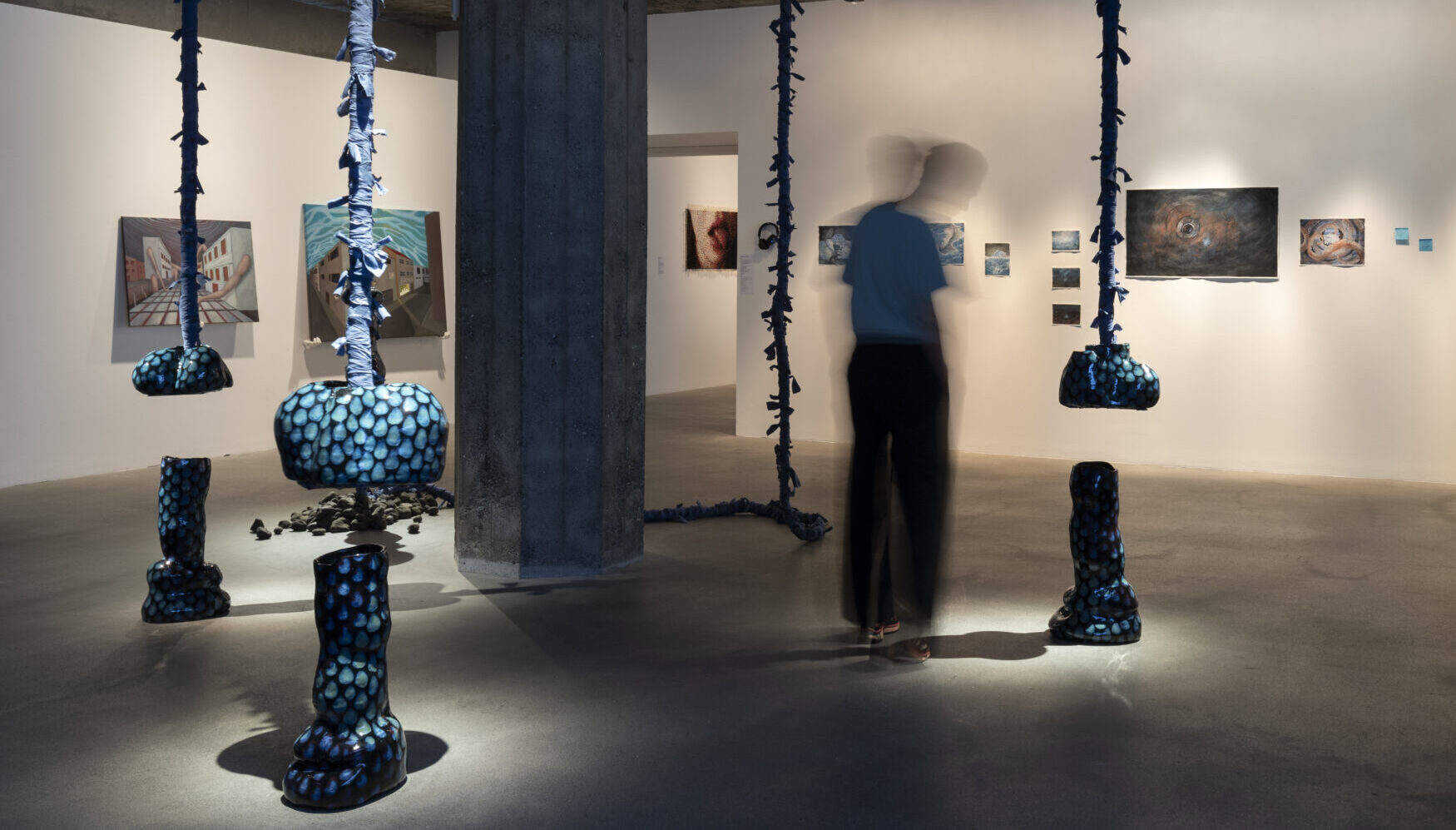
The program is a platform for courses, independent work, collaborative projects, experiments in materials and methods, whether it is practical or theoretical work.
Art is a diverse subject and the course offerings in the BA program reflect that diversity Courses either address basic knowledge related to the methods of art, history or art theory that students mirror in their own artistic creation In elective courses, students continue to develop their expertise In all courses, primal creation is a foundationassumption.
All students have their own workshop during their studies where subjects are developed over a longer period of time in conversation with teachers, visitors and fellow students Supervising teachers accompany students through the study period and provide personal guidance while also getting to know the number of part-time teachers involved in the work of the courses ends with reviews where students are trained in critical discussions about their own work and the tasks of fellow students.
During the study period, students have the opportunity to study longer and shorter exchange programs through Erasmus or Kuno, a cooperation network of Nordic art universities.
Programme structure
The Bachelor of Fine Arts program is a full-time program (180 ECTS credits) for three years The Faculty of Fine Arts emphasizes that students can get to know a wide range of methods and approaches to artistic creation and academic thinking The program is composed of a studio, academic and workshop courses.
1 year: The courses in the first year lay the foundation for the entire program. Þmethods are presented, both technology and the basis of the context of art in the contemporary and historical context.
2 years: In the second year, students choose longer courses that aim to deepen knowledge of media and methods. Elective course on 1. and 2. year offers elective courses, among other things, in other departments of LHÍ and specific thematic courses that explore trends and trends in the profession.
3 years: In the third year, students work independently to create a solo exhibition, write a BA thesis and work on a work for a joint exhibition at a public art museum.
After graduation
Studying art at the BA level prepares students for master's studies and diverse jobs in the professional field of art and culture.
Graduated students from the Faculty of Fine Arts are among the leading visual artists in the country The knowledge that the program brings to students is useful in all work where curiosity and research are the basis.
Application and admission process
-
Electronic application is filled in application portal.
-
Note: All required fields must be completed, requested documents uploaded, the application fee paid, and the application confirmed.
-
A certified copy of the diploma (photograph does not apply) with a stamp from the relevant school and a scanned study history summary is attached to the electronic application.
-
If supporting documents are incomplete, applicants will be notified by email and given an opportunity to amend their application.
-
Applicants will receive confirmation once the electronic application is valid.
- If the number of applicants meeting the admission criteria for a study programme falls below the minimum threshold, the programme will not be offered for the upcoming academic year. Applicants will be informed of this as soon as possible, and the registration fee will be refunded if it has already been paid.
Required 1st Folder/Portfolio
- Substantive submission deadline or the electronic folder/portfolio is April 6, 2027.
- Note that you have to choose between a physical or electronic folder/portfolio and let them know in the field „More information about previous studies or other relevant things“ in the application portal if a physical folder/portfolio is returned.
- If you are applying for more study programs or departments, you must submit an application and a folder/porfolio for each study programme/department.
- A physical folder/portfolio must be returned or sent by mail to Laugarnesveg 91, 105 Reykjavík. Write Application art on shipment.
- We ask you to read carefully the instructions below regarding the meaning of the folder.
Labeling the folder:
- If your folder is physical, you need to include a sheet with the folder that clearly states your full name and social security number.
- If your folder is electronic, you need to save the file with your full name and social security number.
Applicants must collect samples of their work together in a folder (portfolio), in paper form or in a.pdf document. It is assumed that the folder is a maximum in size A3 or a maximum of 80mb .pdf document. It shall contain up to 30 images or other types of documentation of the applicant's work. They shall be accompanied by a detailed description stating information such as: title, size, content, year, etc. Video and audio works may be returned to a USB stick if the documents are returned in paper form, but as active links/path inside an electronic folder. Works are not received via a wetransfer or similar web, but must be saved on data sources such as Google Drive, Vimeo, or Dropbox and care must be taken to make the documents available (public).
The folder can be divided into two parts:
- Basic subjects - works showing general drawing skills, image structure and color use together with 3D works showing image structure, morphology and material use.
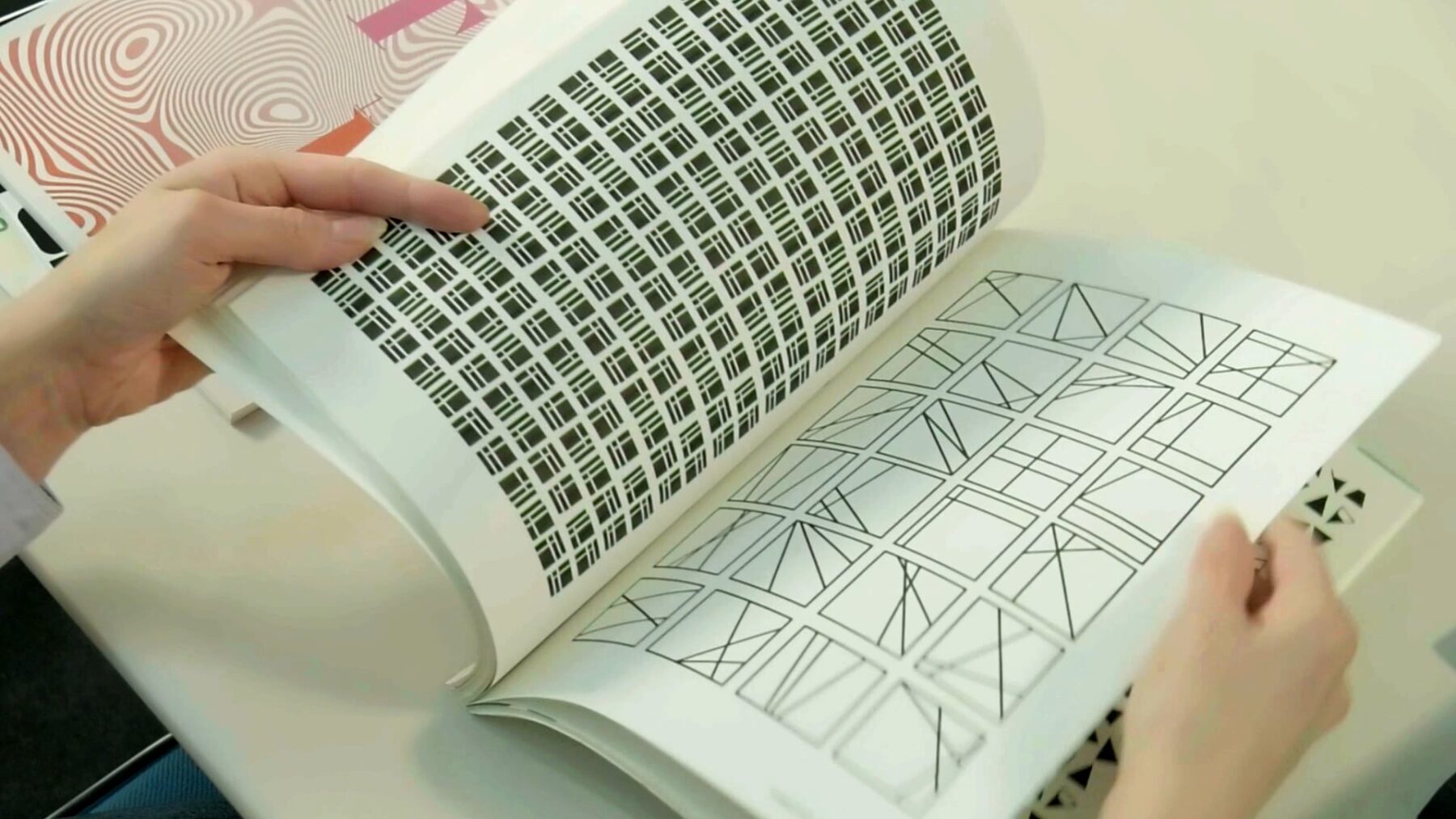
- Independent works - visual works, sound works, text, etc., done in any subject, which show the applicant's personal creations This refers to works that the applicant has done based on his own criteria The works need not be completed or executed to the fullest On the contrary, it is important that there are also any ideas, sketches and drawings, photographs, text, videos and sound works In fact everything fits within the folder that in the applicant's opinion can in one way or another describe what he wants to achieve through his art work and can testify whether he has the ability to convey it to others In some cases it may be good to include a short text about the works.
Folders must be picked up again at the school office at Laugarnesveg 91 according to the advertised deadline. Unclaimed folders will not be stored and the school reserves the right to delete them.
If folder/portfolio is posted:
- If the folder/portfolio is sent by mail, a postmark must be dated April 13, 2026 at the latest.
- The folder/portfolio should be sent by traceable mail and the envelope marked with: „Application of Fine Arts“.
The Faculty of Fine Arts' address is:
Iceland University of the Arts, Faculty of Fine Arts
Laugarnesvegur 91, 105 Reykjavík
Office, main entrance.
Office opening hours in Laugarnes:
Mon - Thu: 08:00 - 16:00
Fri: 08:00 - 14:00
Telephone: +354 5452240
Required 2. Cover letter
Prerequisites for application, discuss the reasons for applying for the program. Tell about the artistic experience, interest or relevant subjects, maximum 200 words.
3. Admission process
- Applications are evaluated for general and specific admission requirements, and the admissions committee reviews submitted works Applicants who pass the admissions committee's assessment qualify for the sample group.
- Those who make it to a sample group are invited to an interview. Applicants bring 1-2 works with them along with a sketchbook.
- All applicants will be sent a written response to applications in May. Those applicants who receive an invitation to attend school must confirm by the end of May whether they intend to take it by paying a confirmation fee. The fee is irreversible, but the tuition fees will be added if the person arrives to study in the fall.
- The decision of the admissions committee is final and it is not obliged to give further explanations of its ruling.
4th Interview
Admissions criteria
General admissions criteria are matriculation, final exam from secondary school at the third qualification level,
equivalent exam from a foreign secondary school or a minimum of 60 ECTS credits from
accredited college Applications must be accompanied by certified copies of diplomas and certified copies
from the study history summary.
Admission to the school may be granted to applicants with knowledge and experience
which is considered adequate preparation for bachelor's degree studies at the school See more „exemptions for admission“
Admission committees evaluate applications based on submitted data as well as interviews and/or entrance exams
the fields that apply. The dean appoints an admissions committee for each study programme in consultation with
professional managers and admissions committees work according to the procedures presented to applicants.
Exemptions due to intake
Admission to the school may be granted to applicants with knowledge and experience
which is considered adequate preparation for bachelor's studies at the school.
Applicants who do not meet the general admissions criteria can apply for an exemption if they have
completed, for example, numerous credits at secondary school level, completed other final exams such as on 4.
qualification level or have other preparation that can prepare the person for studies on
university level in the relevant study programme. Applications for exemption from general
admission requirements are assessed by professionals within the relevant department The result of the assessment of
exemption applications are final. When evaluating applications, synergistic factors are considered
regarding grades in studies at secondary school level, education in arts, further education,
work experience and participation in social work Each case is examined separately and can interact
these factors affected the outcome Applicants are encouraged to account for all of it
which they believe may be subject to their application for exemption from general admission requirements
progress.
Admission committees evaluate applications based on submitted data as well as interviews and/or entrance exams
the fields that apply. The dean appoints an admissions committee for each study programme in consultation with
professional managers and admissions committees work according to the procedures presented to applicants.