Art Research: The Sensory Knowledge//Artistic Research: The Tacit Knowledge
The researchers are increasingly focusing their attention on artists and how they approach their subjectsThe insight and the creative thinking that artistic creation requires has proven to be an effective addition to the standard methods of physical science Artists are curious individuals who apply critical and interdisciplinary thinking to solutions to complex problems Often, that skill has evolved from an early age Art research therefore has value far beyond the obvious aesthetic elements.
Despite this, there seems to be a lack of understanding and dialogue with the research environment The purpose of Hugarflugi 2024 is to find out what lies behind it. Is there a lack of common language? Are artists' research methods too different from the traditional ways to be taken seriously? Could the results of art research be communicated in a different way than is done, or is quality at times simply lacking?
We open the discussion with the aim of answering the above questions. The Iceland Academy of the Arts called this spring for proposals of any kind, presentations of research that are ongoing or have been carried out by our staff, students and/or partners. With the aim of producing a “ screen shot of our research culture that can be discussed between us, but no less with representatives of today's broad research environment. The clear visitor's eye is, after all, a valuable contribution to the development of research within the Iceland Academy of the Arts for the future.
The creative insight of artists is increasingly engaging the attention of the weller research arena. Artists’ divergent thinking (ie imaginative, open ended) has been shown to add a new, beneficial dimension to problem solving which hitherto has mostly been in the hands of convergent thinkers (ie logical, analytical). But the artist's mind is also an investigative mind. It is a modern, cross-disciplinary mindset, geared towards working on highly complex tasks through skills which have often been developed from a very young age. Needless to say, there is this great value in artistic research, beyond the simple aesthetic value of art works which is more generally and easily recognized.
Still, there seems to be a lack of understanding between these different research communities. The overarching question Brainstorming 2024 sees to answer is: why? Is it a lack of common terminology? Are the methods of investigation used by artists too different from the more traditional ways of performing research to be taken seriously? Are artists' means of dissemination not clear enough, or is it even a simple question of quality?
In order to answer the above questions, we want to open the field to a wide discussion. The Iceland University of the Arts called for research topics of any kind being performed or having been performed by our staff, students and collaborators. The aim was to provide a snapshot of our research output and to sit down and talk, not only between our products but not least with representatives of the way research community who will be informed to the discussion, providing a valid „guest's eye“. It this a truly open call.
Keynote: Stuart Walker
Peaceful stillness: creative change with sensory knowledge
In this talk, I reflect on the ways of thinking and human values that are dominant in the present Either has led to unprecedented social inequality and caused immeasurable harm to nature Other methods and values are not only possible but are also more compatible with collaborative methods, vibrant community and respect and concern for nature However, we cannot simply choose new values There is a need for a rational, job-oriented learning that is centered on trust and respect for certain principles, as well as a loyal, sincere commitment This type of learning is also the basis of creative art.
Key terms: Ingenuity, values, sensory, modern, context, nature
Stuart Walker is Head of the Department of Sustainable Design at Manchester Metropolitan University He is also Professor Emeritus at Lancaster and Calgary University and Visiting Professor of Sustainable Design at Kingston University London His research in sustainable design has been published and exhibited internationally and his books include Sustainable by Design; Design Realities and Design & Spirituality His latest book, Design for Resilience, is published by The MIT Press.
A Quiet Stillness: Creative change through tacit ways of knowing
In this talk, I consider the modes of thinking and human values that have been dominated the modern era. These have recovered in unpromoted levels of social inequity while similar growing have on the natural world. Alternative modes and alternative values are not just possible but are also more compatible with cooperative ways of being, the flourishing of community, and respect and care for nature. However, we cannot simply choose a new set of values. Instead, tactice-based learning is needed, and this reports on trust in and content to the information, this information. creativity, values, tacit, modernity, context, nature Stuart Walker is Chair of Design for Sustainability at the School of Design, Manchester Metropolitan University. He is also Emeritus Professor at Lancaster and Calgary Universities and Visiting Professor of Sustainable Design at Kingston University, London. His research in design for sustainability has been published and studied internationally, and his many books include Sustainable by Design; Design Realities and Design & Spirituality His latest book, Design for Resilience, is published by The MIT Press.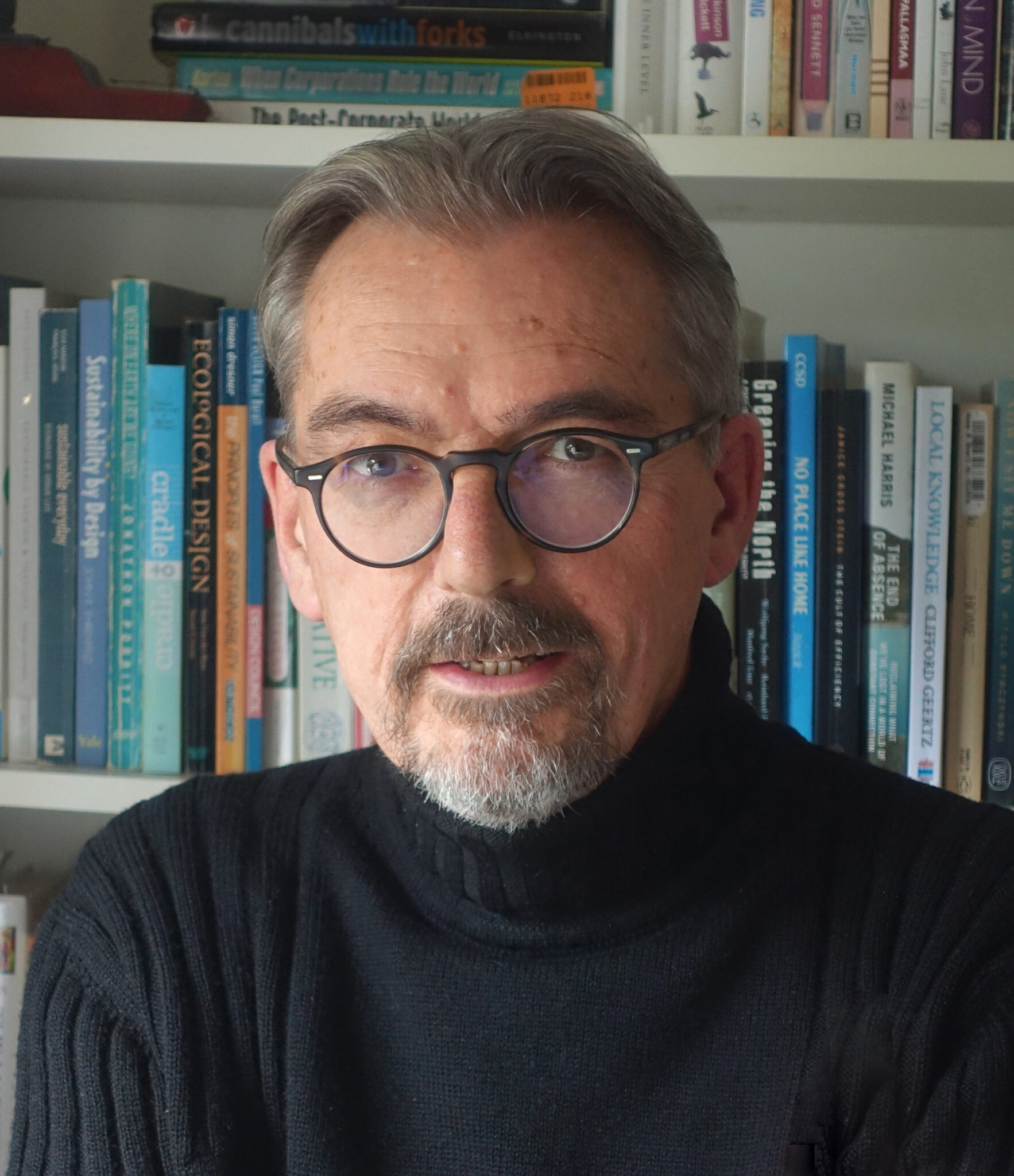
Jóhannes Dagsson//Are we talking to each other?

In this lecture, I examine ideas about presentation and art objects as phenomena that originate in the epistemological context of the art of research and focus especially on knowledge production as part of the results of art research.
Hildur Bjarnadóttir //NARP experiment 2003 - 2024
Art Research in Norway - the short version
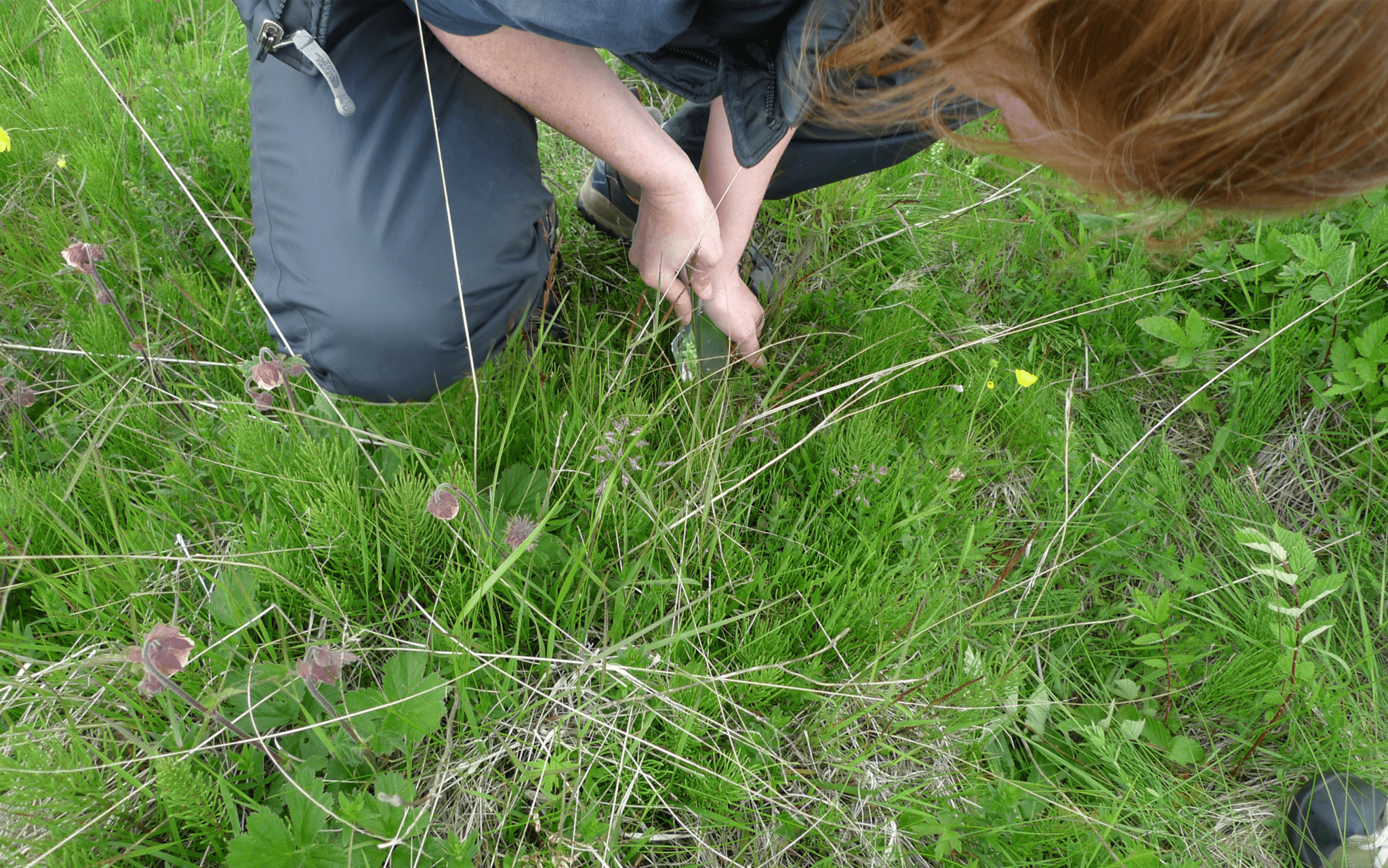
In the talk, I review the history, development and uniqueness of the Norwegian Research Program, which has been operating since 2003, but this year will be closed down in the form it has been operating. NARP aimed to develop and shape an art research environment/community where the focus was on an artistic project and not on writing, i.e. doctoral thesis.
Margrét Elísabet Ólafsdóttir//Experiment or research: A new art form is created
In this lecture, the intention is to look back on the early years of video art and especially the careers of Steina and Woody Vasulka, who began experimenting with video around the 1970s.
Katrín Ólína Pétursdóttir//Primitiva: A dance with the line of beauty
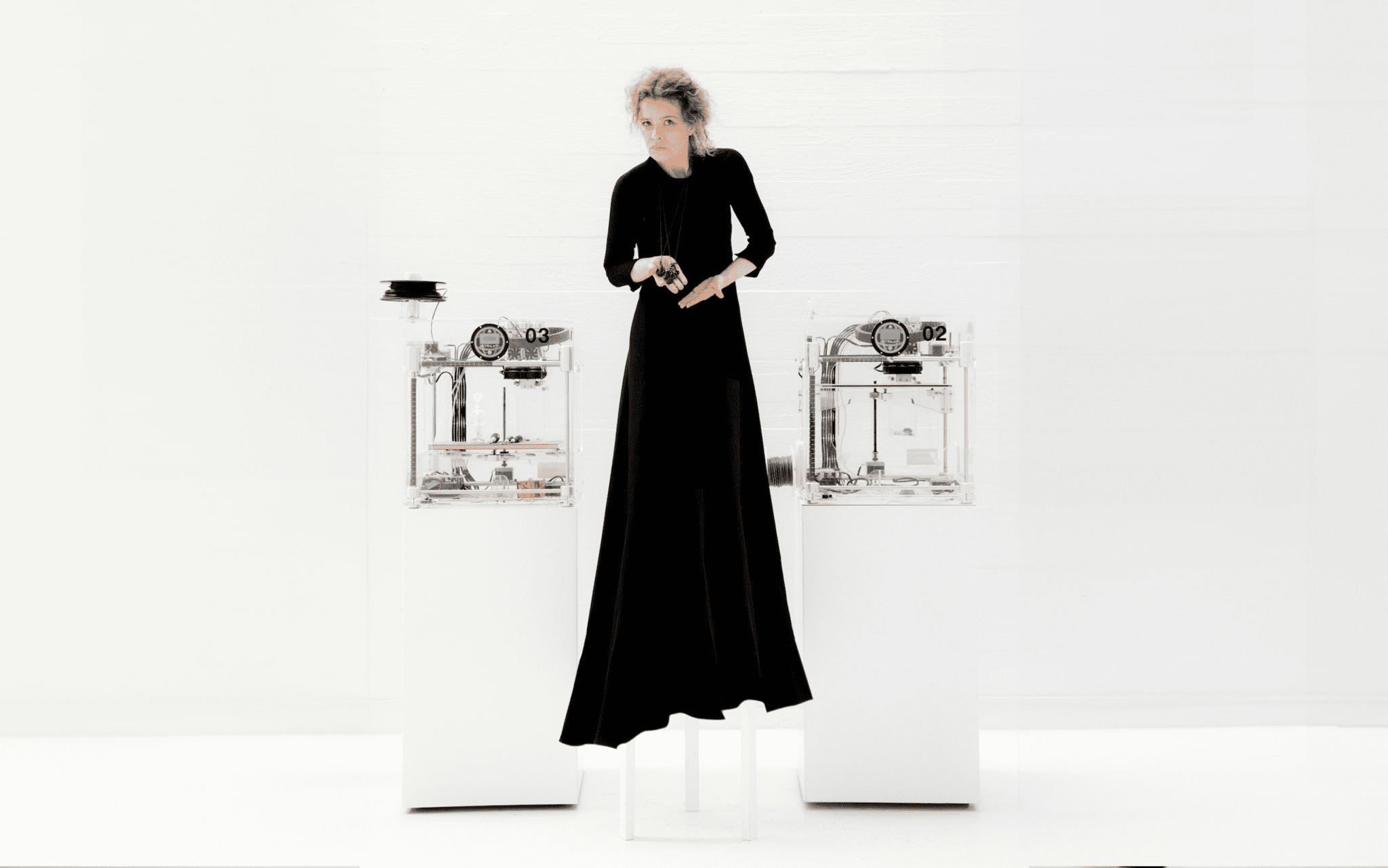
This talk traces developments Primitiva, a collection of jewelry and amulets that combines the designer's methods, automatic processes and precision of machines. Katrín Ólína will tell about years of experimental work with drawing and narration in two-dimensional media that later developed into Primitiva the artifacts.
Fraser Muggeridge

„The Craft Risk“ is an idea formulated by David Pye in 1968. the idea consists of using any kind of technology or system „where the quality of the outcome is not predetermined, but depends on the judgment, plumbing, and the care the creator shows when doing his work“ This is in contrast to the certainty found in mass production, where the quality of the product is always predetermined before anything is created.
Emily Lethbridge, Sarah Woods, Bergdís Júlía Jóhannsdóttir and Gosia Trajkowska
The research project Kvennspor was funded by Rannís for three years, 2023 to 2026. One of the key goals of the project is to encourage creative practices in a traditional academic approach, and to develop creative responses to narrative traditions and places on a solid academic basis, where academic expertise and employee research are intertwined.
Becky Forsythe, Gunndís Ýr Finnbogadóttir and Þorgerður Ólafsdóttir
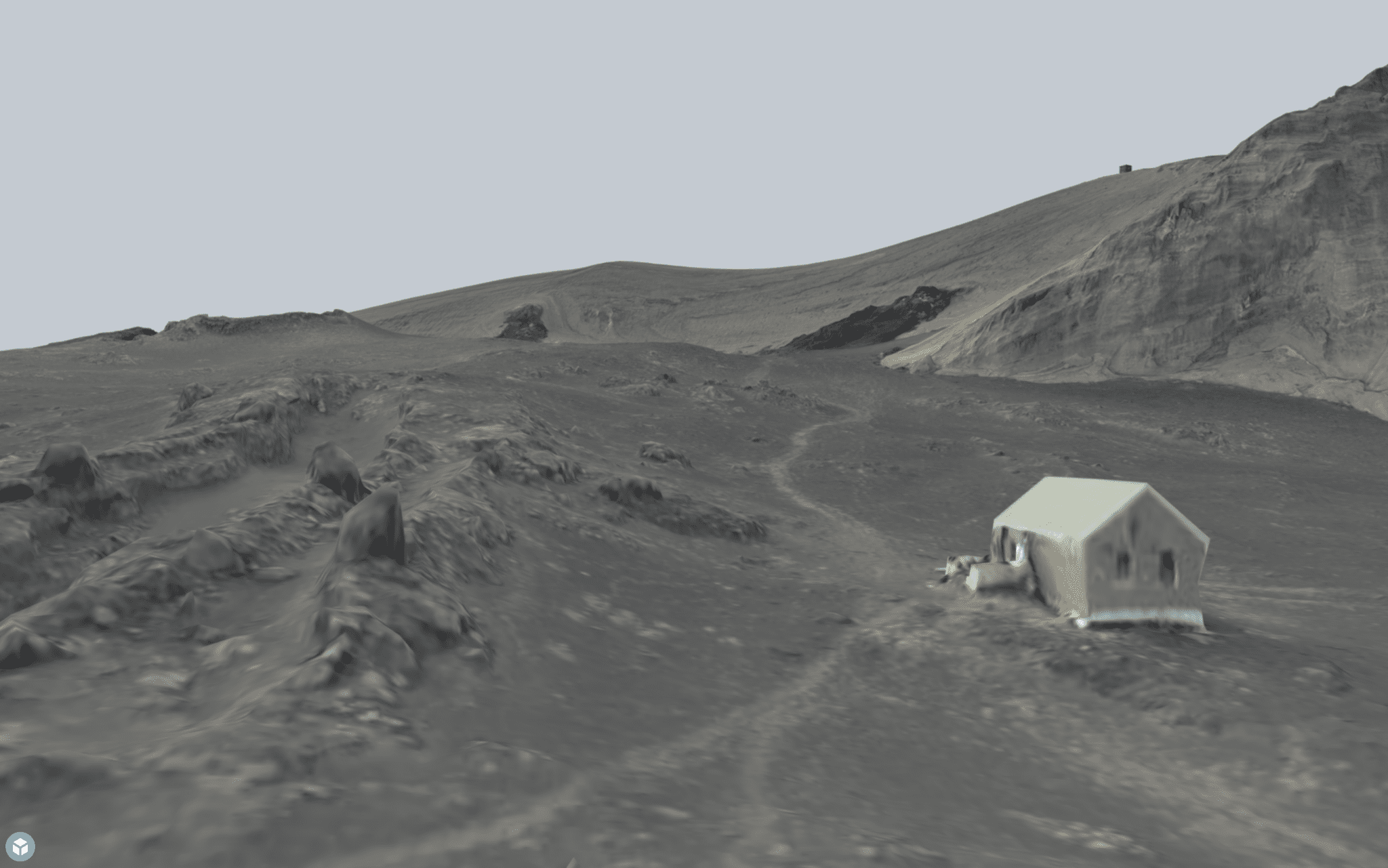
The talk will discuss the research and art project Unstable Land/Unstable Ground by Gunndísi Ýr Finnbogadóttir and Þorgerði Ólafsdóttir, which is based on interviews with individuals who traveled to Surtseyjar in the years 1966 - 2022, with diverse goals and different purposes.
Erla Rún Guðmundsdóttir //Respect and dissemination of art(s)
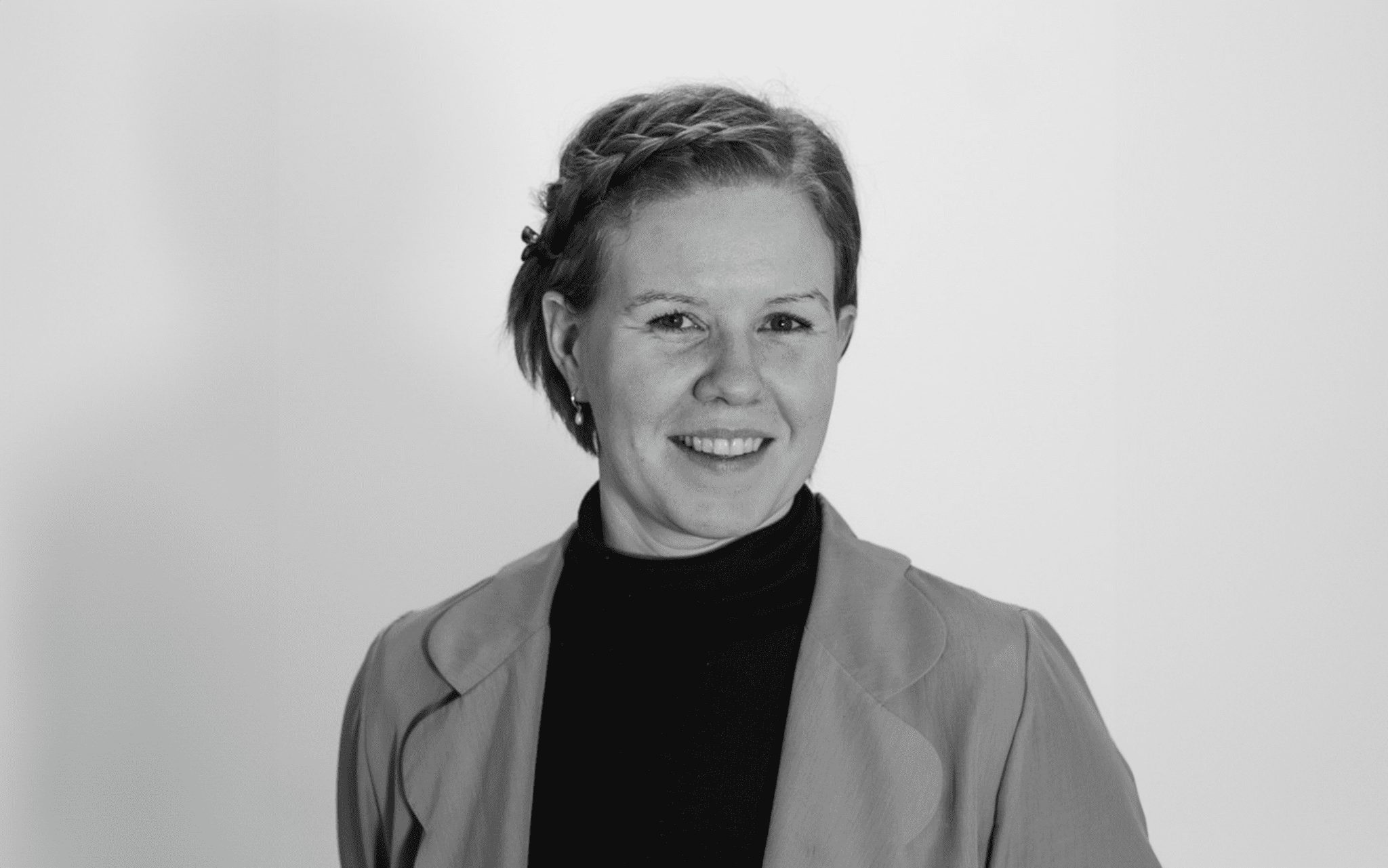
The Creative Arts Research Centre (RSG) was established in 2023 with the aim of promoting research into the professional life of culture and creative industries.
Sensory world in formation - the impact of technological development on human senses and art communication
1. Hidden Bird//Virtual reality: Performing arts and filmmaking
2. Steingerður Lóa Gunnarsdóttir //Games as art and learning - understanding of games as interdisciplinary works and tools.
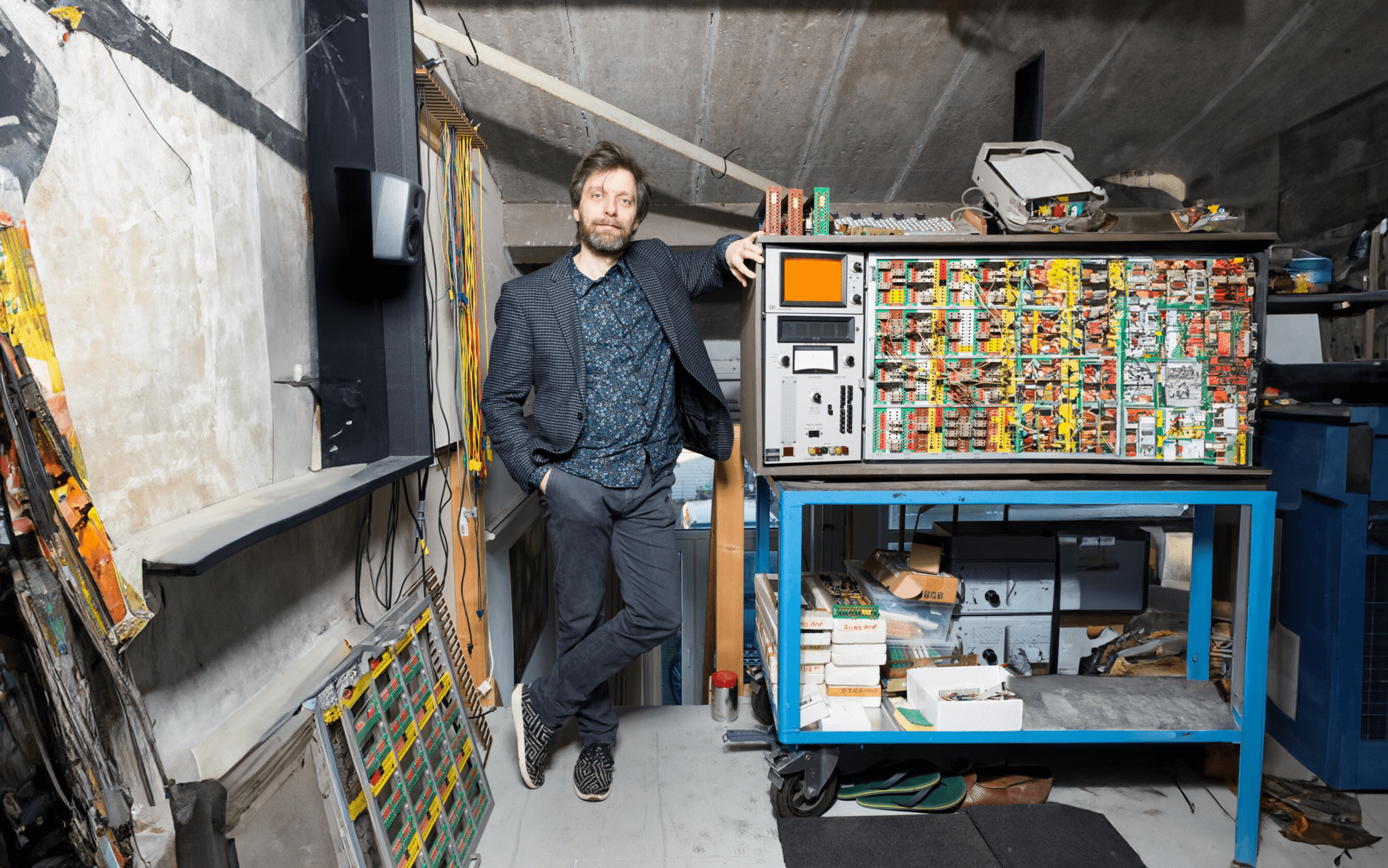
3rd Joost Rekveld// Lightning Empiricism; Thinking Through Devices
Cover image: Joost Rekveld in his studio. Image Ivo van der Bent
Carl Boutard//Examples of joined analog and digital processes in sculptural production
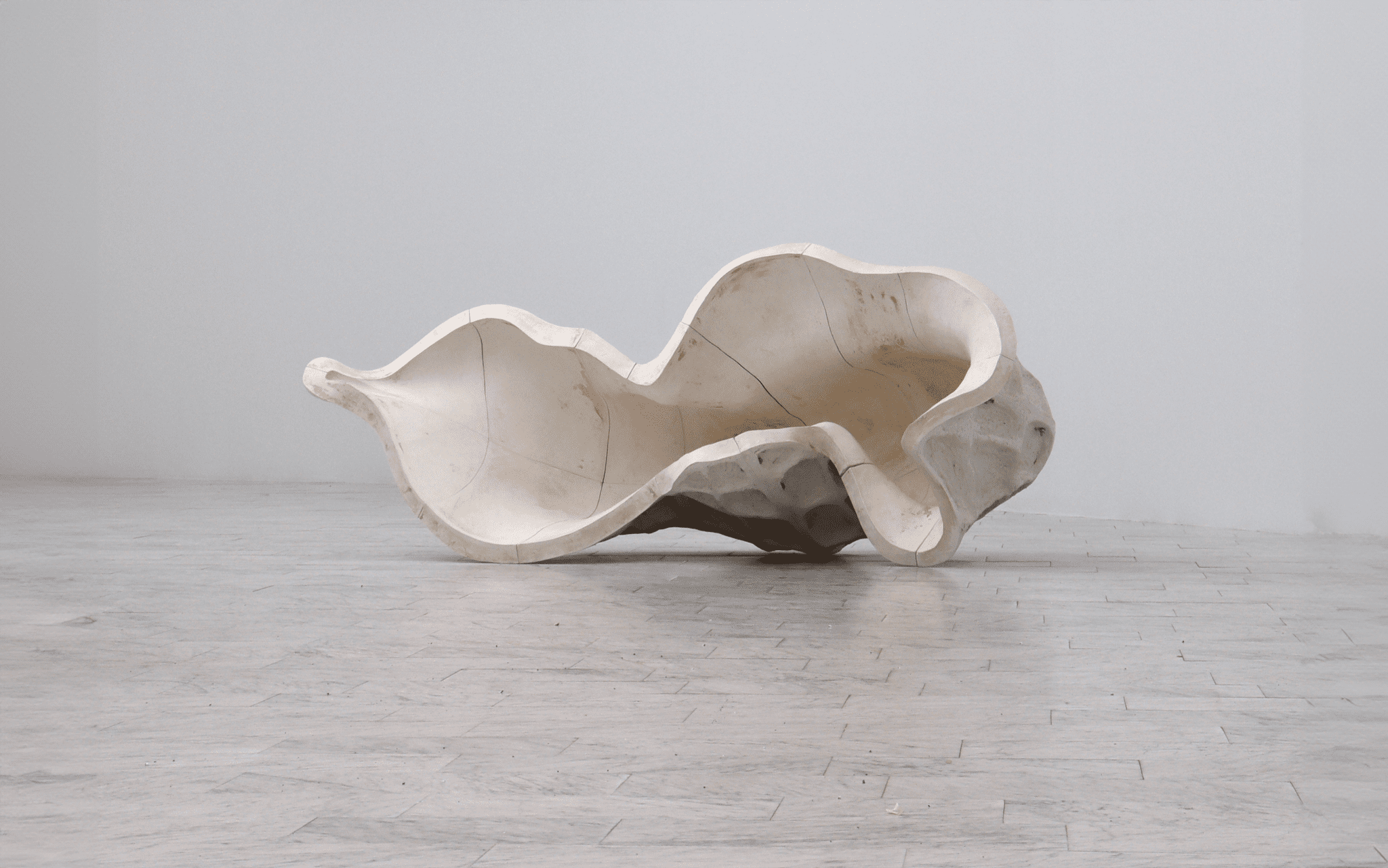
Vilte Adomaviciue// HEMPGORMA
Anna Holmquist//The Production Novella - About Folkform's Work With Masonite and other Materials

Kristín Valsdóttir, Guðbjörg R. Jóhannesdóttir and Gunndís Ýr Finnbogadóttir//Sensual knowledge of art teachers
In the art education department, it is important to promote students' self-knowledge and understanding of sensory knowledge.
In the talk, we will discuss sensory knowledge in the learning of art teachers based on selected examples from the work and the department's participation in the research project Freedom for meaning creation: Physical empirical research. Then the focus will be on methods Focusing, Thinking at the Edge and Micro-phenomenology and how they are useful in studies and research work.
Agnes Ársælsdóttir//Triggers in Borghildar Óskarsdóttir's works
The seminar discusses triggers that have arisen from a research project about the visual artist Borghildi Óskarsdóttir (b. 1942), which ended in March 2024 with the publication of a book and the installation of an exhibition at Kjarvalsstaðir. The research work will be reported with an emphasis on Borghilda's material and interdisciplinary art research.
Dance Africa, Iceland-Guinea project
Mamady Sano, Rokia Sano, Alpha Camara, Younoussa Camara and Ousmane Sylla are African dancers and drummers from Ballet Merveilles de Guinée in Guinea West Africa They will have an energetic African dance and drum show as well as answering questions about Guinea's culture.
Katrín Gunnarsdóttir//ARRANGEMENT
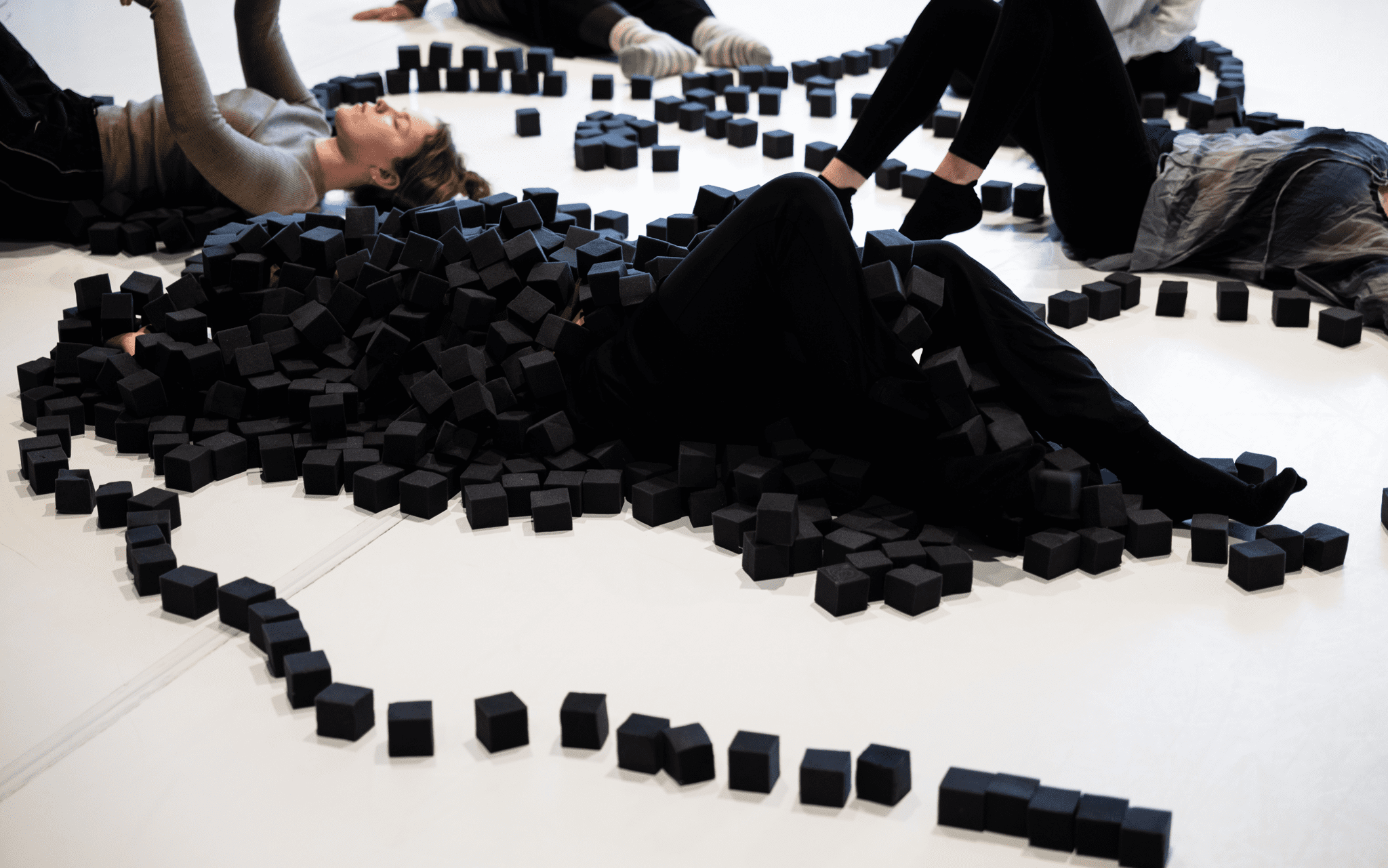
ARRANGEMENT is an event at the border of an installation or workshop as part of an artistic study. Þel (2024-2027), but the project explores how visual perception, sounds and movements can induce a meditative state, play with the senses and create a sense of intimacy in the context of live performance.
Njörður Sigurjónsson//Aesthetics of time and arrangement of work
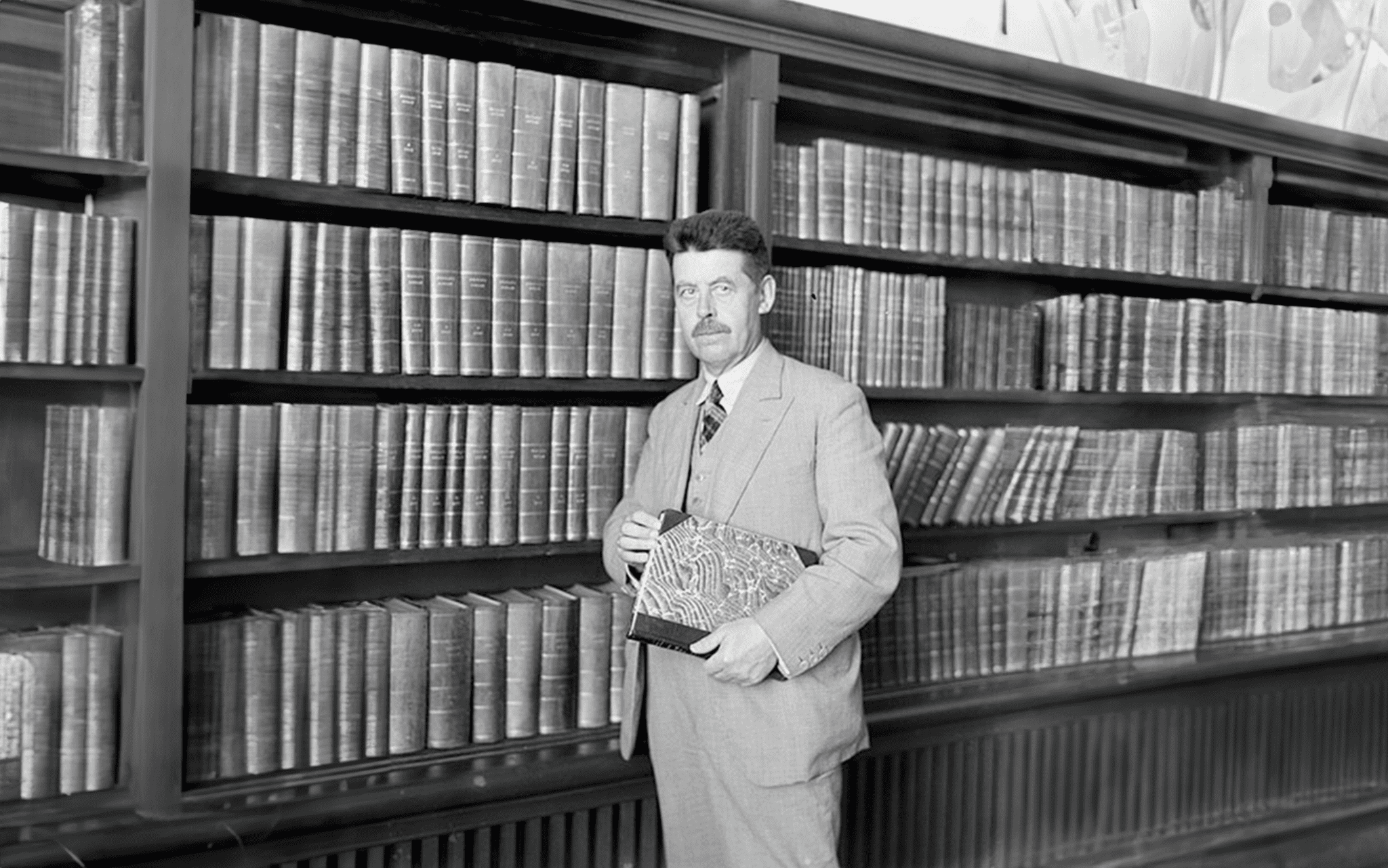
Í the talk is discussed about the ideas of philosopher and psychologist Guðmundar Finnbogason about beauty and time. Guðmundur was a polymath, pragmatist and influenced by different sources, but he wrote, among other things, the first Icelandic book on aesthetics, Frá sjónheimi, in 1918.
Þorgerður Ólafsdóttir //Fragment from the future
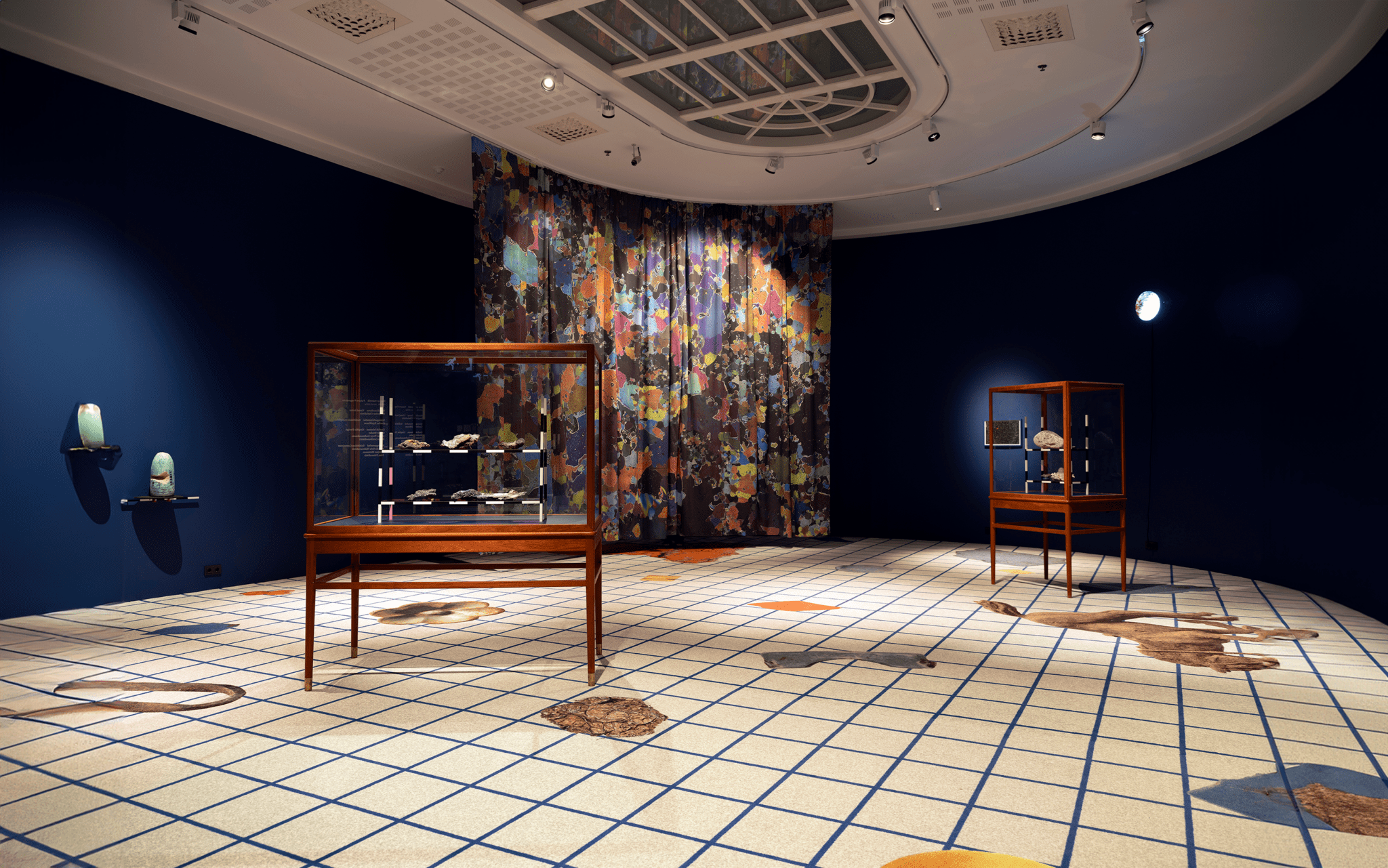
Excerpts from the future are based on an art project and art research in which Þorgerður Ólafsdóttir focuses light on phenomena related to the human age and ideas about cultural and natural heritage.
Katrín Ólína Pétursdóttir and Sigríður Þorgeirsdóttir //Minisophy - Small Philosophy
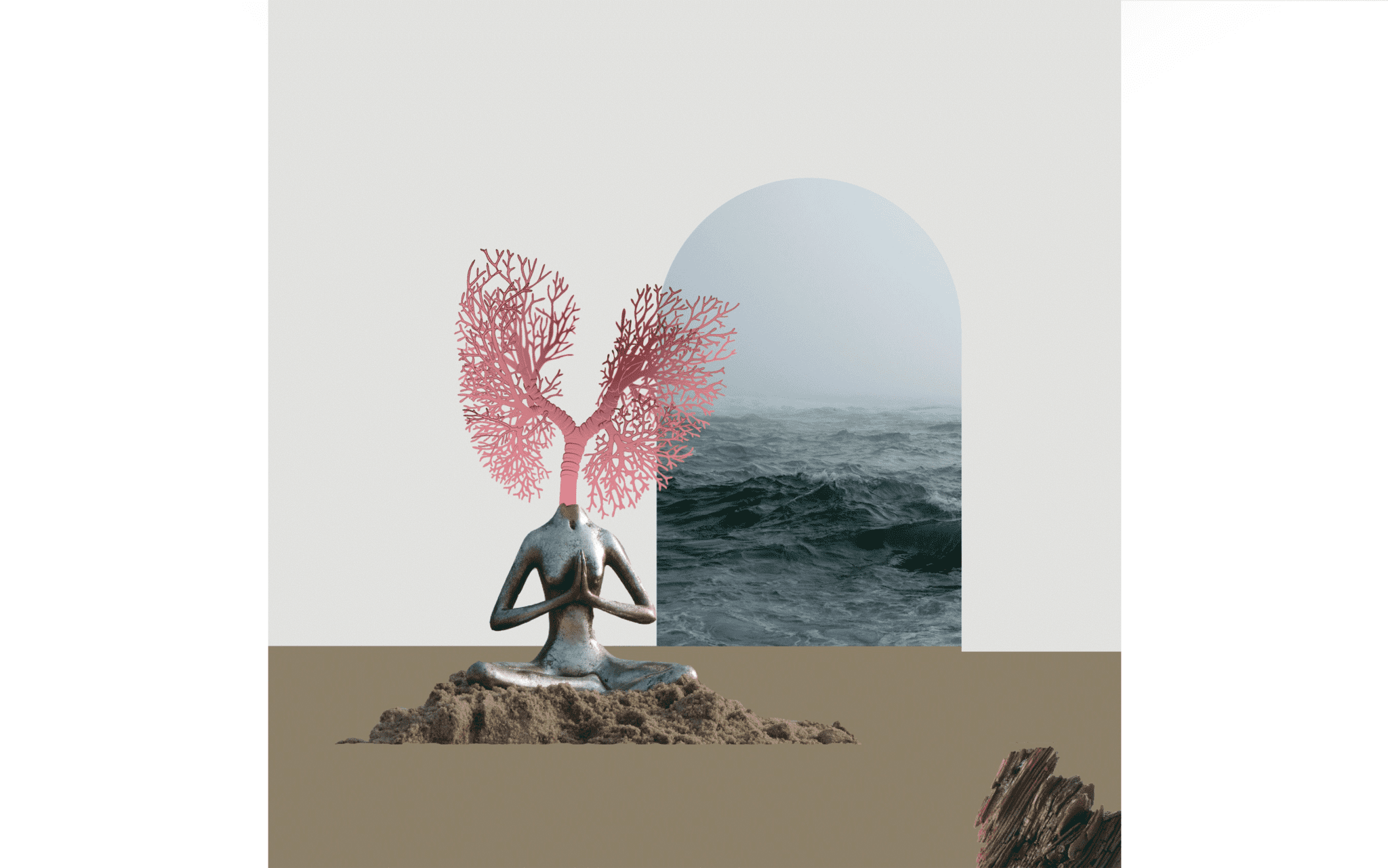
A practical workshop in text-making where the methods of physical critical, creative thinking will be applied as well as utilizing AI's text editing programs Participants core thinking, process an idea and express it in microscopic texts with the help of AI tools.
Master's students at the Iceland Academy of the Arts in performing arts // From the page to the space
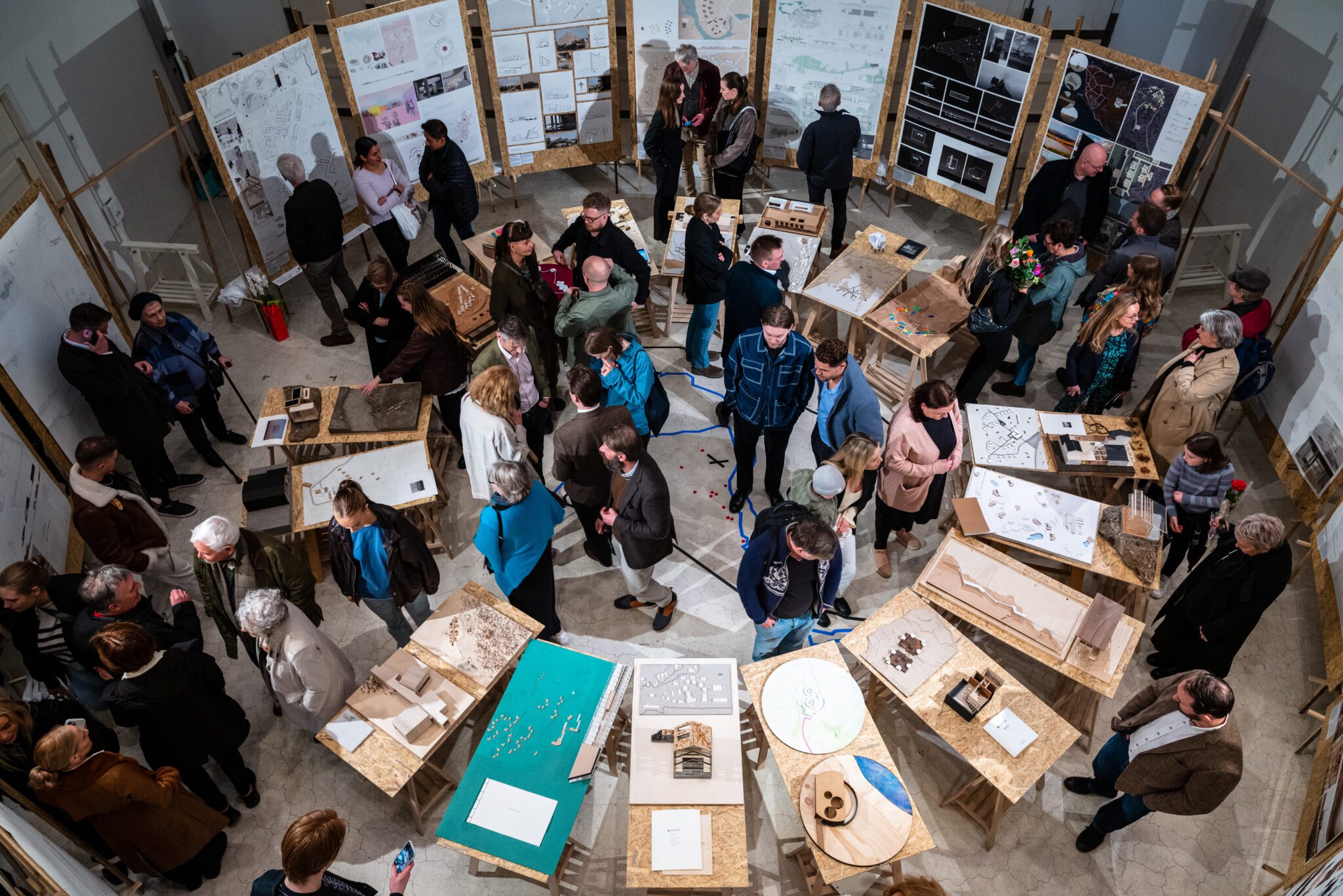
Here will be a joint exhibition of master's students at the Iceland Academy of the Arts, where they have worked with graphic designers to present their art research from a written text into a specific performative space where the audience gets access to.
This year Hugarflug offers both seminars and workshops The seminars are divided into two; on the one hand into seminars with one 60-minute talk, together with a 30-minute panel discussion and on the other hand joint seminars with three 20-minute independent talks and a roughly 30-minute joint panel. Outside guests have been invited to follow talks at the seminars and to participate in panel discussions - with the aim of highlighting the guest eye during the conversation.
Hugarflug's visitors have the same characteristic of conducting research in their field. They have been chosen based on a diverse background of art and science, and will now be with us to discuss art research and the sensory knowledge.
The workshops are varied, and they break up the otherwise formal arrangement of lectures.
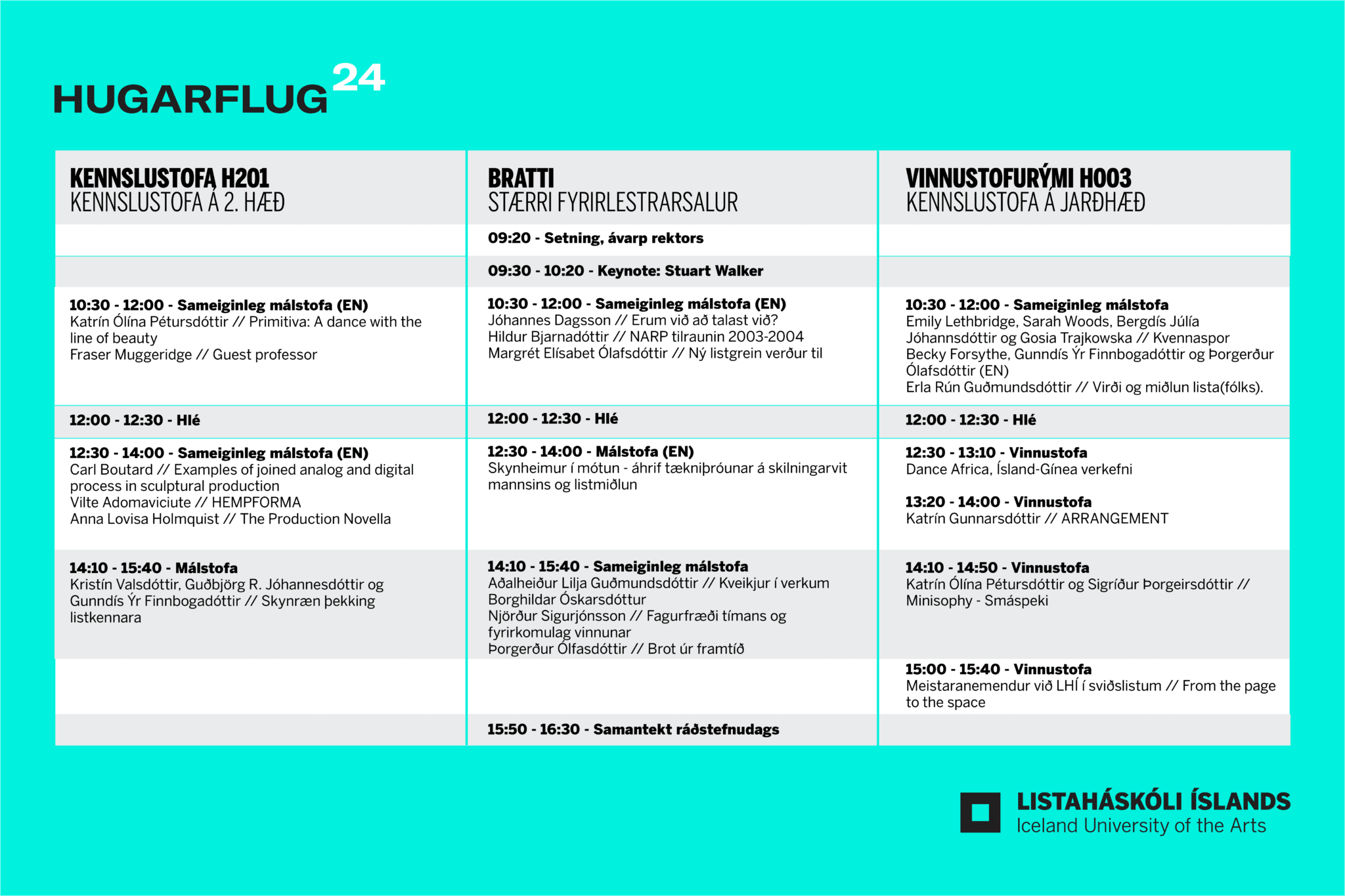
About Hugaflug
Hugarflug, the annual research conference of the Iceland Academy of the Arts, is a forum for open, professional and critical discussion about arts, design and architecture.
2024 Brainstorming Committee
Ása Helga Hjörleifsdóttir, associate professor in the Faculty of Cinematography
Carl Boutard, Associate Professor in the Department of Fine Arts
Ingimar Ólafsson Waage, dean of the art education department
Katrín Ólína Pétursdóttir, dean of the design department
Pétur Jónasson, dean of the music department
Sahar Ghaderi, Associate Professor in the Department of Architecture
Sigmundur Páll Freysteinsson, research project manager
Elín Þórhallsdóttir, quality and documentation manager