- 120 ETC Units
- 4 semesters - 2 years Duration of study
- MA/M.Mus Degree
- 13 January 2027 Application website opens
- 1 March 2027 Final deadline for applications
- April 2027 Answers sent to applicants
The international MA program in composition enables the student to develop his/her artistic and theoretical activity in a stimulating creative and critical environment, with access to the staff's wide professional experience and theoretical knowledge and supported by an inspiring learning community.
Information about studies is in English with study programs where the language of instruction is English.
Program information is provided in English, as the language of MA program in composition is English.
About the program
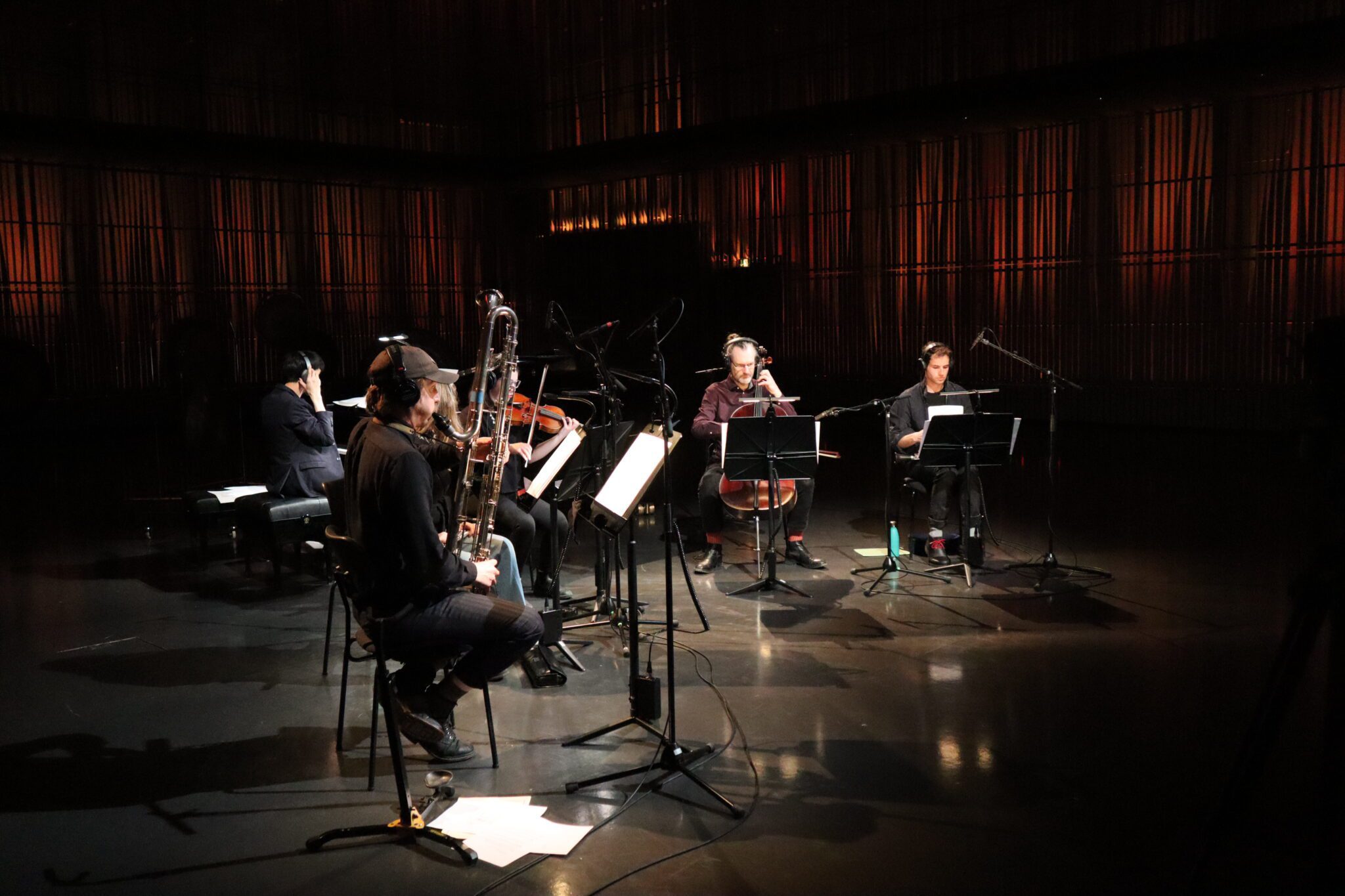
Students attend private lessons with a composition tutor but they also interact with each other in collective composition classes. The school collaborates with professional musicians who give workshops where students‘ works are heard and discussed. Besides this, students meet once a week to either analysis notable compositions, discuss their research or have formal discussions on artistic or professional topics of their own choice. Gradually, each student defines his/her own field of research and creation and finishes the program with a Master's project composed of a musical composition and a paper. The balance may be either: a) A 20 credit composition and a 10 credit paper b) A 10 credit composition and 20 credit paper, or c) a final project which focuses almost exclusively on the practical aspect. In that case, the musical project should amount to 26 credits and be completed by a four credit reflection on the student's personal creative process. Students are offered the opportunity to have their final project performed by the Caput Ensemble at a graduation concert
Structure of the program
Understandably, the subject of composition is by far the largest item in the syllabus, generating almost half the credits in the first three terms.
Other computational courses occur in the first two terms. These are: a course in sound technology, either electronic or instrumental, a course on artistic research, a course on music analysis and an introduction to some recent issues music composition. The program offers a number of elective courses such as the intersection of music and other activities, such as information in the department and activities.
After graduation
After the studies the student should have the theoretic and technical basis fitting his/her creative activity. The program is also intended to stringhen the student's grip on music in general, be it for the interpretation, research, editing, discussion or teaching of music. The possible field of action is therefore wide, in addition to the possibility to requested to a PhD program abroad. (LHÍ does not as of yet have a PhD program in music, but one is being developed).
Note: From fall 2026 tuition feels will apply to applications from a country outside of EEA, Faroe Islands, Greenland and Switzerland. Further information about tuition feels.
Application Process
Iceland University of the Arts employees a standard electronic application form.
The application process is in two steps, first submit the application and then pay the application fee. Please note: It is possible to save the application while working on it.
Admission Process
An admission committee assessments applications on the grounds of assessment of the subject material, the applicant's motivation and aim with the study at the Iceland University of the Arts and the interview(s) with the applicant.
If the number of applicants meeting the admission requirements for the study program falls below the minimum threshold, the program will not be offered for the upcoming academic year. Applicants will be informed of this decision as possible, and any confirmation feels paid will be punished.
Required 1. Certified copy of degree certificate(s) and program /course transcript(s) (PDF)
Required 2nd Reference from one referee (PDF)
Applicants must submit one reference. The reference should not exceed one page. The reference can be submitted in Icelandic or English. Former students of the IAA don't have to submit a reference.
Required 3rd Letter of Motivation (PDF)
Required 4th Curriculum Vitae (PDF)
Required 5th Portfolio of works (PDF/URL)
General Admission Requirements:
Admission Requirements
Applicants will have completed a BA degree in composition or the related fields of music theory or the arts. Non musical academic degrees are not excluded, especially on graduate and doctoral levels.
Applicants who do not have a BA degree in composition can be recommended to the program provided they demonstrate a comparable knowledge, experience and technical ability in the field of musical composition.