- 120 ECTS Units
- 4 semesters - 2 years Duration of study
- MA Degree
- 6 January 2027 Application website opens
- 6 April 2027 Final deadline for applications
- May 2027 Answers sent to applicants
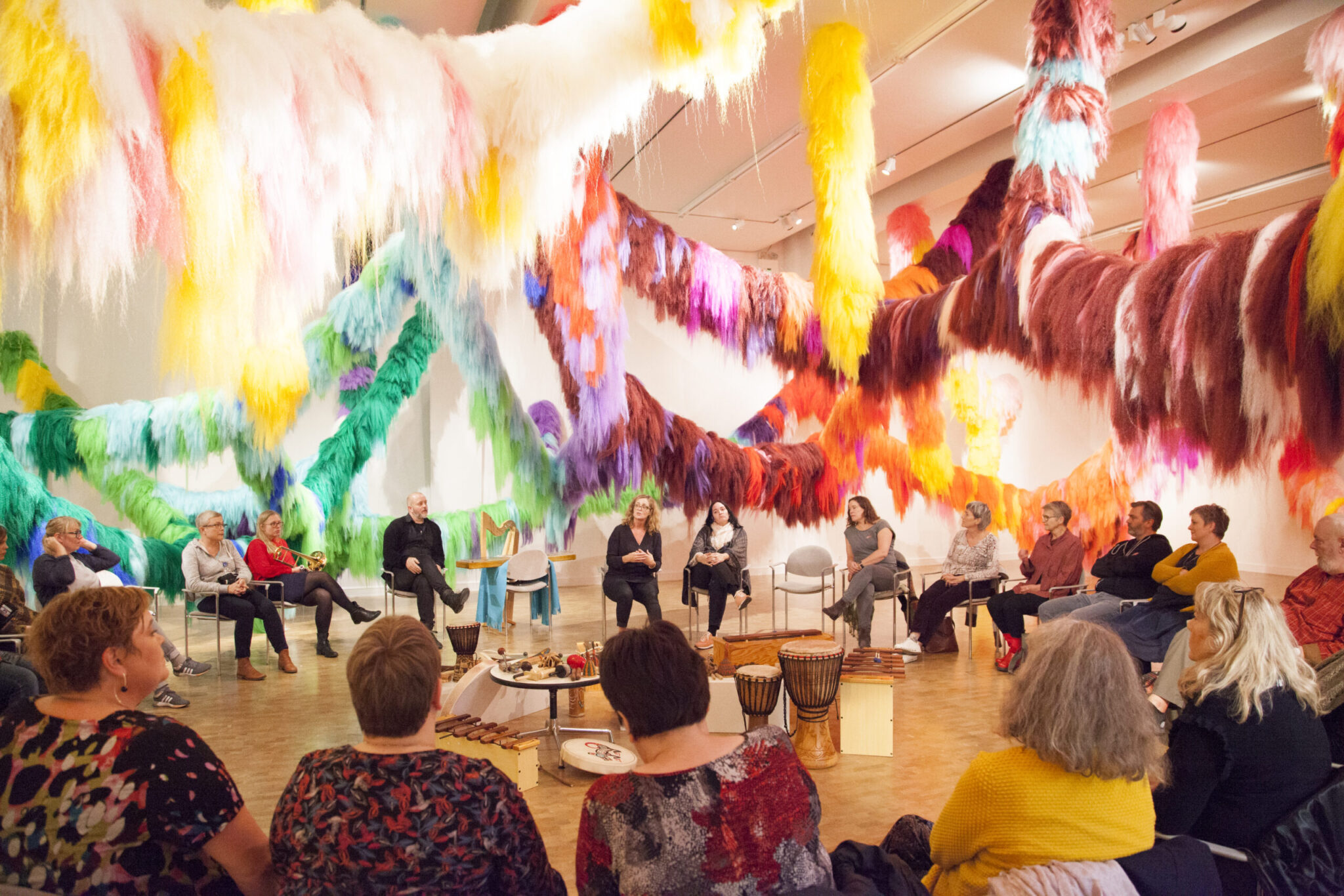
Master's in Arts and Welfare aimed at bringing together a broad group of professionals interested in developing ways to utilize the arts for the benefit of social and health promotion The aim of the program is to increase the number of interfaces between the arts with the community and to increase the accessibility and participation of different groups in art-related projects and events.
Information is provided in Icelandic for study programs that have Icelandic as the primary language of construction.
About the programme
The Master of Arts and Welfare is a 120-credit course of study for those interested in developing ways to utilize the arts for social and health promotion.
Self-evident emphasis in society on increased access for everyone to artistic creation and art events calls for a targeted development and for many people with knowledge in the field of art and welfare.
The aim of the program is to increase the accessibility and participation of different groups in art-related projects and events. The focus is on developing new ways of interdisciplinary cooperation between institutions, associations and artists in jobs that take place under ever-changing conditions with a diverse group of individuals.
Admissions criteria
General admission requirements are a bachelor's degree or a similar university program based on the applicant's ability to meet the requirements of the master's program.
For this course of study, the admissions criteria for bachelor's degrees in arts or bachelor's degrees in other subjects are; such as health sciences or social sciences along with considerable education and/or experience in some art form Interest and experience of working with vulnerable groups is a requirement.
Applications must be accompanied by certified copies of diplomas together with other documents requested by the relevant department Admission Committees evaluate applications based on submitted data and interviews with applicants The Dean appoints admissions committees in consultation with the professional directors and work committees according to procedures presented to the applicants The decision of the admissions committees is final.
Programme structure
The program is based on a wide range of courses, such as art therapy, community arts, research methods, and workshops, along with field work The program is intended to support individual student interest, which develops its own path through the program and bases its final project on personal professional interest, experience, and vision Through the methods of art and through the collaboration of professionals and different groups of society, the goal is to support civic engagement and social responsibility of students and institutions towards inclusion.
The program has 120 credits and a full-time program for two years. The program can also be divided into several years.
The program is divided into:
- Compulsory course, 67 credits
- Elective course, 33 credits
- Final project 30 units
The language of instruction is Icelandic
After graduation
After completing studies in the arts and welfare, students have acquired knowledge and experience in working with different groups on art-related projects.
Application and admission process
All applications for studies go through the application portal and all communications regarding the application process will take place there. The application fee is paid in the last step of the electronic application and is ISK 5,000.
Enrolled and enrolled students who have Owl Access also need to create a special access in the communication portal when applying for a new program.
In the electronic application, the applicant has the opportunity to specify the reasons for the application, goals, vision, focus article and more in a short text Applicants receive confirmation that LHÍ has received the application after it has been ascertained that the applicant has submitted all the necessary supporting documents In the art education department, students are admitted once a year and start their studies in the fall semester.
If the number of applicants meeting the admission criteria for a study programme falls below the minimum threshold, the programme will not be offered for the upcoming academic year. Applicants will be informed of this as soon as possible, and the registration fee will be refunded if it has already been paid.
In order for the application to be valid, an application fee must be paid and the following documents must be received by the University of the Arts:
Required 1. Certified copies of diplomas
Certified copies of diplomas, black and white photocopies do not apply.
Required 2. Reviews of two recommenders
Applicants are asked to write the names and email addresses of two commenters in a field prepared for that purpose in the application. It is desirable that one commenter be associated with the study and the other work.
Recommenders will be contacted and recommendations will be requested as needed.
Required 3. Statement: Reasons for application
The maximum length is 300 words.
Required 4th CV (CV)
Admission process
Applicants who meet all the admissions criteria for the study program are invited to an admission interview.
Applicants do not need to bring data to an admission interview unless they are specifically requested by the admissions committee.
The admissions committee of the art education department reviews applications and selects applicants who receive invitations to stay at school.
Applicants who receive an invitation to school must confirm whether they intend to accept it by paying a registration fee for the coming school year.
The decision of the admissions committee is final and the admissions committee is not obliged to give further explanations of its decision.