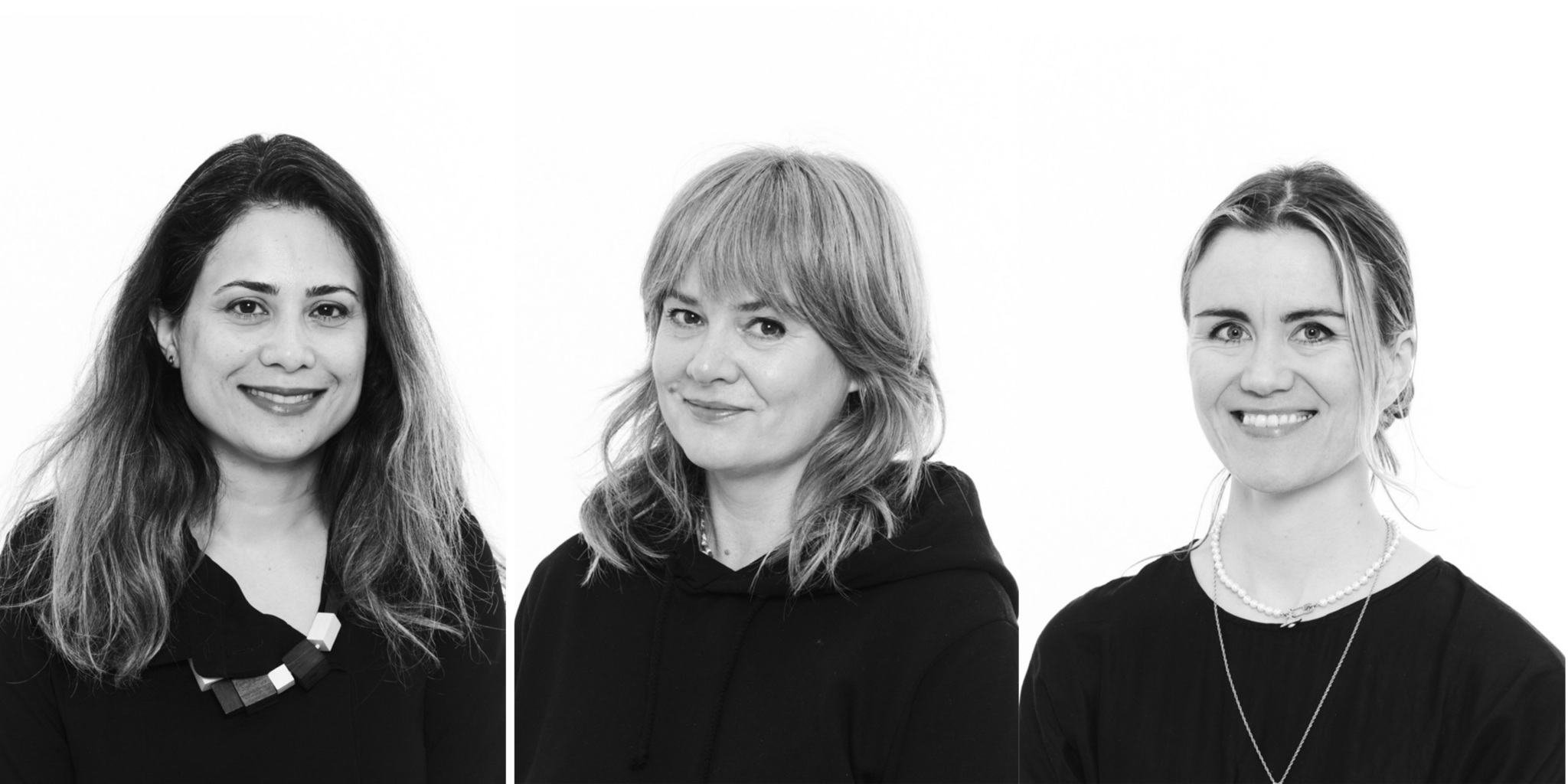
Three licences for the 2026 -2027 academic year have been allocated to the academic staff of the Iceland University of the Arts.
Sahar Ghaderi, Department of Architecture
Sahar received a research license in the spring semester of 2027 for the project „Geothermal Energies, Food Production, and Architecture: Toward a Visionary Model for Productive Cities in Iceland“ Sahar describes the project as follows:
„The research deals with the relationship between geothermal energy, food production and architecture with the aim of developing new models for sustainable urban life in Iceland“ The project also focuses on how to rethink geothermal development through design to create ecological cities that promote social participation. The project is based on cooperation between the Iceland University of the Arts, the School of Architecture in Paris-Malaquais, the University of Luxembourg and the Icelandic University of Agriculture, where Iceland will be used as a living laboratory to explore the urban and social value of geothermal energy. Through design research and GIS mapping, connections between geothermal systems, food systems and urban spaces will be highlighted. This analysis will lead to design models that show how energy and production can be part of daily urban life. The results will be published in a peer-reviewed article, graphical maps and presented on Hugarflugi, ON-Research and at LHÍ. By connecting environmental data, and adaptive design systems to the project.“
Sirra Sigrún Sigurðardóttir, Faculty of Fine Arts
Sirra is granted a permit in the fall semester of 2026 for the project „Eclipse of 2026“ Sirra describes the project as follows:
„The research license supports my ongoing artistic research on natural and man-made systems, with a particular focus on time as material and experience" The core mission of the study is a total eclipse of August 12, 2026, a unique event seen only once in Iceland over a period of nearly 270 years. A total eclipse is a short-lived moment in which phenomena that are normally invisible to us suddenly become tangible and remind us that we belong to a larger context The study will use the total eclipse as an artistic subject and place to examine how such an event can manifest itself in material, image and other documentation The study will work with diverse methods: digital and analog cameras, spatial recording and physical processing where photosensitive plate graphics and other printing methods will be tested Stay with the material after the event, analyze them and develop representations that take into account the diverse effects of the eclipse, both in nature and man-made environments.
Ása Helga Hjörleifsdóttir, film department
Ása Helga received a research permit in the spring semester of 2027 for the project „Óhemja (BEAST)“ Ása Helga describes the project as follows:
„UNBRAIN IS A feature film, a mix of feature film and creative documentary" In short, the film's theme is the creative process of female artists, and the creative space they have taken - or not - throughout historyWe see feature scenes from the artist lives of women such as Mary Shelley, Mary Wollstonecraft, Nina Sæmundsson, Marianne Faithfull, Shirley Jackson, Virginia Woolf and others But intertwined with this featureed past material is a contemporary story, source material, where we follow filmmaker - Asa Helga Hjörleifsdóttir - live her life and create her next film (the feature film) The night is Young) in the narrow, extreme and often incriminating creative space that women artists live in, or create for themselves Cf. title of the work - you are an uncontrollable, even a monster, if you take up this space Shame on you The film is in direct conversation with the book Private room by Virginia Woolf which was released in 1929, but still has - almost 100 years later - quite an incredible mission. It's the author's dream for the film Uncontrollable will be ready for the 100th anniversary of the book's publication, in 2029. “
Research permits are 85 working days or about 17 weeks According to the school's rules, the formal conditions for granting a research permit are that the employee has defined a research rate within the employment contract, has fulfilled his professional duties under that contract, and can demonstrate effectiveness in research at the start of the research permit The projects carried out must be in the special field for which the employee is employed at the school and lead to communication in the public arena.
The Professional Council Research Committee evaluates applications and makes a proposal for their prioritization based on professional criteria for the value of a project for the field of study of the arts, the clarity of the research plan, the feasibility of the project and timetable and the plan for dissemination, as well as with regard to the formal conditions of the Rector granting a research permit.
We wish Sahar, Sirra and Ása Helga the best of luck with the allocation and look forward to following the results of the projects later.