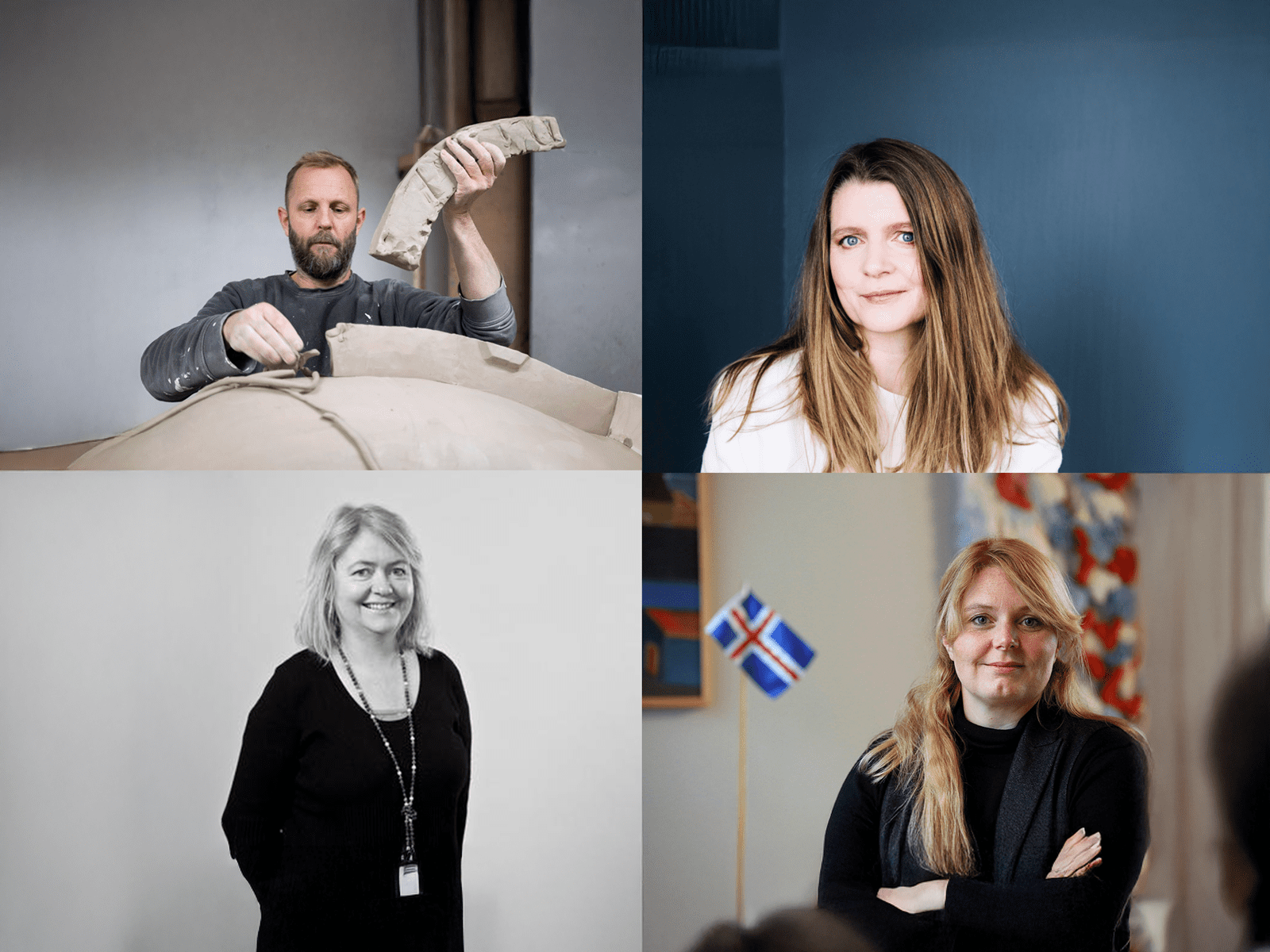
Research permits for the 2025 -2026 school year have been allocated to academic staff of the Iceland University of the Arts.
Anna Dröfn Ágústsdóttir, assistant professor at the department of design, received a research permit in the fall semester of 2025 to work on a new research project, Design, women's home and women's freedom in Reykjavík at the beginning of the 20th century. The project is an important contribution to Icelandic design history and discusses how a group of women at that time used design to create a social space, promote discussion about arts and industry, and lay the foundation for design education in Iceland. Anna Dröfn says:
„The research focuses on a group of women who designed their way out of homes and created a place for themselves in public debate at the beginning of the 20th century with the aim of promoting, among other things, a discussion about arts and industry or, in many cases, what we would call design today“ An attempt is made to argue that through design, a group of women have on the one hand managed to redefine their position in society and on the other hand managed to lay the foundation for the development of infrastructure that later became the basis for art and design studies in Iceland. This is a contribution to Icelandic design history that little has been written about on a theoretical note. An article will be published in the History Historical Society's magazine, which is a peer-reviewed academic publication and presented papers at both Hugarflugi and the Humanities Congress.“
Anna María Bogadóttir, associate professor at the Department of Architecture, received a research permit to work on an art study entitled, Pissed in gold combs In the study, she examines the relationship between water and the man-made environment with an emphasis on a creative approach to contemporary architecture and cultural context. About the project, Anna María says:
„The aim of the art study is to harness my existing work in teaching and research that revolves around water in architecture and organization in the present day“ Intercourse, the goal is to create an artistic whole from these wet and juicy materials, in a work that is created on the border between architecture and literature In modern architecture and organization, water often appears as a phenomenon subject to human control. It is carried on in specially designed pipes under the surface, inside and along walls and floorboards. Can architecture affect society's perspective on water? Activated a different perspective than what is now dominant? In the art study, I apply a narrative form that connects different threads in text, and drawings. Thus, I follow the interface between architecture and literature, where I have sought to develop a method for writing architecture, to transfer my own research on architecture to the literary environment by connecting the general and the unique; humanized environment and the intersection of the art research that must also be used in the form of the art.“
Carl Boutard, associate professor and professional director in the Department of Fine Arts, received a research permit in the spring semester of 2026 to work on the development of a new method in sculpture, where crafts and digital methods meet. About the project, Carl says:
„Combining analog and digital technologies in the shaping and production of sculpture. In a world where diamonds for shorter production time, faster production technologies and remote control are ever increasing this research project prophecies a method where the presence and slowness of the hand can be combined and assisted by digitisation of the objects, through the use of digital scanning techniques, the applied will expand and gain knowledge of how to develop an alphabet/ shapes/ shapes that can be distributed separately or combined“, in different materials.“
Snæbjörg Sigurgeirsdóttir, a professor at the Department of Performing Arts, received a research permit in the spring semester of 2026 to study the voice work of actors The project combines theoretical analysis of the voice as a foundation in drama and human nature with the development of practical exercises for drama students The aim of the study is to publish a textbook on the subject in 2026. About the project, Snæbjörg says:
„The study highlights three perspectives on voice and voice work; the physical, the conceptual and the profound“ The physical perspective focuses on the technical aspects of voice acting, the conceptual on more intangible concepts such as ground contact, space and focus. The profound perspective then looks at the person in all their complexities; their lessons and emotions In voice learning, it is practical to work with one perspective at a time, not least in the early stages of learning, but in fact they imply each other. The research focuses, among other things, on how these different perspectives strengthen each other. The practice is the result of decades of teaching at the performing arts department. It branches into two categories; vocal technique exercises where all the basic aspects of voice acting - breathing, relaxation, natural support, sound, voice formation, sound formation, sound shaping - and then text exercises; to get to know text, to analyze text with body and voice, attribute text, to maintain text, and to maintain text.“
Research permits are 85 working days or about 17 weeks According to the school's rules, the formal conditions for granting a research permit are that the employee has defined a research rate within the employment contract, has fulfilled his professional duties under that contract, and can demonstrate effectiveness in research at the start of the research permit. The projects carried out must be in the special field for which the employee is employed at the school and lead to communication at the public level.
The Professional Council Research Committee evaluates applications and makes a proposal for their prioritization based on professional criteria for the value of a project for the field of study of art, the clarity of the research plan, the feasibility of the project and timetable and the plan for dissemination, as well as with regard to formal conditions The Rector subsequently grants research permits.
We wish Anna Dröfn, Anna María, Carl and Snæbjörga the best of luck with the allocation and look forward to monitoring the results of the research in the future.