- 180 ECTS Units
- 6 semesters - 3 years Duration of study
- BA Degree
- 13 January 2027 Application website opens
- 5 April 2027 Final deadline for applications
- May / June 2027 Answers sent to applicants
Telling stories is a fundamental part of being human, and filmmaking is the predominant storytelling medium of our age. We provide you with the tools and knowledge to tell the stories that are important to you.
Information is provided in Icelandic for study programs that have Icelandic as the primary language of construction.
About the programme
The BA in Filmmaking is a 180-ECTS course of study intended for those who have already completed a secondary education, express an interest or talent in visual storytelling, and wish to become professional filmmakers or go on to study at the postgraduate level.
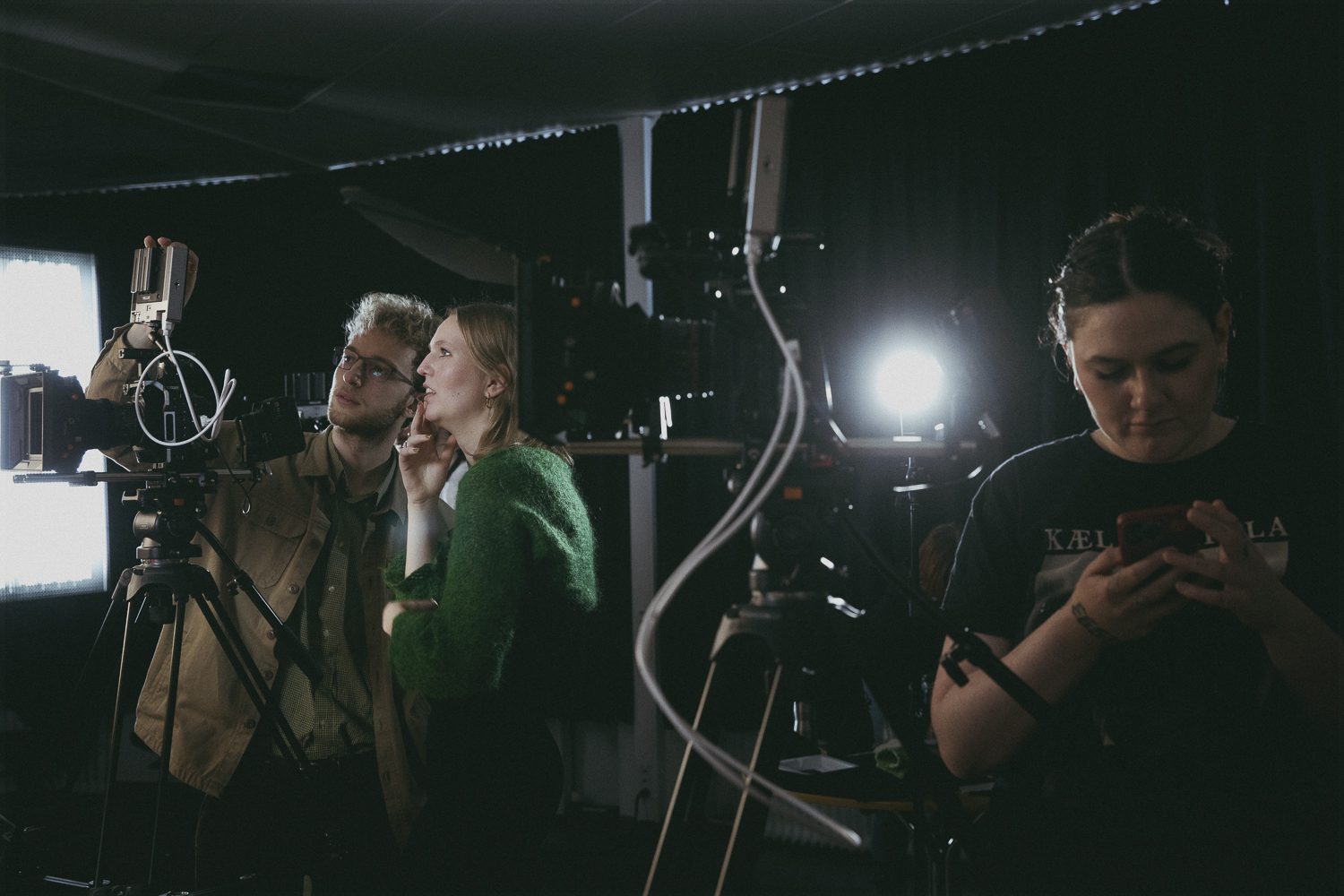
While the programme places special emphasis on key creative roles, it also provides wide-ranging education across six traditional filmmaking disciplines – directing, screenwriting, producing, cinematography, editing, and sound. It’s primarily a programme in narrative filmmaking, with some training in documentary.
In addition to providing students with the skills and tools to tell their stories in film, the programme aims to foster creative collaboration across disciplines, encourage students to think critically about the development of their work and the art form, and nurture the giving and receiving of constructive criticism at all levels.
The programme also promotes responsible and sustainable practices in filmmaking and embraces new challenges brought by emerging technologies.
Programme structure
The BA in Filmmaking is a three-year programme. In the first year, all students take the same courses, and each student authors a series of exercises designed to teach fundamentals across six traditional filmmaking disciplines.
Students begin the second year by making short documentaries. The rest of the year is focused on the making of each student’s first proper narrative short. Along the way, each student begins to define their own path through a series of focused electives.
In the third year, students get real-world experience in the form of a traineeship, research and write a BA Thesis, make their BA Project, and begin to prepare for life after graduation.
After graduation
At the end of their studies, students will have broad, foundational knowledge and practice across the six traditional filmmaking disciplines, plus further experience in their chosen specialization. They will have the tools necessary to enter the field or pursue postgraduate education in filmmaking.
Applications are submitted electronically through the application portal.
Note: All required fields must be completed, requested documents uploaded, the application fee paid, and the application confirmed.
- Certified copies of diplomas (photocopies are not accepted), stamped by the issuing institution, along with a scanned academic transcript, must be uploaded.
- If supporting documents are incomplete, applicants will be notified by email and given an opportunity to amend their application.
- Applicants will receive confirmation once the electronic application is valid.
- If the number of applicants meeting the admission criteria for a study programme falls below the minimum threshold, the programme will not be offered for the upcoming academic year. Applicants will be informed of this as soon as possible, and the registration fee will be refunded if it has already been paid.
An admissions committee made up of professionals from the filmmaking field and/or teachers at the film arts department reviews all applications from applicants who meet the department's admissions criteria.
Admission process
Those who make it to a sample group are then invited for an interview, at the beginning of May The interview has the purpose of examining the candidates' interest in prospective studies, attitudes and attitudes towards filmmaking and ideas about their own work. The applicant can expect to have to provide more detailed information about the points stated in the application, and especially to be ready to discuss the creative works he submitted. For those applicants who are abroad or for some reason cannot attend in person, when an interview with the admissions committee is offered via teleconferencing equipment.
The cohort of the year in question is then selected from among those invited for an interview Those applicants who receive an invitation to attend school must confirm by paying a confirmation fee The fee is irreversible but goes up to the tuition fees for the first semester The decision of the admissions committee is final and the committee is not obliged to give a more detailed explanation of its decision.
Admissions criteria
The language of instruction is mostly Icelandic However, individual courses are taught in English, so it is expected that students are able to understand, write and speak both languages.
Exemptions from general admission requirements:
The following documents must be included with the application for a bachelor's degree in filmmaking
Required 1. Cover letter
Tell us about yourself.
What fascinates you about filmmaking?
Why are you applying to the Faculty of Cinematography at the University of the Arts?
Why should you get into this program now?
Required 2. Project
This is the creative part of the application, to give us the opportunity to get to know your skills and abilities in this field.
Submit the following in one PDF file:
1. Written narrative, a maximum of 3 pages.
Tell us a story in the written form you prefer (script, detailed plot, short story, etc).
The story is supposed to contain at least one character, one story place, and all are set in one day.
2. Visual narrative in 10 pictures.
Tell us a story with your own photos or photos from someone else's collection.
Note that the pictures should tell the story and be able to stand on their own.
Keep in mind the structure of the story, perspective and context between the pictures.
Required 3rd CV
The CV must inform us about education, work experience and other phases in your life.
Required 4th Diploma
Diploma or diploma documents for other education you have attended.
Optional 5. Other documents
The applicant is free to upload other documents that he believes are relevant, or could support the application.
Optional 6. Links
The applicant can send us links to his previous works, films, videos, or other creative projects that he believes could support his application.